Calls to Strengthen International Cooperation with Neighboring Countries Including China and North Korea, Including Boycott of Tokyo Olympics in July
Discharge Decision Approved Only by the U.S. Is a 2021 Version of the Katsura-Taft Agreement...Strong
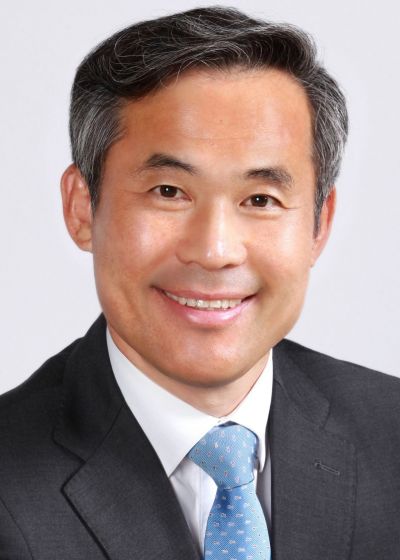
[Asia Economy Honam Reporting Headquarters Reporter Lee Hyung-kwon] Kim Seung-nam, a member of the National Assembly from the Democratic Party of Korea (representing Goheung, Boseong, Jangheung, and Gangjin), strongly condemned the Japanese government’s decision to release contaminated water from the Fukushima nuclear power plant into the ocean and on the 14th urged the strengthening of international cooperation with neighboring affected countries such as China and North Korea, including a boycott of the Tokyo Olympics scheduled for July.
According to research results from a German marine research institute last October, the contaminated water from the Fukushima nuclear power plant is known to reach Jeju Island in South Korea in about 200 days.
Recently, the Korea Institute of Ocean Science and Technology analyzed data from the Helmholtz Centre for Ocean Research in Germany and observed that trace amounts of cesium could reach Jeju Island and the West Sea one month after the discharge.
The release of contaminated water from the Fukushima nuclear power plant is an issue directly related to the lives and safety of not only South Korea but also neighboring countries including China, North Korea, and Southeast Asia.
Assemblyman Kim Seung-nam stated, “To respond to the Japanese government’s decision to release contaminated water, our government must strengthen international cooperation and joint responses with neighboring countries such as China and North Korea, including refusing participation in the Tokyo Olympics.”
There are also growing voices of criticism regarding the ocean discharge decision, which was effectively approved solely by the United States.
Kim Seung-nam said, “This is no different from the 1921 Katsura-Taft Agreement,” and emphasized, “Our government must strongly protest not only to Japan but also to the United States.”
Concerns are rising about seafood safety and damage to fishermen due to the release of contaminated water, and public opinion calls for extraordinary measures from our government.
The Ministry of Oceans and Fisheries announced related measures the day before, stating that it would strengthen distribution history management and origin inspections for imported seafood.
Assemblyman Kim said, “These measures are insufficient,” and urged, “Distribution history management and origin inspections should be strengthened specifically for Japanese seafood and processed products, not for all imported seafood.”
In particular, Kim pointed out that if Japan does not withdraw its decision to release contaminated water from the Fukushima nuclear power plant, it is necessary to actively consider a complete ban on imports of Japanese seafood.
The annual average volume of imported seafood in South Korea is about 1.53 million tons, with Japanese products accounting for an average of 30,000 tons per year.
Kim said, “This is a serious issue involving the lives and safety of the people and the livelihood of fishermen,” and emphasized, “Our government must strongly protest to Japan, which unilaterally decided on the release, and the United States, which approved it, while actively playing a central role in international cooperation with neighboring countries.”
© The Asia Business Daily(www.asiae.co.kr). All rights reserved.
![Clutching a Stolen Dior Bag, Saying "I Hate Being Poor but Real"... The Grotesque Con of a "Human Knockoff" [Slate]](https://cwcontent.asiae.co.kr/asiaresize/183/2026021902243444107_1771435474.jpg)











