[Asia Economy Reporters Inho Yoo and Jieun Lee] As the issue of Japan's Fukushima nuclear power plant contaminated water discharge into the ocean unfolds into a 'Korea-China VS US-Japan' confrontation, South Korea's diplomatic front, already in a difficult position between the US and China, has fallen into a dilemma.
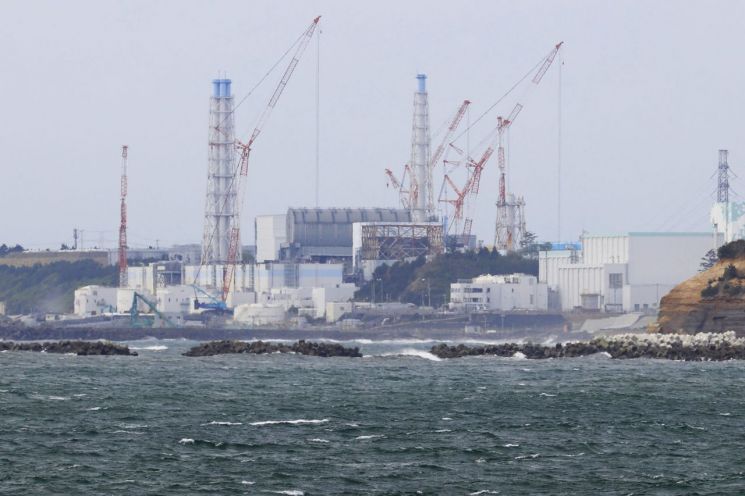
South Korea and China strongly oppose Japan's decision, while the US supports Japan's stance. This confrontation is expected to potentially affect the upcoming series of bilateral summits among Korea, the US, and Japan scheduled for May.
According to the Ministry of Foreign Affairs on the 14th, the South Korean government has been focusing on understanding the US intentions through various channels, including high-level and working-level officials, following the US's support for Japan's decision to discharge contaminated water from the Fukushima nuclear power plant.
Earlier, on the 13th, the US State Department spokesperson Ned Price issued a statement expressing support for Japan, saying it appears to have adopted an approach based on internationally accepted nuclear safety standards.
The South Korean government finds the US's declaration of support awkward. While the US, which values the Korea-US-Japan trilateral security cooperation, demands improvement in Korea-Japan relations, it simultaneously sided immediately with Japan on an issue that could worsen Korea-Japan relations.
From the government's perspective, since the discharge of contaminated water from the nuclear plant is directly related to the environment and the lives of its citizens, it inevitably reacts more sensitively than it does to historical issues.
This is a matter of a different dimension from whether to accept the US's demand for improving Korea-Japan relations.
Given this situation, President Moon Jae-in's position ahead of the Korea-US summit has also become difficult.
The South Korean government is consulting with the US to promote the Korea-US summit next month, and there is even speculation about the possibility of holding a Korea-US-Japan summit.
The US's declaration of support for Japan's contaminated water discharge has created a confrontation between Korea-China and US-Japan, adding another burden to President Moon ahead of the summit diplomacy.
In this context, President Moon will meet with Koichi Aiboshi, the Japanese Ambassador to South Korea, at the Blue House on the 14th. Although this is a pre-scheduled credential presentation ceremony unrelated to the contaminated water discharge, there is interest in whether President Moon will express his position on the Japanese government's decision.
The Blue House has not yet issued any official message, such as expressing regret, regarding the Fukushima contaminated water discharge. While it is not easy to bring up the contaminated water issue during a meeting that serves as a formal introduction between the president and the ambassador, it is also burdensome to maintain a 'no response' stance considering public sentiment.
A Blue House official said, "It is not possible to know in advance what message President Moon will deliver during the meeting."
In diplomatic circles, there is an opinion that it will be realistically difficult for the government to reverse the Japanese government's decision.
Since October 2018, when the Japanese government announced it would consider treating the contaminated water, the South Korean government has operated an inter-agency task force (TF), but it has judged that the discharge decision itself is a matter of Japan's sovereignty and has focused its efforts on ensuring compliance with international standards and transparency.
There are ways to raise international attention through organizations such as the International Atomic Energy Agency (IAEA), but countries expressing strong concerns like South Korea are limited to China.
The day before, the Chinese Ministry of Foreign Affairs criticized in a statement, "Japan unilaterally decided to treat contaminated water without sufficient consultation with neighboring countries and the international community, despite domestic and international opposition and without establishing safety measures."
Kim Jae-shin, an advisor at the Japan Research Center of the Korea National Diplomatic Academy, said, "In a situation where there is virtually no sincere dialogue due to historical conflicts between Korea and Japan, the issue of Japan's contaminated water treatment, which is directly related to health and the environment, could further worsen bilateral relations. Efforts to find a compromise through dialogue have become even more urgent."
© The Asia Business Daily(www.asiae.co.kr). All rights reserved.
![Clutching a Stolen Dior Bag, Saying "I Hate Being Poor but Real"... The Grotesque Con of a "Human Knockoff" [Slate]](https://cwcontent.asiae.co.kr/asiaresize/183/2026021902243444107_1771435474.jpg)
















