Biden Inherits Trump's Hardline Approach Toward China
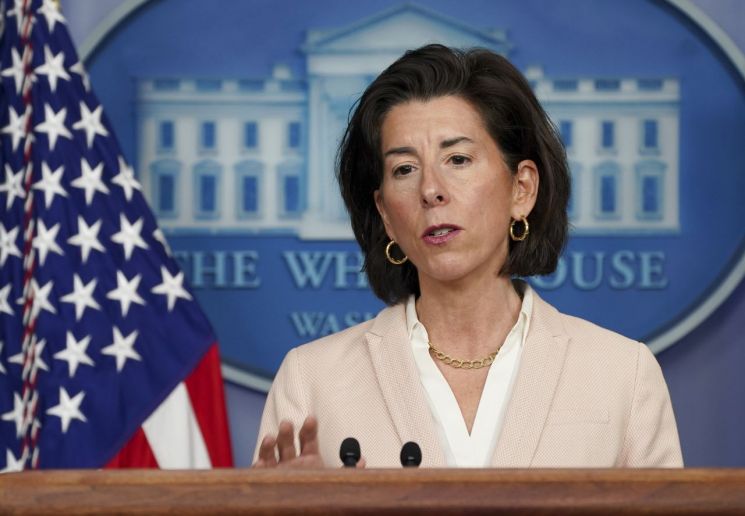
[Asia Economy Reporter Kim Suhwan] The U.S. Department of Commerce has requested Chinese companies to submit related documents, including transaction records with U.S. companies. Analysts interpret this as the Biden administration targeting Chinese companies, similar to the Trump administration, based on the judgment that Chinese companies infiltrating the domestic Information and Communication Technology and Services (ICTS) industry pose a threat to U.S. security.
On the 13th (local time), the U.S. Department of Commerce issued a statement announcing that it had requested Chinese companies to submit data related to transactions connected to the supply chain of the U.S. ICTS industry. The specific companies required to submit documents were not disclosed.
The Department of Commerce stated, "Unrestricted access or use of U.S. ICTS technology by foreign companies is a serious threat to U.S. security," adding, "The measures announced today will help identify potential threats to U.S. security. We expect the companies required to submit documents to cooperate accordingly."
Earlier, after taking office, the Biden administration requested Chinese companies providing ICTS services within the U.S. to submit transaction records with U.S. entities in March. The data submission request announced on the 13th is the second such measure since President Biden took office.
This data submission request by U.S. authorities is based on an executive order implemented during the Trump administration in 2019. The executive order titled "Protecting the Information and Communications Technology and Services Supply Chain," signed by former President Trump, stipulates that if companies from "adversary" nations are judged to infiltrate the domestic ICTS industry and threaten U.S. security, the Department of Commerce must investigate their transactions with the U.S.
Previously, the Trump administration designated China as an "adversary" threatening U.S. security and implemented strong sanctions, including placing Chinese IT companies such as Huawei on a trade ban list.
The Biden administration's continuation of the Trump-era executive order is interpreted as a commitment to maintain the previous administration's tough stance on China. In particular, it is expected that economic sanctions against China will continue through Chinese companies exerting influence in the U.S., similar to former President Trump’s approach.
The statement released by the Department of Commerce in February, ahead of the data submission request to Chinese companies, aligns with this perspective. At that time, the department stated, "Reliable information and communication technology and services are a core element of U.S. economic security and a top priority for the Biden administration."
However, the U.S. business community has shown opposition to the Biden administration’s tough stance on China. When President Biden announced plans in January to continue the Trump administration’s policies toward Chinese companies, the U.S. Chamber of Commerce sent a letter to the Department of Commerce expressing public opposition. The letter pointed out that "the government would gain unrestricted authority to intervene in all transactions between U.S. companies and foreign partner companies."
The Business Roundtable (BRT), a business association of U.S. CEOs, also criticized the measure as "an inappropriate action unsuitable for the management environment of U.S. companies."
© The Asia Business Daily(www.asiae.co.kr). All rights reserved.

















