Song Young-gil, Chairman of the Foreign Affairs and Unification Committee, to Condemn Japan
Will Meet with Koichi Aiboshi, Japanese Ambassador to Korea
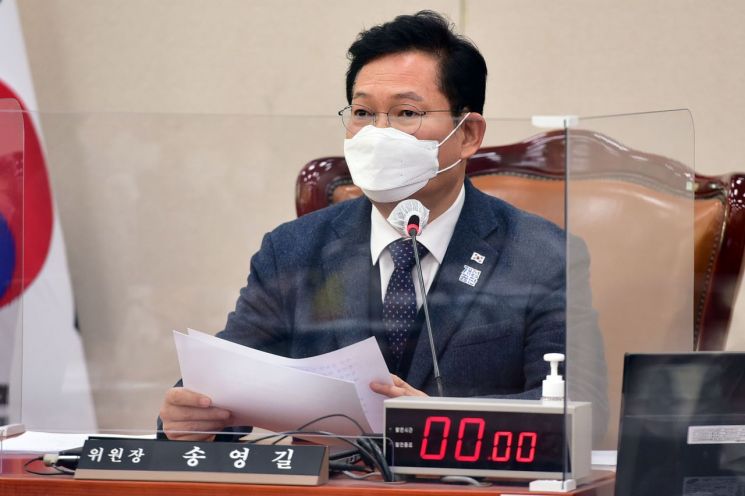
[Asia Economy Reporter Koo Chae-eun] Song Young-gil, chairman of the Foreign Affairs and Unification Committee of the Democratic Party of Korea, directly criticized Japan's discharge of contaminated water from the Fukushima nuclear power plant on the 13th, calling it "extreme national selfishness and a crime unforgivable to all humanity." Chairman Song met with Koichi Aiboshi, the Japanese Ambassador to Korea, to express opposition and stated that he would prepare countermeasures.
On the same day, the Japanese government decided on the "Basic Policy on the Disposal of Treated Water (Contaminated Water)" at a cabinet meeting held in the morning, which includes plans to discharge contaminated water stored in tanks at the Fukushima Daiichi Nuclear Power Plant into the ocean. Since procedures such as the construction of discharge facilities and approval from the Nuclear Regulation Authority of Japan remain, the actual discharge is expected to occur in about two years. Once the discharge begins, it will continue for 20 to 30 years until 2041?2051, the timeframe Japan has set for completing the decommissioning work.
Chairman Song criticized on Facebook, saying, "The Pacific Ocean, where the Japanese government intends to discharge the contaminated water, is a water area shared by all humanity," and added, "The Japanese government must not pollute the ocean, which is used by present and future generations of humanity and the Earth, citing 'cost burden' as a reason."
He mentioned, "The Japanese government plans to dilute the concentration of tritium, a radioactive substance, to meet the World Health Organization (WHO) drinking water standards before discharge, but the total amount of radioactive material actually discharged does not change, and marine pollution cannot be avoided."
Chairman Song emphasized, "Even among the 59 municipal assemblies in Fukushima Prefecture, 19 have adopted resolutions opposing the marine discharge of contaminated water, showing that Japan cannot even persuade its own citizens with such a weak argument," and added, "Japan's behavior, which violates international standards, threatens the safety of its people and the marine environment, and does not seek the understanding or consent of neighboring countries, is absolutely unacceptable."
Chairman Song stated, "As chairman of the National Assembly's Foreign Affairs and Unification Committee, I will promptly meet with Koichi Aiboshi, the Japanese Ambassador to Korea, to clearly convey the opposition of our people and prepare joint countermeasures with neighboring countries."
© The Asia Business Daily(www.asiae.co.kr). All rights reserved.

![Clutching a Stolen Dior Bag, Saying "I Hate Being Poor but Real"... The Grotesque Con of a "Human Knockoff" [Slate]](https://cwcontent.asiae.co.kr/asiaresize/183/2026021902243444107_1771435474.jpg)















