Increase in Pet Households Leads to Surge in Abandoned Animals
Overcrowding and Overcapacity Issues in National and Private Shelters
Ownerless and Sick Animals Forced into Euthanasia
Problems Include Mass Euthanasia and Painful Deaths Without Anesthesia
Experts Urge Compliance with Euthanasia Procedures and Guidelines
 Photo of a pet dog in a household. The photo is not related to any specific expression in the article. Photo by Yonhap News
[Asia Economy Reporter Lim Juhyung] As the population of pet owners increases, the number of abandoned animals is also rapidly rising. In contrast, government-run and private animal shelters are severely insufficient, leading to overcrowding problems. Consequently, cases of mass euthanasia of animals that cannot be rehomed are increasing, sparking controversy over the disregard for life. Experts advise that laws need to be revised to ensure that procedures and guidelines related to euthanasia of abandoned animals are properly implemented within shelters.
Pets have already become part of the family. According to Statistics Korea, as of the end of last year, there were a total of 6.04 million households raising pets in Korea, accounting for 29.7% of all households nationwide. This means that 3 out of 10 Korean households live with pets.
However, as the number of pets increases, the number of abandoned animals is also surging. According to statistics from the Ministry of Agriculture, Food and Rural Affairs, the number of abandoned animals, which was 96,268 annually in 2011, exceeded 130,000 by 2019. Since the statistics only include animals that have been rescued or protected, the actual number of abandoned animals is presumed to be even higher.
Given this situation, animal shelters operated by the government or private sectors are suffering from overcrowding and congestion issues. The number of new shelters is far too low compared to the increasing number of abandoned animals each year, forcing shelters to increase the number of animals housed in a single barn.
 Abandoned dog at an animal shelter. The photo is not related to any specific expression in the article. / Photo by Yonhap News
Overcrowding in shelters directly affects the health of abandoned animals. Due to the nature of abandonment, many abandoned animals are already sick or elderly, and if sufficient space is not secured within the shelter, problems such as deteriorating hygiene and accumulated stress can worsen their health.
Animal shelters are responsible for restoring the health of abandoned animals and caring for them until they are rehomed. If an abandoned animal cannot find a new owner within a certain period or its health deteriorates beyond recovery, the shelter decides whether to euthanize the animal.
In fact, as of 2019, only 26.4% of animals in shelters were adopted into other homes. The proportion of abandoned animals that died naturally (24.8%) or were euthanized (21.8%) in shelters reached 46.6%.
Some shelters have sparked controversy by euthanizing animals in large numbers.
For example, in 2019, Park Soyun, head of the animal rights organization 'Care,' was prosecuted for ordering euthanasia of 201 animals due to lack of space to accommodate rescued animals.
There have also been reports of shelters performing so-called 'painful deaths,' where animals are euthanized without anesthesia, causing suffering. According to the 'National City and County Animal Protection Center Survey and Improvement Report' released by the animal rights group 'Beagle Rescue Network' in January, a significant number of domestic animal shelters fail to comply with euthanasia regulations.
The current Animal Protection Act stipulates that when euthanizing abandoned animals, anesthesia must be administered first, followed by inducing death painlessly through cardiac arrest or respiratory paralysis.
However, according to the Network's report, very few shelters that perform euthanasia provide records of anesthetic drug use or have euthanasia isolation rooms in accordance with animal protection center operation guidelines.
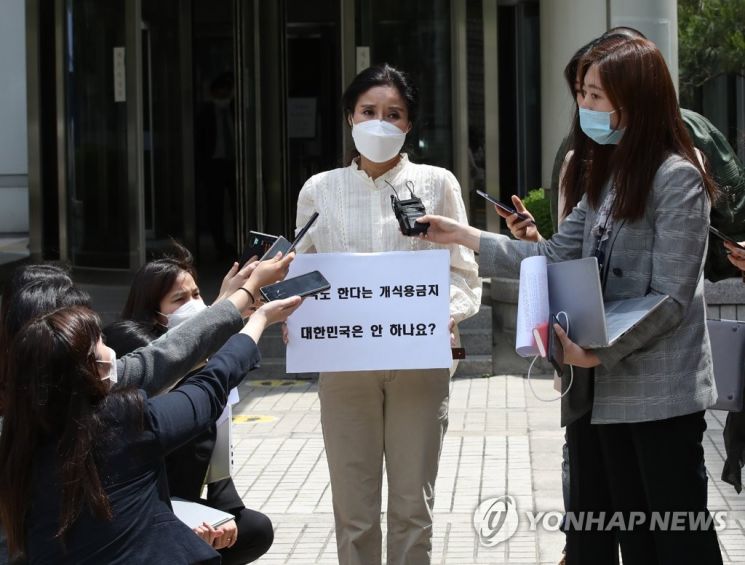 Former representative Park So-yeon of the animal rights organization "CARE," who was indicted on charges including euthanizing rescued animals, is seen answering questions from reporters as she leaves the courtroom after attending a trial held on the morning of May 20 last year at the Seoul Central District Court in Seocho-gu, Seoul. / Photo by Yonhap News
Given these circumstances, citizens have expressed concerns that abandoned animals might be euthanized indiscriminately and painfully.
A 28-year-old office worker A, who learned about euthanasia of abandoned animals through news articles, said, "It is heartbreaking that animals are abandoned by their owners, but it is even more tragic that most of them cannot be re-adopted and face death." He added, "If abandoned animals continue to be discarded and euthanized like this, I worry that respect for life itself will be diminished."
B, 33, who owns a dog, said, "This problem arises because pet owners irresponsibly adopt animals or abandon them without responsibility," expressing frustration by saying, "Irresponsible people should not be raising animals in the first place."
Experts suggest that if euthanasia of animals in shelters is unavoidable, guidelines must be strictly followed.
Lee Wonbok, head of the Korea Animal Protection Association, said, "More than 130,000 abandoned animals occur annually, and about 20% of them end their lives through euthanasia. While euthanasia procedures are relatively well followed in shelters operated by cities or provinces, there are shelters that do not comply properly, which is problematic."
He added, "First, laws need to be revised so that violations of related guidelines, such as performing euthanasia without anesthesia, can be punished. Also, efforts are needed for cities and animal hospitals to cooperate and make the prices of anesthetic drugs more realistic," he advised.
© The Asia Business Daily(www.asiae.co.kr). All rights reserved.



















