Despite 70% Opposition from Citizens, Proceeding
US "Meets International Safety Standards" VS Korea "Absolutely Unacceptable"
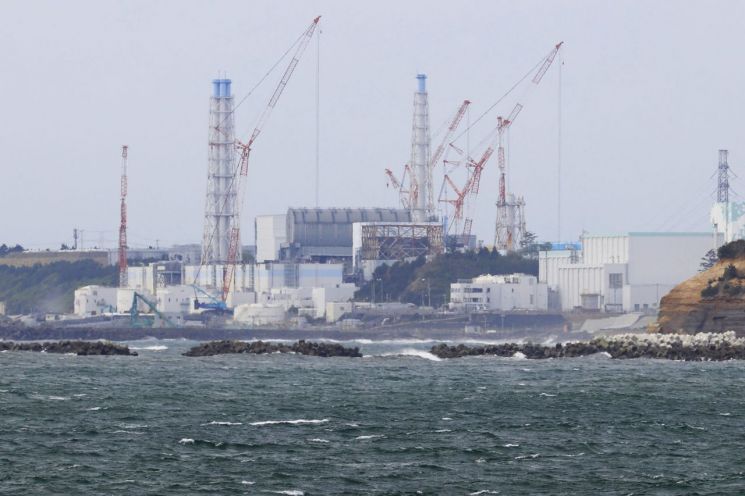
[Asia Economy Reporter Kwon Jae-hee] The Japanese government has decided to discharge contaminated water containing a large amount of radioactive materials from the Fukushima Daiichi Nuclear Power Plant accident into the ocean. This decision by the Japanese government has sparked controversy as it was pushed forward despite overwhelming opposition from its own citizens and concerns from the international community. Our government expressed strong regret over Japan's decision to release the Fukushima contaminated water and condemned it as an "absolutely unacceptable measure."
According to NHK on the 13th, the Japanese government held a meeting of relevant ministers that morning and announced the decision on the "Basic Policy on the Disposal of Treated Water," which includes discharging the contaminated water into the ocean.
According to Tokyo Electric Power Company (TEPCO), as of the 18th of last month, the contaminated water stored in tanks at the Fukushima Daiichi Nuclear Power Plant amounts to approximately 1,250,844 tons. Considering the time required for review and approval by the Nuclear Regulation Authority of Japan, as well as facility construction, the actual discharge is expected to begin two years later and continue over about 30 years until the planned completion of the decommissioning work between 2041 and 2051.
The Japanese government plans to dilute the concentration of tritium, a radioactive material, to below the legal standard before releasing the water, taking into account concerns from its citizens and neighboring countries. Additionally, monitoring of tritium levels before and after the discharge will be strengthened, and TEPCO plans to compensate for any "rumor damage" that may occur despite these measures.
The Japanese government emphasized that "the policy on contaminated water treatment cannot be delayed any longer in order not to delay the decommissioning work at Fukushima Daiichi Nuclear Power Plant." This decision is known to strongly reflect the intentions of Prime Minister Yoshihide Suga. Considering the schedule of the Tokyo Olympics in summer and the House of Representatives election in autumn, it appears that now was judged to be the appropriate time to decide on the contaminated water treatment.
The U.S. government also supported Japan's decision. Ned Price, spokesperson for the U.S. Department of State, said in a statement that day, "We understand that the Japanese government has thoroughly reviewed various options regarding the management of treated water," and "Japan's decision is a transparent one adopted according to internationally recognized nuclear safety standards." Notably, the U.S. Department of State used the term "treated water," which is the term used by the Japanese government for the contaminated water from the Fukushima nuclear accident, in its statement.
Our government strongly opposed the decision. Koo Yun-cheol, Director of the Office for Government Policy Coordination, chaired a meeting of vice ministers from related ministries that day and stated, "This unilateral measure was taken without sufficient consultation and understanding with our country, Japan's closest neighbor, and poses risks to the safety of surrounding countries and the marine environment."
The reason for our government's strong opposition is the safety of the contaminated water. Among experts, there are concerns that even if the contaminated water is reprocessed, it is difficult to remove the radioactive material tritium, and other radioactive substances besides tritium remain. TEPCO has already purified the water once using the Advanced Liquid Processing System (ALPS), but it has been found that 70% of the contaminated water in the tanks contains radioactive materials such as cesium and iodine, which are lethal to the human body, above the standard levels. In particular, tritium has been confirmed to be difficult to remove with this system. This tritium is known to convert into organically bound tritium when it penetrates the human body through seafood, causing internal exposure.
Opposition among Japanese citizens is also strong. In the "public comment" solicitation conducted by the Japanese government targeting its citizens, about 70% opposed the discharge of contaminated water into the ocean. Especially, Japanese citizens engaged in fisheries argue that damage caused by rumors is inevitable regardless of the actual concentration of the contaminated water.
Tatetani Kanji, head of the Soufutaba Fisheries Cooperative, said, "The government simply says it is okay to release it into the sea, but among the entire nation and overseas countries that do not accept the safety, damage caused by rumors will definitely occur," and added, "The government says it will take measures against this, but no concrete details have been presented, so it is hard to believe."
© The Asia Business Daily(www.asiae.co.kr). All rights reserved.

















