Professor Kim Kyung-kyu's team at Sungkyunkwan University develops nanorobots that selectively target antibiotic-resistant Staphylococcus aureus and release 'reactive oxygen species bombs'
Revolutionary approach different from protein-targeting antibiotics...Electric signals cause cell membrane destruction, preventing resistance development
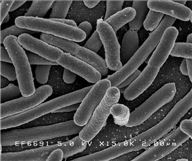 ▲Superbacteria
[Asia Economy Reporter Kim Bong-su] A nanorobot that selectively targets super bacteria resistant to powerful antibiotics and eliminates them by detonating a reactive oxygen species bomb has been developed. This development is attracting attention as a potential breakthrough in combating super bacteria, which are considered one of the top ten threats to human survival.
▲ 'Super Bacteria' Threat Intensified by the COVID-19 Pandemic
The emergence of super bacteria (antibiotic-resistant bacteria) that do not die from antibiotics is one of the most serious public health problems facing humanity today. When antibiotic resistance occurs, diseases caused by various bacteria as well as simple infections acquired during hospital surgeries can become life-threatening. According to the UK Parliament report (O'Neill Report), by 2050, the annual death toll from resistant bacteria is expected to reach 10 million. The 2018 Swedish GCF report listed antibiotic-resistant bacteria as one of the ten risks threatening human survival.
In particular, there are reports (World Health Organization, WHO) that antibiotic resistance may rapidly increase during the treatment of COVID-19, making urgent countermeasures necessary. This is because when antibiotic treatment is combined to treat lung infections during COVID-19 therapy, an environment conducive to the emergence of new resistant bacteria is created. Antibiotic resistance is a natural phenomenon where, under pressure from antibiotics, a very small number of bacteria with mutations or other genetic traits that confer resistance survive and multiply over generations, eventually developing into antibiotic-resistant strains. Antibiotics that kill bacteria inevitably induce resistance. Although various new treatment methods to overcome antibiotic resistance are being researched, none have yet been commercialized.
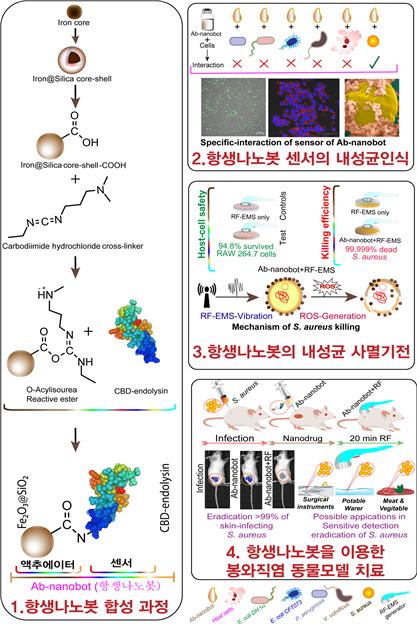
▲ Dropping Reactive Oxygen Species Bombs with Nanorobots
The antibiotic-resistant bacteria treatment method developed by Korean researchers this time is fundamentally different from the conventional approach of developing new antibiotics. According to the National Research Foundation of Korea (NRF), Professor Kim Kyung-kyu’s research team from the Department of Medicine at Sungkyunkwan University, together with Lee Jeong-heon from the Department of Materials Science and Engineering at Sungkyunkwan University and Yoo Sang-ryeol from the Department of Food Engineering at Seoul National University, announced on the 13th that they developed a 20nm-sized nanorobot that selectively binds only to Staphylococcus aureus and, when an external electrical signal is applied, generates a large amount of reactive oxygen species to destroy the bacterial cell membrane and eliminate the bacteria.
The research team created a nanorobot that does not attach to animal cells but only to bacteria and produces reactive oxygen species at the desired time. They identified the docking protein (endolysin) necessary for bacteriophages to parasitize bacteria and coated iron oxide nanoparticles with it. Then, after injecting this nanorobot into a mouse model of cellulitis infected with resistant Staphylococcus aureus, they applied an electrical signal via radio waves. They confirmed that the cell membranes of the resistant infected bacteria hit by the reactive oxygen species bomb were destroyed, leading to rapid death of the bacteria and disappearance of inflammation.
This method of eradicating resistant bacteria using nanorobots is radically different from conventional new antibiotic development. Existing antibiotics target proteins specific to each bacterium, so bacteria with mutations in those proteins survive, inevitably leading to resistant strains. In contrast, cell membrane damage caused by reactive oxygen species cannot be overcome by simple genetic mutations, making the emergence of resistant bacteria highly unlikely. Moreover, the electrical stimulation used is of low energy, similar to that used in skin care, and is harmless to the human body. However, for nanorobots to be commercialized, safety must be demonstrated through optimization of biocompatible materials and driving methods.

Professor Kim Kyung-kyu said, "We have proposed a new strategy to eliminate resistant bacteria, marking an important turning point in overcoming antibiotic resistance," adding, "If it can be applied clinically, it is expected to treat bacterial infections without the development of resistance, not only treating resistant bacterial infections." The research results were published in the June 10 online edition of the international nanomedicine journal 'Small.'
© The Asia Business Daily(www.asiae.co.kr). All rights reserved.
!["The Woman Who Threw Herself into the Water Clutching a Stolen Dior Bag"...A Grotesque Success Story That Shakes the Korean Psyche [Slate]](https://cwcontent.asiae.co.kr/asiaresize/183/2026021902243444107_1771435474.jpg)

















