[Asia Economy Reporter Donghyun Choi] The 'MZ generation (born between the 1980s and 2000s)' was found to prefer traveling outside their residential area.
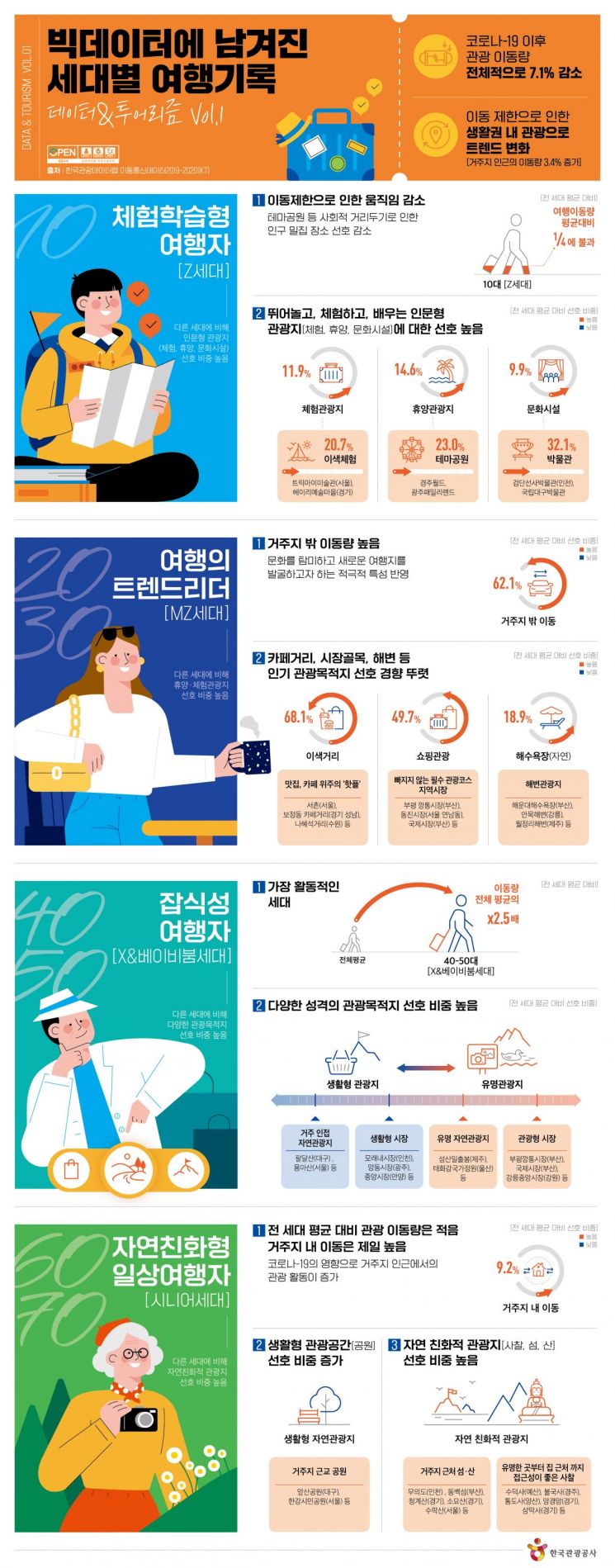
On the 13th, the Korea Tourism Organization analyzed the travel movement patterns of domestic tourists over two years from January 2019 to December last year using big data from the 'Korea Tourism Data Lab.' The results showed that the total volume of tourist movements last year decreased by 7.1% compared to the previous year. In contrast, movements to tourist destinations within the residential area increased by 3.4%, indicating that tourism behavior during the COVID-19 era mainly shifted to traveling without going far outside one's residence.
However, there were clear differences by generation. Last year, the MZ generation's movements outside their living area were 62.1% higher than the average of all generations. Preferred tourist destinations included unique streets, shopping tourism spots, and beach tourism sites, which are well-known as tourist courses on social networking services (SNS). Unique streets included 'hot places' centered on popular restaurants and cafes such as Seochon (Seoul), Bojeong-dong Cafe Street (Seongnam, Gyeonggi), and Nahye-seok Street (Suwon, Gyeonggi). Shopping tourism spots included Bupyeong Kkangtong Market (Busan) and Dongjin Market (Seoul). Beach tourism sites included Haeundae (Busan), Anmok Beach (Gangneung, Gangwon), and Woljeongri Beach (Jeju), which ranked high among popular destinations.
The senior generation aged 60 to 70 preferred lifestyle-oriented nature tourism enjoyed near their homes. Their movements outside their living area last year were lower than the average of all generations, but movements within their living area were higher than average. They also showed a stronger preference for nature-friendly tourist destinations such as temples, islands, and mountains compared to other generations. Popular places included Apsan Park (Daegu), Hangang Citizen's Park (Seoul), Muui Island (Incheon), Dongbaek Island (Busan), Cheonggyesan (Gyeonggi), and Soyosan (Gyeonggi). In particular, temples near the metropolitan area such as Manggyeongam (Seongnam, Gyeonggi), Sammaksa (Anyang, Gyeonggi), and Neungin Seonwon (Seoul) were highly favored.
The Z generation, who are teenagers, had travel movement volumes last year at about 26% of the average of all generations, making them the least mobile among the generations. Compared to other generations, they showed a distinct preference for experiential tourism sites, cultural facilities, and nature tourism sites?humanities tourism destinations conducive to learning. This appears to reflect the characteristics of the Z generation, most of whom are students. Among cultural facilities, 'museums' were preferred 32.1% more than the average of all generations.
The X generation in their 40s and 50s and the baby boom generation showed a balanced preference for various types of tourist destinations. There was little difference in movements inside and outside their living areas. Among the top 10 preferred tourist destinations, seven were recreational and nature tourism sites, indicating a strong preference for spaces to enjoy nature and rest. Frequently visited places included famous tourist spots such as Seongsan Ilchulbong (Jeju) and Taehwagang National Garden (Ulsan), as well as living area sites like Yongmasan (Seoul) and Paldalsan (Suwon, Gyeonggi). Among shopping tourism spots, tourist markets such as Jungang Market (Gangneung, Gangwon) and Bupyeong Kkangtong Market (Busan) were popular, along with living area markets like Moraenae Market (Incheon) and Yangdong Market (Gwangju).
Kim Youngmi, head of the Tourism Big Data Office at the Korea Tourism Organization, said, "This generational travel behavior analysis aimed to provide timely and objective data for establishing tourism policies and marketing strategies by utilizing telecommunications data." She added, "In the future, we will conduct in-depth and multifaceted analyses of tourism big data within the Korea Tourism Data Lab and various external data to regularly address diverse issues within the tourism industry."
© The Asia Business Daily(www.asiae.co.kr). All rights reserved.
!["The Woman Who Threw Herself into the Water Clutching a Stolen Dior Bag"...A Grotesque Success Story That Shakes the Korean Psyche [Slate]](https://cwcontent.asiae.co.kr/asiaresize/183/2026021902243444107_1771435474.jpg)
















