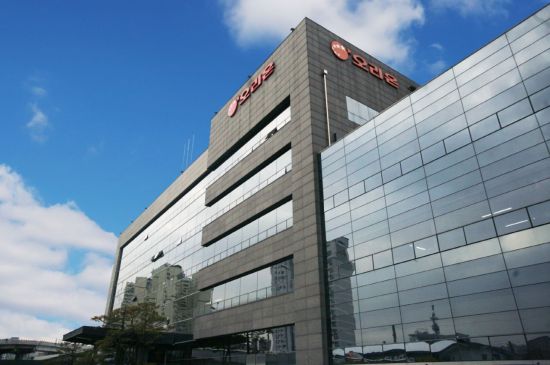
[Asia Economy Reporter Seungjin Lee] Orion announced on the 13th that its Cheongju and Iksan factories have been selected as target sites for the ‘2021 Food and Beverage Industry Emissions Trading Scheme Greenhouse Gas Reduction Support Project’ promoted by the Ministry of Agriculture, Food and Rural Affairs and the Korea Agricultural Technology Commercialization Foundation.
The Greenhouse Gas Reduction Support Project aims to contribute to achieving the national greenhouse gas reduction targets by introducing greenhouse gas reduction equipment and systems to companies subject to allocation in the food and beverage industry.
The Cheongju factory has established equipment that produces hot water by utilizing high-temperature exhaust waste heat generated from fryers (potato fryers), and the Iksan factory plans to reduce energy consumption by replacing the existing air compressors with inverter-controlled air compressors.
Orion expects to reduce the carbon emissions of the two factories by about 900 tons (t) annually through this. Considering that 360 young pine trees need to be planted to absorb 1 ton of carbon dioxide, this is equivalent to the effect of planting 320,000 young pine trees.
Last month, Orion established a ‘Global Carbon Emission Integrated Management System’ and is strengthening eco-friendly management activities at the group level. To this end, it newly formed a ‘Green TFT (Task Force Team)’ consisting of practical personnel from six departments including production, equipment, and management. The Green TFT plans to collaborate not only with seven domestic factories but also with 11 overseas factories in China, Vietnam, Russia, and India to set group-level carbon emission targets, integrate and manage data, establish energy-saving measures, and implement global carbon emission management.
Orion has consistently practiced eco-friendly management by continuously improving and investing in production facilities at each corporation. In Korea, last year, the quality improvement team at the Cheongju factory improved the ‘Kkobuk Chip Energy-saving Steam Supply Device’ and the ‘Fryer (potato fryer) Oil Cooling Heat Exchanger,’ achieving a 5% reduction in greenhouse gas emissions compared to before and winning the highest award, the President’s Gold Prize, at the ‘46th National Quality Improvement Team Competition.’ At the Iksan factory, replacing low-efficiency refrigeration units with high-efficiency ones reduced carbon emissions by 218 tons annually.
The Chinese corporation installed equipment at the Langfang factory to recover and recycle waste heat emitted from the swing chip fryer and the factory boiler, expecting to reduce carbon emissions by about 1,000 tons annually. The Shanghai factory also expects to reduce waste by 795 tons annually by additionally introducing wastewater sediment drying equipment. Considering the local characteristic of insufficient electric power, the Vietnam My Phuoc factory installed solar panels on the factory roof to convert solar energy into electricity and use it for product manufacturing.
An Orion official said, “The creative ideas and efforts of the production sites to reduce carbon emissions were highly evaluated, leading to the selection as a target site for the ‘Greenhouse Gas Reduction Support Project.’ We will continue to practice global eco-friendly management by expanding facility improvements and investments to reduce carbon emissions not only domestically but also at overseas factories.”
© The Asia Business Daily(www.asiae.co.kr). All rights reserved.

















