Governor Soeder of CSU Enters Chancellor Candidate Race Against CDU
Bloomberg "Indicates Start of Power Struggle Within Conservative Union"
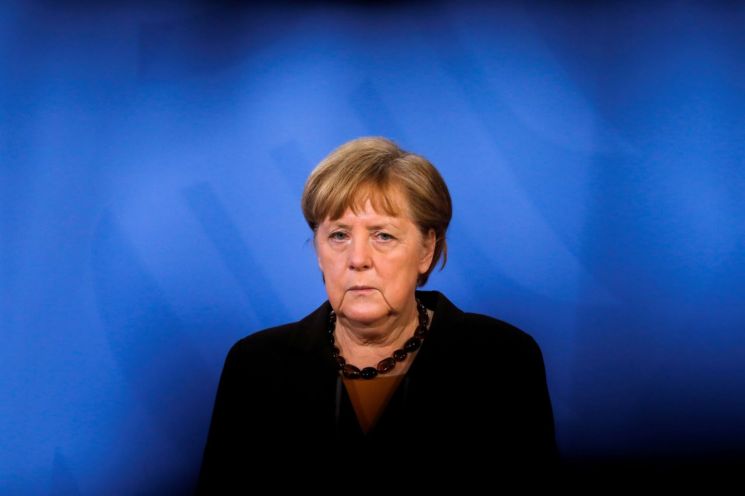
[Asia Economy Reporter Kim Suhwan] In the competition to select the successor to German Chancellor Angela Merkel, both parties participating in the ruling conservative alliance have put forward their own candidates.
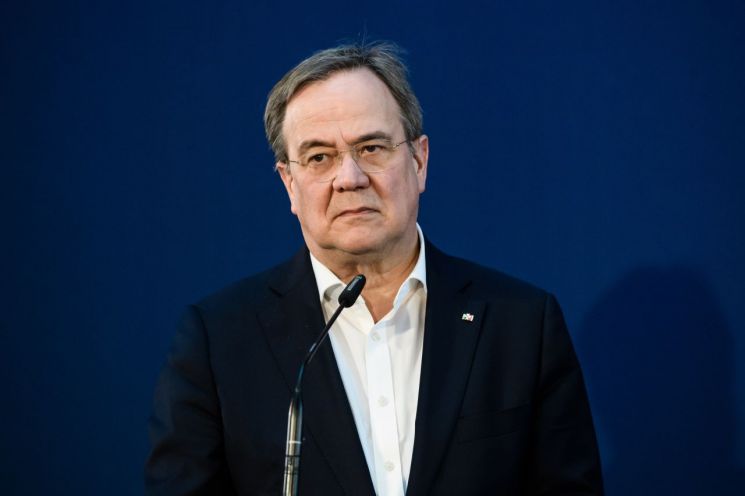
According to Deutsche Welle on the 11th (local time), at a meeting held to agree on the conservative alliance's chancellor candidate nomination, Markus S?der, Minister-President of Bavaria from the Christian Social Union (CSU), announced that he would compete against Armin Laschet, leader of the Christian Democratic Union (CDU). The CDU and CSU are the parties that currently make up the conservative alliance governing Germany.
Immediately after the meeting, S?der, who declared his participation in the candidate competition, said, "Both I and candidate Laschet are qualified individuals to be chancellor," adding, "Regardless of the conclusion, we will all cooperate to maintain the government." Laschet also stated, "Our goal is to further strengthen the cooperative relationship between the CDU and CSU," and "There is much to be done for our Germany."
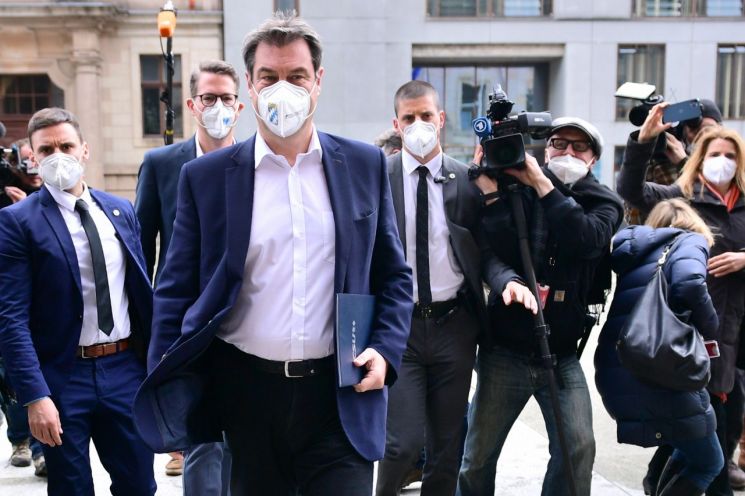 Markus S?der, leader of the Christian Social Union (CSU) (third from the left) [Image source=EPA Yonhap News]
Traditionally, these two parties have nominated only one chancellor candidate through agreement. The candidate has usually come from the relatively larger CDU, and Chancellor Merkel herself is also from the CDU.
However, with the CSU announcing its participation in the candidate competition this time, analysts interpret this as a visible power struggle between the two parties. Bloomberg News reported, "With Minister-President S?der of the CSU entering the chancellor candidate race, it signals the start of a power struggle within the conservative alliance that has ensured Germany's political stability since World War II," adding, "S?der has passed the ball of deciding the chancellor candidate to the CDU."
This competition between the conservative alliance parties for the chancellor candidacy comes amid declining support for the alliance due to public backlash against lockdown measures following the recent resurgence of COVID-19. Additionally, there are observations that the conservative alliance's chances of re-election have been jeopardized by a mask scandal involving ruling party figures earlier this year. In that scandal, it was revealed that conservative alliance-affiliated lawmakers received large commissions while mediating the supply of COVID-19 protective masks to the government.
Consequently, support for the conservative alliance has been steadily declining. Currently, the alliance's approval rating fluctuates around 27%, which is lower than the 33% vote share it received in the previous 2017 general election. In contrast, the Green Party has seen a significant rise in support, from 9% in the last election to 23%, leading to speculation that they could win the upcoming general election in September.
At present, S?der is leading Laschet in the polls. According to German polling firm Forsa, as of the 9th, S?der recorded a 37% approval rating in competition against candidates from the opposition Social Democratic Party and the Green Party, ranking first. Meanwhile, Laschet recorded the lowest support among the three parties at 13%, placing third.
© The Asia Business Daily(www.asiae.co.kr). All rights reserved.



















