Head of Chinese Disease Control Publicly Announces
"Mixed Use Announcement" Confuses Purchasing Countries
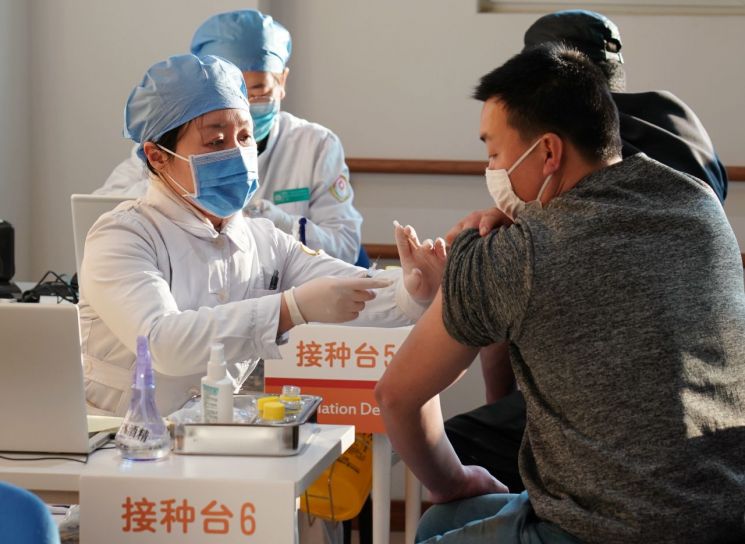
[Asia Economy Reporter Cho Hyun-ui] China's head of disease control publicly stated that the preventive effectiveness of domestically produced COVID-19 vaccines is not low, causing setbacks in China's vaccine diplomacy. China, which aimed to expand its presence on the global stage through vaccines, is now reluctantly considering the use of Western vaccines.
According to the Washington Post and others on the 12th (local time), Gao Fu, director of the Chinese Center for Disease Control and Prevention, said at a conference held in Chengdu on the 10th, "We need to address the issue that the protection rate of the currently used COVID-19 vaccines is not high," adding, "We are considering mixing other vaccines to resolve this."
The COVID-19 vaccines approved in China include four types such as Sinopharm and Sinovac, all domestically produced. The "other vaccines" mentioned by Director Gao are interpreted as vaccines developed in Western countries such as Pfizer, Moderna, and AstraZeneca.
This is the first time that Chinese health authorities have publicly acknowledged the low effectiveness of domestically produced vaccines. As China has been conducting vaccine diplomacy focusing on developing and underdeveloped countries, skepticism about the usefulness of Chinese vaccines, which are used in more than 20 countries worldwide, is expected to intensify.
Chinese vaccines have raised concerns due to inconsistent clinical trial results across countries. For example, the Sinovac vaccine showed an immune effectiveness of 91% in Turkey, but dropped to 68% in Indonesia and 50% in Brazil. Sinopharm showed an immune effectiveness of 86% in the United Arab Emirates (UAE), but its own clinical trials reported a lower rate of 79%.
Countries purchasing Chinese vaccines are experiencing confusion. The UAE, which was the first in the world to approve the use of Chinese vaccines, decided to administer a third dose to some individuals after the second dose of Sinopharm at the end of last month, citing cases where sufficient antibodies were not produced. The Wall Street Journal (WSJ) reported, citing local doctors, that "there are cases where almost no antibodies were produced or generated after the second dose of the Sinopharm vaccine."
In Turkey, which ranks fifth in the world for vaccination rates, voices questioning the effectiveness of Chinese vaccines are growing as new confirmed cases recently reached a record high. Turkey began administering the Pfizer vaccine earlier this month but adopted a strategy of receiving large supplies of Chinese vaccines, which are relatively easy to procure, since January. In Chile, where about 90% of vaccinated individuals received the Sinovac vaccine, the number of confirmed cases has more than doubled compared to before vaccination.
China's plan to introduce a Chinese-style "vaccine passport," which focuses on quarantine cooperation with countries such as South Korea, is also expected to face setbacks. The Chinese vaccine passport is essentially interpreted as allowing entry for those vaccinated with Chinese vaccines, which implies recognition of the safety and efficacy of Chinese vaccines.
© The Asia Business Daily(www.asiae.co.kr). All rights reserved.

















