[Asia Economy New York=Correspondent Baek Jong-min] Stakeholders in the United States have unanimously welcomed the battery dispute settlement between LG Energy Solution and SK Innovation. This also serves as evidence of how urgent the settlement was in the U.S. Local media report that the Biden administration and politicians were deeply involved and exerted pressure on this agreement.
Brian Kemp, Governor of Georgia, issued a statement on the 11th (local time), calling it "fantastic news for the electric vehicle industry growing in northeastern Georgia and throughout the state." Governor Kemp added, "I would like to extend special thanks to the Korean government and the U.S. Trade Representative (USTR) for supporting the resolution between the two companies."
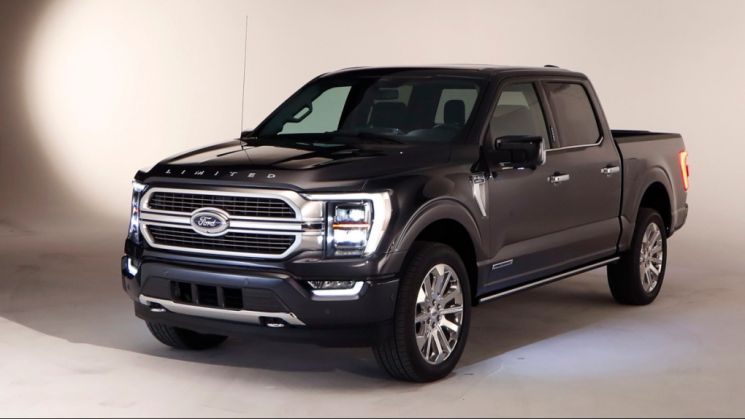
The parties most pleased with this agreement were Ford and Volkswagen, who had immediate concerns about battery supply. Ford stated in a press release that "this agreement allows us to focus on delivering world-class electric vehicles to our customers, supports American workers and the economy, and helps us participate in climate change goals." Ford, which has been strengthening its electric vehicle lineup recently, planned to produce the highly popular F-150 pickup truck in the U.S. using SK batteries.
Scott Keogh, President of Volkswagen America, said, "With the resolution of intellectual property issues between LG and SK, we will fully commit to producing the electric vehicle ID.4 SUV in the United States."
Catherine Tai, USTR Representative, said in a statement, "We congratulate LG and SK for resolving their differences and for demonstrating trust and responsibility as suppliers to the U.S. automotive industry." This is interpreted as a signal that the U.S. will actively intervene if foreign companies trading with U.S. firms threaten the American supply chain. The Washington Post reported that Tai, who was confirmed by Congress and took office two weeks ago, actively engaged in this agreement through discussions with Korean government officials.
Local Georgia media, the Atlanta Journal-Constitution, reported that Georgia’s political and governmental figures were fully mobilized and worked urgently until the last moment to resolve the battery dispute. According to the outlet, Georgia Senator Jon Ossoff flew to Washington on the 2nd, about two weeks before President Biden’s veto deadline (the 11th), met with SK executives for about three hours, and urged a settlement of the dispute.
Earlier, President Biden issued a statement welcoming the agreement as "a victory for American workers and the automotive industry." The Washington Post described the agreement as a "win for President Biden," as it produced a result aligned with U.S. interests without the political risk of a veto. Given Biden’s announcement of a massive $2.25 trillion infrastructure investment including significant funding for electric vehicles, exercising a veto would have put 2,600 jobs at risk solely at SK’s factory.
Political media outlet Politico also reported that if President Biden had exercised a veto, he might have faced pressure from progressive lawmakers to waive vaccine patent rights. Many Democratic House members are currently advocating for a waiver of U.S. patent rights on vaccines to expedite the end of COVID-19.
President Biden could not avoid criticism regarding potential harm to the U.S. automotive industry and falling behind Chinese electric vehicles in competition. A key industry insider suggested, "It seems neither LG nor SK is fully satisfied with the agreement," indicating that the pressure from the U.S. to reach a settlement was higher than expected.
© The Asia Business Daily(www.asiae.co.kr). All rights reserved.

















