Xinjiang Autonomous Region Criticized Internationally for Uyghur Forced Labor Issue
4 of 5 Major Production Factories Located in Xinjiang... Market Monopoly Driven by Low Costs
High Dependence on Chinese Companies Despite US Association's Supply Chain Diversification Recommendations
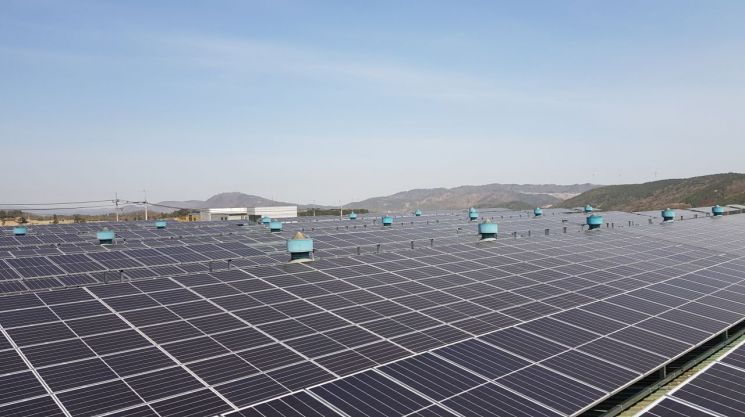
[Asia Economy Reporter Kim Suhwan] It has been revealed that nearly half of the global production of polysilicon, the raw material for solar panels, comes from the Xinjiang Uygur Autonomous Region in China, which is under international criticism for forced labor. If forced labor is confirmed, it is expected that the repercussions could spread throughout the global solar energy industry.
On the 11th (local time), The Wall Street Journal (WSJ) reported, "Most of the polysilicon production, a key raw material in the solar energy industry, comes from the Xinjiang Autonomous Region in China," adding, "Concerns about forced labor in the supply chain are increasing within the industry."
Four out of five major production plants located in Xinjiang Autonomous Region, China
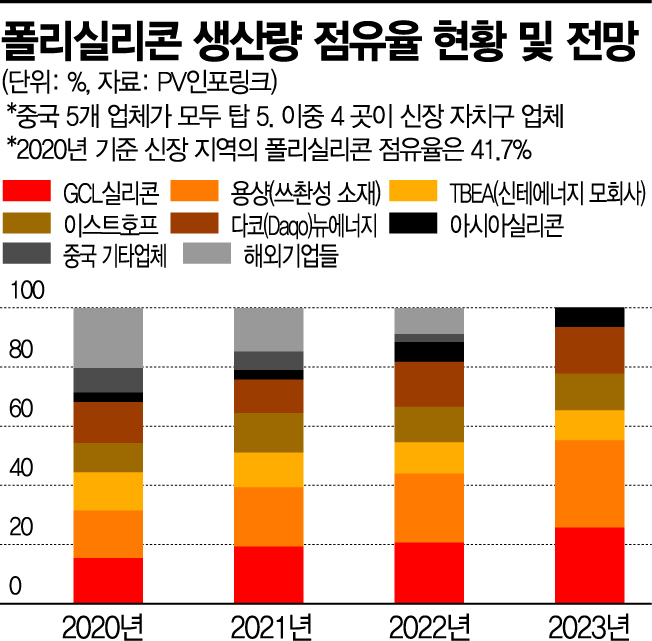
According to Bernreuter, a polysilicon market research firm, the polysilicon production share of the Xinjiang Autonomous Region reaches 45%. Bloomberg News reported, "The reason Xinjiang has emerged as a center for polysilicon production is due to its low electricity costs," explaining, "This is possible because most of Xinjiang's electricity is generated from coal power."
Currently, it is known that four out of the world's five major polysilicon production plants are located in the Xinjiang Autonomous Region. According to BloombergNEF, four plants?SynTech Energy, Daqo New Energy, GCL-Poly Energy Holdings, and East Hope Group?are responsible for polysilicon production in Xinjiang. The U.S. consulting firm Horizon Advisory stated, "All these companies are linked to the issue of forced labor involving the Uygur ethnic group."
Furthermore, the industry analyzes that there is a high possibility of forced labor involvement, as these companies are also known to have cooperative relationships with the Xinjiang Production and Construction Corps (XPCC), a Chinese Communist Party-affiliated paramilitary organization sanctioned by the U.S. last year over forced labor issues.
Due to the Chinese authorities' restricted access to the Xinjiang Autonomous Region, it is difficult to verify whether forced labor involving the Uygur people is actually involved. Zaid Ashai, CEO of the U.S. solar energy company Nexamp, said, "We cannot take the various allegations related to Xinjiang lightly," but also lamented, "It is practically impossible for us to independently send inspectors to Xinjiang to audit the supply chain."
U.S. Solar Energy Association Recommends "Diversify Supply Chains"
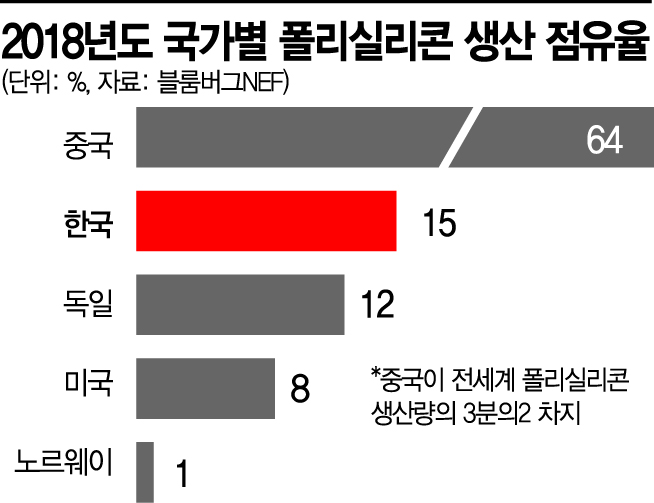
In response, the solar energy industry is making efforts to diversify polysilicon import sources. The U.S. Solar Energy Industries Association strongly recommended its members to relocate their solar energy supply chains from the Xinjiang region to other areas as early as June. It also suggested that each member company prepare measures to track their own supply chains in anticipation of U.S. sanctions.
However, such attempts to diversify supply chains are expected to be challenging. Changing polysilicon import sources to other regions would require bearing higher import costs. Dennis If, an analyst at Daiwa Capital, said, "We cannot simply ignore polysilicon produced in Xinjiang," and analyzed, "Measures to sanction polysilicon imports from Xinjiang will also negatively impact the solar energy industry."
Additionally, the solar energy industry's heavy reliance on Chinese companies for most of its supply chain is another factor making diversification difficult. Analyst If stated, "Chinese companies hold an 80% market share of the global solar wafer and panel assembly market."
Recently, the U.S. Congress has been discussing the "Uygur Forced Labor Prevention Act," which would, in principle, ban all imports produced in the Xinjiang Autonomous Region, suggesting that the supply chain controversy in the industry is likely to intensify.
© The Asia Business Daily(www.asiae.co.kr). All rights reserved.



















