Consider Reviewing Lawsuits for Jeonse Deposit Refunds
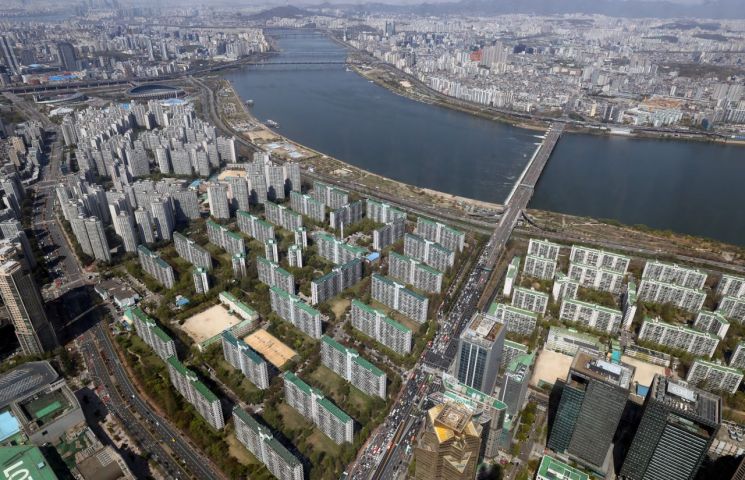 On the 9th, a view of the Hangang riverside apartments, including Jamsil Jugong Complex 5 in Songpa-gu, as seen from the Seoul Sky observation deck at Lotte World Tower in Songpa-gu, Seoul
 Conflicts between tenants and landlords over the return of Jeonse deposits are a recurring issue every moving season. Recently, with an increase in Jeonse listings in the metropolitan area and concerns about 'Kkangtong Jeonse' (a situation where the house price drops so much that even selling the house does not allow the landlord to return the Jeonse deposit to the tenant) in some suburban areas, tenants especially need to exercise caution.
According to statistics from the Jeonse Deposit Return Litigation Center, which provides specialized real estate legal consultations, the most common reason landlords do not return the Jeonse deposit is "I will give you the money once a new tenant moves in." Most Jeonse contracts in Korea operate on a structure where the landlord receives a Jeonse deposit from a new tenant and then returns the deposit to the existing tenant.
If the lease period has ended but you have not received your Jeonse deposit because the landlord says they will return it only after a new tenant moves in, experts advise preparing for a Jeonse deposit return lawsuit. A Jeonse deposit return lawsuit is a legal claim filed against the landlord to demand the return of the Jeonse deposit.
According to the '2020 Judicial Yearbook' published by the Supreme Court, a total of 5,703 Jeonse deposit return lawsuits were filed in courts nationwide in 2019 alone.
Real estate specialist lawyer Eom Jeong-sook said, "Once the period specified in the lease contract ends, the landlord is obligated to return the Jeonse deposit according to Article 548 of the Civil Act," adding, "The claim that the deposit will be returned only after a new tenant moves in is just the landlord's position, not the law." She advised, "In such cases, you should proceed with the Jeonse deposit return lawsuit."
For a Jeonse deposit return lawsuit, proving that the lease contract has been terminated is crucial, even if it takes time and costs. Not only the lease contract but also emails, text messages, and recorded phone calls exchanged during the process of requesting the return of the deposit can be used as evidence.
Lawyer Eom said, "If you draft and send a certified letter of content regarding the return of the Jeonse deposit in accordance with the law, the landlord may feel psychological pressure and return the deposit before the lawsuit." She added, "When the landlord says they will return the deposit once a new tenant moves in, sending a certified letter under a lawyer's name can increase psychological pressure and is also an effective method."
Meanwhile, among tenants who have not received their deposits back from landlords, half fail to recover all or part of their deposits even when the residence is put up for court auction.
According to the Supreme Court's 'Status of Unpaid Lease Deposits' data from last year, out of 39,965 houses that went to court auction from 2015 to September 2020, 18,832 tenants (47.1%) did not recover all or part of their deposits.
Unpaid deposits refer to cases where the distribution amount is less than the amount claimed by the tenant (tenant, Jeonse right holder, occupant, housing lease right holder, or leaseholder) as stated in the distribution claim form.
The proportion of tenants who did not recover their full deposit by year was 44.2% in 2015, 51.2% in 2016, 47.9% in 2017, 41.3% in 2018, 43.1% in 2019, and 48.6% up to September 2020. This means that even through the last resort of court auctions, about one in two tenants fail to fully recover their Jeonse deposits every year.
© The Asia Business Daily(www.asiae.co.kr). All rights reserved.

















