Corporate Tax Increased from 21% to 28%
Discussion on Global Tax Applying Uniform Rate to Overseas Corporations
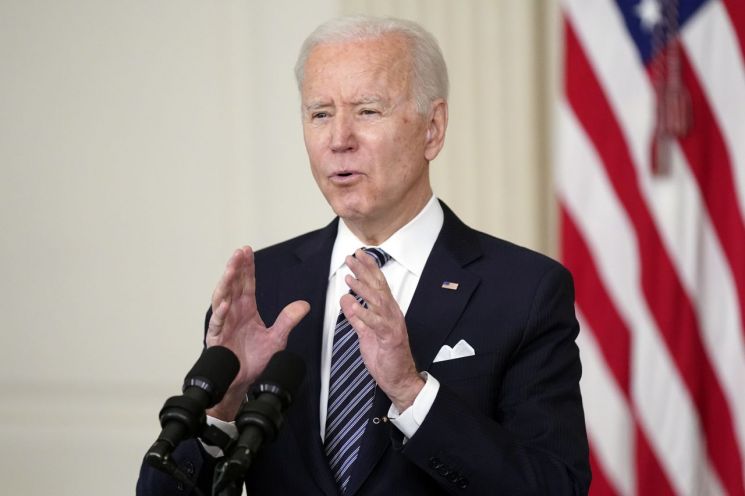
[Asia Economy Reporter Kim Suhwan] The Joe Biden administration in the United States has announced various regulatory measures to raise corporate taxes and prevent tax avoidance through the relocation of foreign corporations. This signals a complete shift from the corporate-friendly tax policies implemented during the Donald Trump administration. It is also interpreted as a move to promote the $2.25 trillion infrastructure development plan announced by President Biden.
On the 7th (local time), the U.S. Treasury Department announced a new tax policy focusing on raising corporate taxes and preventing the so-called "profit shifting" phenomenon, where domestic companies transfer sales to foreign subsidiaries to reduce taxes paid in the U.S. This is expected to be the biggest policy change since former President Trump drastically cut the corporate tax rate from 35% to 21% in 2017, implementing a corporate-friendly tax policy.
Corporate Tax Cut by Trump, Raised Again by Biden
Specifically, the U.S. Treasury Department plans to raise the current 21% corporate tax rate to 28%. The rationale behind the corporate tax increase is the interpretation that the actual corporate tax payment rate in the U.S. is lower compared to other advanced countries. According to the Organisation for Economic Co-operation and Development (OECD), the U.S. records about 1% of corporate tax revenue relative to its Gross Domestic Product (GDP), falling short of the OECD average of 3%, ranking among the lowest in OECD countries.
Additionally, the plan is to minimize corporate tax reduction benefits to raise the effective corporate tax rate to at least 15%. The U.S. Treasury stated, "We will impose a minimum corporate tax of 15% on companies earning more than $2 billion annually." The New York Times (NYT) reported that about 45 companies currently meet this criterion.
Focus on Preventing Tax Avoidance by Multinational Corporations like Google and Facebook
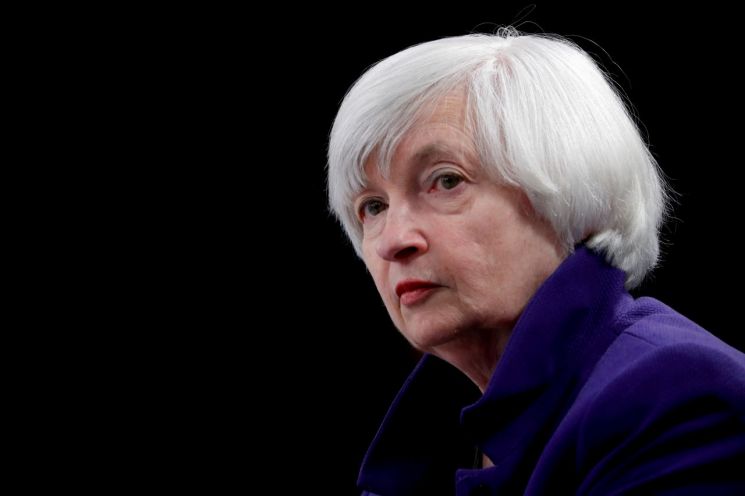
Furthermore, regulations to curb the so-called "profit shifting," a tax avoidance practice where sales are transferred to foreign subsidiaries to reduce corporate taxes in the U.S., will be strengthened.
First, the Biden administration plans to introduce a global minimum tax rate applicable uniformly to all profits earned overseas by multinational corporations in cooperation with other countries. The introduction of the global tax is interpreted as a determination to fundamentally block some multinational corporations from relocating their headquarters to countries with low corporate tax rates and shifting sales generated in other countries to those subsidiaries to reduce corporate taxes.
This contrasts with the Trump administration’s opposition to the European Union’s (EU) plan to introduce a digital tax to regulate profit shifting by U.S. multinational corporations such as Google and Facebook, signaling a comprehensive change in U.S. corporate tax policy.
Alongside this, the U.S. plans to prepare regulatory legislation to prevent profit shifting by domestic companies themselves.
There is also a plan to minimize tax reduction benefits for foreign subsidiaries to balance taxes on foreign subsidiary sales and corporate taxes on domestic sales.
According to the U.S. Treasury, the tax rate under the GILTI (Global Intangible Low-Taxed Income) law, which taxes income from foreign intangible assets, will be doubled to 21%. Additionally, the tax imposition under the GILTI law will be based on corporate sales by country, focusing on blocking tax avoidance by shifting profits to countries with low corporate taxes.
Abolition of Fossil Fuel Subsidies... Congressional Approval Expected to Be Difficult
Moreover, the U.S. Treasury announced plans to abolish subsidies for carbon-emitting industries such as fossil fuels and increase the budget of the Internal Revenue Service (IRS) to strengthen monitoring and supervision capabilities for tax payments.
The government expects that these policies will collect more than $2.5 trillion in corporate taxes over the next 15 years. Given that President Biden recently announced a $2.25 trillion infrastructure development policy, the newly announced corporate tax policy is analyzed as a concrete plan to secure funding sources for infrastructure development.
For these corporate tax policies to be implemented, related tax law amendments must pass in Congress. However, strong opposition from the Republican Party is expected, making it difficult to be optimistic about the bill’s approval. The Republicans oppose Biden’s corporate tax policy, calling it a "policy that undermines America’s competitiveness," and some Democratic lawmakers are also calling for a slowdown in the pace of corporate tax increases.
© The Asia Business Daily(www.asiae.co.kr). All rights reserved.
![Clutching a Stolen Dior Bag, Saying "I Hate Being Poor but Real"... The Grotesque Con of a "Human Knockoff" [Slate]](https://cwcontent.asiae.co.kr/asiaresize/183/2026021902243444107_1771435474.jpg)

















