Woori Bank Accepts Disciplinary Committee Decision, Disciplinary Hearing May End First
Aiming to Lower Final Sanctions Through Consumer Relief Efforts
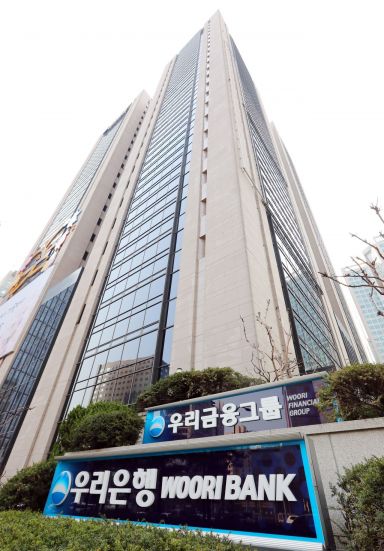
[Asia Economy Reporter Song Seung-seop] Woori Bank and Shinhan Bank will face the Financial Supervisory Service's (FSS) 3rd Disciplinary Committee on the 8th regarding the Lime Fund incident. In the case of Woori Bank, which accepted the opinion of the Dispute Mediation Committee, the disciplinary level is expected to be lowered, while Shinhan Bank, which has a mediation committee scheduled for the 19th, is expected to have its decision made at the next disciplinary hearing.
According to the financial sector on the 7th, the authorities have individually notified each financial institution of the schedule for the 3rd disciplinary hearing. The FSS pre-notified sanctions against the two banks for incomplete sales under the Capital Markets Act and violations of internal control regulations under the Financial Company Governance Act. Son Tae-seung, Chairman of Woori Financial Group and then CEO of Woori Bank at the time of the Lime Fund sales, was subjected to a suspension of duties (equivalent), and Jin Ok-dong, CEO of Shinhan Bank, received a reprimand.
This disciplinary hearing is likely to focus mainly on Woori Bank. In cases where multiple financial companies are brought to the FSS disciplinary committee at once, the usual practice has been to complete all hearings and decide the disciplinary levels simultaneously. However, the mediation committee for the Lime CI Trade Finance Fund sold by Shinhan Bank is scheduled for the 19th, and there is speculation that the decision could be made at the disciplinary hearing set for the 22nd.
The unusual expectation that sanctions will be finalized for one financial institution first is due to the slow pace of discussions. At the disciplinary hearing, the examination department explains the reasons for the sanctions, the subjects give their statements, followed by arguments from both sides and judgments by the disciplinary committee members. It is known that in the previous two hearings, most of the time was spent listening to the reasons for the sanctions and the statements from both sides.
Woori Bank is currently disputing the FSS's claim that internal controls were inadequate in the overseas interest rate-linked derivative-linked fund (DLF) incident, focusing on whether there was any improper solicitation. Improper solicitation refers to actions that hinder inexperienced general investors from properly recognizing risks or actively recommending high-risk products. Shinhan Bank argues that imposing a reprimand on the bank president for internal control deficiencies is excessive.
Although the issues differ, both banks are expected to focus on having their consumer relief efforts recognized to reduce the final disciplinary level. Since financial company CEOs face restrictions on reappointment if they receive sanctions above a reprimand, they are actively emphasizing their efforts for post-incident management and victim recovery. In Woori Bank's case, compensation payments to some customers have already been completed following the mediation committee's decision in February.
The regulations on financial institution inspections and sanctions also state that disciplinary measures against executives and employees can be mitigated considering post-incident management, efforts to reduce losses, and whether compensation for losses has been made. Accordingly, Park Jung-rim, CEO of KB Securities, and Jung Young-chae, CEO of NH Investment & Securities, who were sanctioned for Lime Fund sales, also had their disciplinary levels lowered to a 'reprimand.' The FSS has also expressed its intention to consider post-incident efforts.
Sanctions for financial institution executives are divided into five levels: dismissal recommendation, suspension of duties, reprimand, cautionary warning, and warning. Receiving a reprimand restricts employment in financial companies for 3 to 5 years.
© The Asia Business Daily(www.asiae.co.kr). All rights reserved.

















