Gold Fund Year-to-Date Return -9.1%... Lowest Among Thematic Funds
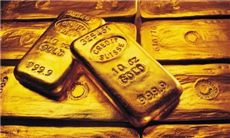
[Asia Economy Reporter Song Hwajeong] As gold prices have continuously declined this year, gold funds have also recorded poor returns. Despite the poor performance, capital inflows continue, suggesting expectations of a future rebound in gold prices.
According to financial information provider FnGuide on the 7th, the year-to-date return of 12 gold funds with assets under management exceeding 1 billion KRW was -9.01%. This is the lowest return among 46 major thematic funds classified by FnGuide.
The poor performance of gold funds is attributed to the sustained decline in gold prices this year. According to the Wall Street Journal (WSJ), gold prices fell 9.5% in the first quarter, marking the largest drop since 2016. Gold prices dropped from $1,895.10 per troy ounce at the end of last year to $1,713.80 at the end of March this year, a 17% decline from the all-time high of $2,069.40 recorded in August last year. Hwang Byungjin, a researcher at NH Investment & Securities, explained, "The precious metals sector, a representative safe-haven and inflation hedge asset, was excluded from the commodity rally in the first quarter. As nominal interest rates rose during the global economic recovery, demand for safe-haven assets retreated, and concerns over early tightening along with rising real interest rates hindered inflation hedge demand."
Despite the poor returns, capital continues to flow into gold funds. In the past month, 2.4 billion KRW has flowed in, and since the beginning of the year, 11.4 billion KRW has been invested. This capital inflow appears to be based on expectations of a future rebound in gold prices.
A rebound in gold prices is expected in the second quarter. In particular, the relatively lower gold prices are expected to stimulate jewelry demand in China, India, and other countries, strengthening the price floor. Researcher Hwang said, "The largest demand sector for global gold supply and demand is jewelry, accounting for more than 50% of total gold demand. The gold demand from China and India, which account for more than half of global jewelry demand, tends to increase during price correction periods rather than price increase periods, which will strengthen the price floor." He added, "Additionally, with expected nominal interest rate stabilization and expanded expected inflation (controlling real interest rates) during the second quarter, gold prices are expected to rebound to about $2,000 per troy ounce."
However, a sharp rise is considered unlikely. Park Kwangrae, a researcher at Shinhan Investment Corp., said, "Gold prices fell more than 7% in March, marking the largest drop in the past three years, so a technical rebound can be expected in April. However, since the room for a decline in real interest rates is limited, a significant rise in gold prices is difficult to expect."
© The Asia Business Daily(www.asiae.co.kr). All rights reserved.















