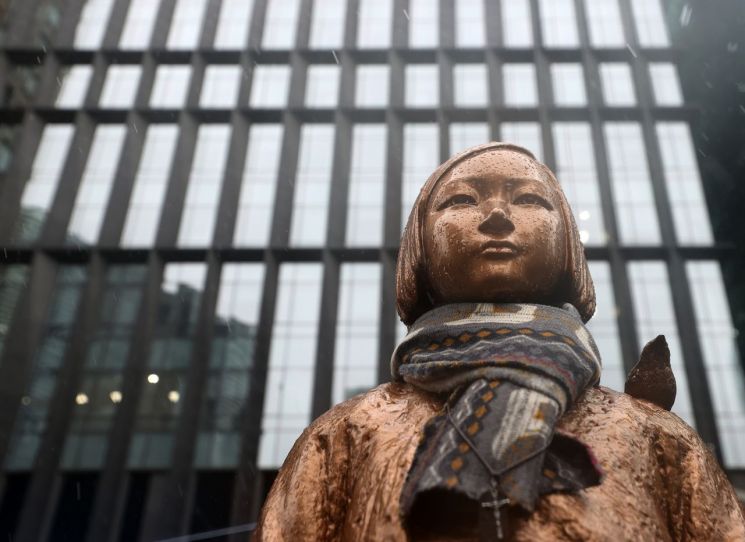
[Asia Economy Reporter Kwon Jae-hee] As UNESCO announced a reform plan for the World Documentary Heritage system, there are observations from the Japanese side that the materials related to the mobilization of Japanese military comfort women, previously applied for by a Korean private organization, will not be registered under this system.
On the 2nd, Sankei Shimbun reported that records related to the mobilization of Japanese military comfort women are unlikely to be registered as UNESCO World Documentary Heritage.
Sankei Shimbun, citing diplomatic sources, conveyed that with the reform of the World Heritage system, voices among UNESCO member countries have risen saying, "If a new system is launched, it is reasonable to handle comfort women-related materials accordingly."
The Japanese government has not withdrawn its objection to registering comfort women-related materials as World Documentary Heritage, and the newspaper added that the registration of these records is virtually impossible.
The Korean side anticipated that the application for registration of materials related to Japanese military comfort women, which was made before the system change in 2016, would not be affected by this reform; however, Sankei, which has approached the Japanese military comfort women issue from a far-right perspective, appears to view it differently.
According to Japanese Ministry of Foreign Affairs data, as of 2020, Japan’s UNESCO contribution rate was 11%, the second highest after China (15%).
Previously, Japan delayed payment of its contribution while the review of the registration of Japanese military comfort women materials was underway, and after the decision to defer registration was made, it paid the contribution, leading to criticism that Japan was pressuring UNESCO financially.
UNESCO prepared a reform plan that allows other countries to raise objections within 90 days regarding World Documentary Heritage registration applications, and if disagreements are not resolved through dialogue among concerned countries, the review can be suspended.
Sankei reported that this includes guidelines stating "registration applications must be based on facts and written without bias" and principles excluding "unverifiable claims, assertions, or propaganda of ideas."
The reform plan will be approved at the UNESCO Executive Board meeting starting on the 7th of this month, and the newspaper added that under the new system, registration reviews are expected to resume after five years.
© The Asia Business Daily(www.asiae.co.kr). All rights reserved.

















