Impact of COVID-19 and US Cold Wave Cause Poor Crop Yields
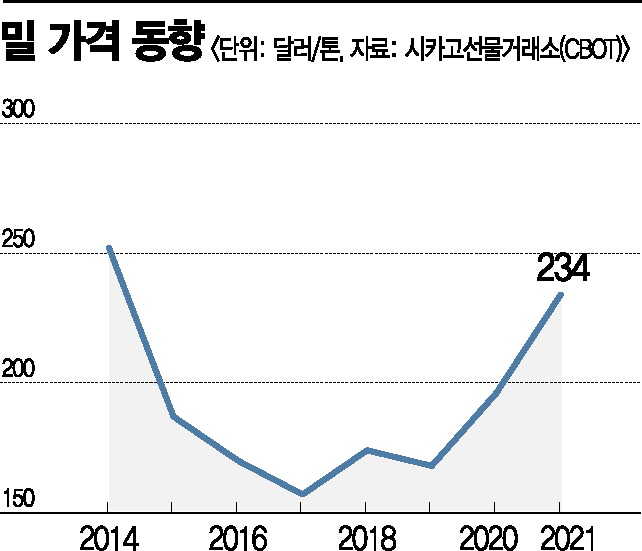
Wheat Prices Reach Highest Since 2014
Milling Industry Moves to Raise Flour Prices
CJ CheilJedang "Maintaining Prices to Stabilize Inflation"
[Asia Economy Reporter Seungjin Lee] Recently, the price of flour, which has been frozen for nine years due to the sharp rise in international grain prices, is starting to stir. The milling industry, which has been unable to reflect the rising costs of labor, logistics, and other expenses, has reached its limit. While CJ CheilJedang, the industry leader, has stated that it will not raise prices considering other consumer goods prices, other milling companies have different circumstances, drawing keen attention from the food industry.
According to the food industry on the 2nd, the recent sharp rise in international wheat prices is increasing pressure to raise flour prices. According to the Chicago Board of Trade, the average wheat price per ton last month was $234, the highest since May 2014.
This is due to disrupted logistics caused by the impact of COVID-19 and poor crop yields in the United States, one of the world's largest wheat producers, due to an unusual cold wave. Additionally, Russia, a major producer, imposed export taxes on wheat exports citing food security concerns. As wheat prices rise daily, discussions about flour price increases continue in the milling industry. Daehan Flour Milling, which produces Gomppyo flour, is currently reviewing a flour price increase.
A Daehan Flour Milling official said, "Although the specific scale and timing of the increase have not been decided, internal discussions are ongoing in the direction of raising prices," adding, "It is difficult to bear the overall costs as logistics expenses have increased by 200%."
Flour prices have been frozen since their increase in 2013. At that time, the flour price hike led to successive price increases in bread, ramen, snacks, and dumplings. As dining-out costs also rose, the government unusually intervened by revealing the proportion of the flour price increase in actual material costs to prevent product price hikes.
Especially as food prices have been rising daily since the beginning of the year, increasing the burden of inflation, a flour price increase could directly impact consumer price inflation. Following successive price hikes in tofu, bean sprouts, and canned side dishes in January, the baking and hamburger franchise industries also raised prices due to soaring egg prices caused by avian influenza (AI). Moreover, the effects of poor crop yields due to last year's longest rainy season continue. The price of green onions has tripled, and apples and dried chili peppers are being distributed at prices 70% higher than last year.
CJ CheilJedang, the industry leader, has set an internal policy to maintain flour prices as much as possible. A CJ CheilJedang official explained, "There are many reasons to raise prices, but no related discussions are underway," adding, "We are well aware of the impact of flour prices on inflation, so there will be no price increase for the time being."
© The Asia Business Daily(www.asiae.co.kr). All rights reserved.

















