Seoul History Focus Research Vol. 10
Detailed Analysis of Commercial Spaces and Expansion of Participating Classes in Late Joseon Seoul
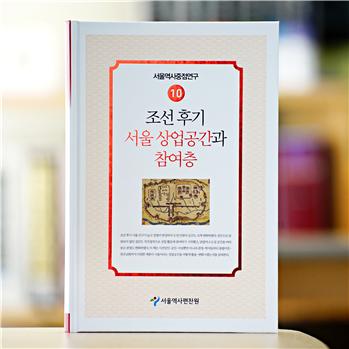
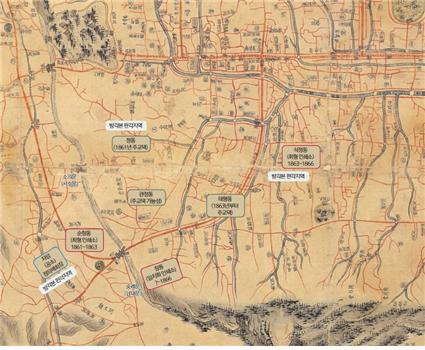 Photo of the main text of 'Commercial Spaces and Participating Classes in Seoul during the Late Joseon Period'. 'Catholic Church Woodblock Printing House in Seoul Area in the 1860s'.
[Asia Economy Reporter Lim Cheol-young] The Seoul History Compilation Institute announced on the 2nd that it has published Volume 10 of the Seoul History Focused Research series, titled "Commercial Spaces and Participating Groups in Late Joseon Seoul."
Since 2016, the Seoul History Compilation Institute has planned and compiled the Seoul History Focused Research series to encourage research in unexplored and vulnerable areas of Seoul's history. By discovering emerging researchers, it has steadily expanded the base of Seoul history experts, and "Commercial Spaces and Participating Groups in Late Joseon Seoul" was published as the 10th volume in this series.
The seven research papers on Seoul commerce included in the volume illuminate various aspects of the thriving commercial scene in late Joseon Seoul from multiple perspectives under several subtopics. It comprehensively examines how diverse actors?from market merchants generally classified as sijon merchants, gongin (貢人), and sasang (private merchants), to government offices, Confucian scholars, wage laborers, and even the Catholic Church?utilized and transformed Seoul's commercial spaces.
First, Professor Ko Dong-hwan of KAIST examined the changes in sijon located inside and outside the Hanyang city walls through "Commercial Spaces and the Capital City in Late Joseon Seoul." Professor Cho Young-jun of Seoul National University explored the commercial landscape of Seoul by analyzing the changes in bu (部), bang (坊), and gye (契) of Hansungbu in "The Subdivisions and Sijon of Hansungbu in Late Joseon."
Research Professor Kim Mi-sung of Yonsei University addressed the activities of wage laborers in Seoul in relation to commercial development in "Distribution and Collective Actions of Wage Laborers in Late Joseon Seoul." Research Professor Han Hyo-jung of the Academy of Korean Studies examined changes in the trading rights of medicinal material gongin in Seoul in "Ownership and Operation Methods of Gongin Rights among Seoul Citizens in Late Joseon."
Research Director Lee Seok-won of the Suwon Church History Research Institute discussed the operation of woodblock printing presses and book distribution by the Catholic Church in 19th-century Seoul in "Operation of Catholic Church Woodblock Printing Presses and Book Distribution in 19th Century Seoul." Former Yonsei University Professor Baek Seung-chul analyzed the participation of government offices and military households in commercial activities in "Commercial Activities of Government Offices and Military Households in Late Joseon Seoul." Research Professor Yoon Seok-ho of Yonsei University Yongwoon Research Institute examined how practical scholars of late Joseon recognized and sought to reform the development of commerce in "Practical Scholars' Reformist Views on Commerce in Late Joseon Seoul."
The book "Commercial Spaces and Participating Groups in Late Joseon Seoul," containing these contents, is priced at 10,000 KRW and can be purchased at the Seoul Bookstore on the basement first floor of Citizen Hall. However, due to COVID-19 infection prevention measures, it is currently only available for purchase online. Additionally, the "Commercial Spaces and Participating Groups in Late Joseon Seoul" volume, along with other titles in the "Seoul History Focused Research" series, can be accessed as e-books at public libraries in Seoul and on the Seoul History Compilation Institute's website.
The publication project of the "Seoul History Focused Research" series will continue in the future. Lee Sang-bae, Director of the Seoul History Compilation Institute, said, "I hope that the publication of this book will spark interest and follow-up research on the commercial activities of various actors within Seoul, contributing to the systematization of Seoul's history in the 2000s," and added, "We ask for the continued interest of many researchers and citizens so that we can publish even better Seoul History Focused Research volumes."
© The Asia Business Daily(www.asiae.co.kr). All rights reserved.


















