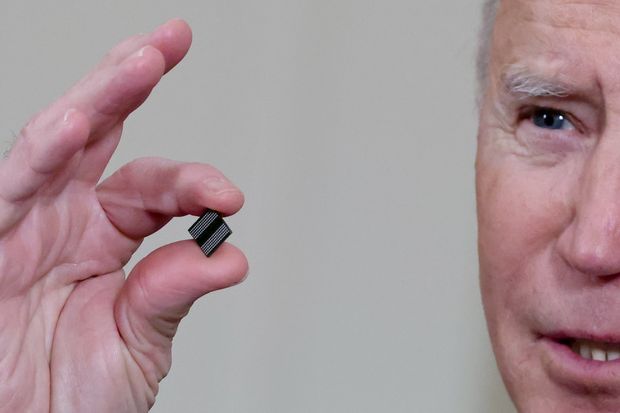
[Asia Economy Reporter Yujin Cho] U.S. President Joe Biden will invest more than $50 billion (approximately 56.5 trillion KRW) to foster the semiconductor industry within the United States.
On the 31st (local time), President Biden unveiled a massive infrastructure investment plan, stating that he aims to lead innovation in batteries, semiconductors, and renewable energy sectors to stay ahead in competition with China. Biden plans to invest $50 billion in semiconductor production facilities, research and development, incentives, including the establishment of the National Semiconductor Technology Center (NSTC).
The semiconductor industry is a national strategic industry, and since key national infrastructures including defense rely on semiconductor chips, the Biden administration views it as essential to reduce dependence on foreign companies.
The investment plan for the semiconductor sector has gained bipartisan support, including from the Biden administration and the Republican Party. Within the Republican Party, voices are growing louder to strengthen semiconductor production capabilities amid prolonged production disruptions across industries including automobiles due to semiconductor supply shortages.
Republican lawmakers have noted that the Chinese government is making massive investments to build its own semiconductor chip production capabilities. Earlier, Republican Senator John Cornyn stated after meeting with President Biden that he "shares the same opinion as the President" regarding semiconductor investment support.
The Wall Street Journal (WSJ) reported that as concerns deepen over the global semiconductor chip shortage that became apparent earlier this year and the possibility of the U.S. being overtaken by China in core technologies, the bill could gain momentum for passage.
The U.S. semiconductor production capacity is significantly behind countries such as Japan, South Korea, and Taiwan. According to the Semiconductor Industry Association, the U.S. share of global semiconductor manufacturing has dropped from 37% in 1990 to about 12% currently. WSJ analyzed that the sluggishness of the U.S. semiconductor industry is largely due to a lack of government funding support.
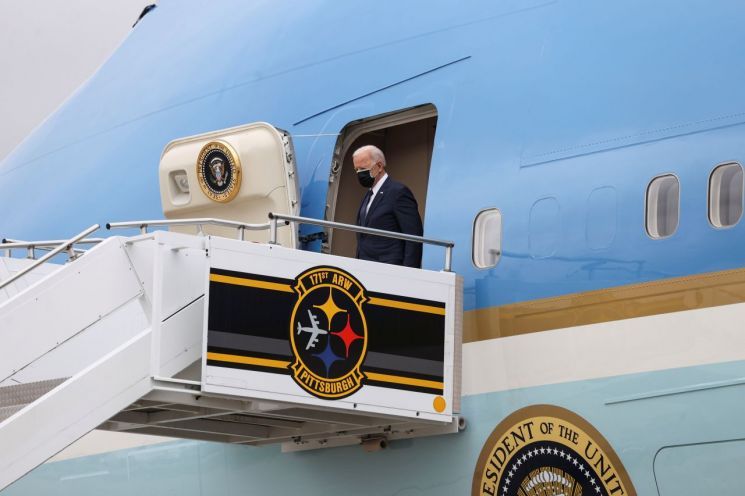
WSJ mentioned that U.S. semiconductor giant Intel’s announcement to enter the foundry business signals a semiconductor hegemony war between the U.S. and China. Intel CEO Pat Gelsinger announced on the 24th of last month that the company will invest $20 billion to build two factories in Arizona. The expected completion date is 2024, and additional production plants are planned in Europe.
According to U.S. market research firm IC Insights, the U.S. semiconductor manufacturing industry is expected to spend at least $129.4 billion this year on new factory establishments and equipment procurement. This represents about a 14% increase compared to the previous year.
However, some conservative groups strongly oppose the industry receiving federal subsidies, so the legislative process is expected to be challenging.
Jessica Anderson, Executive Director of Heritage Action, said, "The U.S. Congress should not support hundreds of billions of dollars to profitable technology industries." Caesar Ibarra, Senior Director at FreedomWorks, said, "Leadership in the semiconductor sector should come from private companies, not U.S. taxpayers."
© The Asia Business Daily(www.asiae.co.kr). All rights reserved.


















