"Trust in Government Vaccine Promotion and Rapid Scheduling"... Over Half of the Population Completed Second Dose
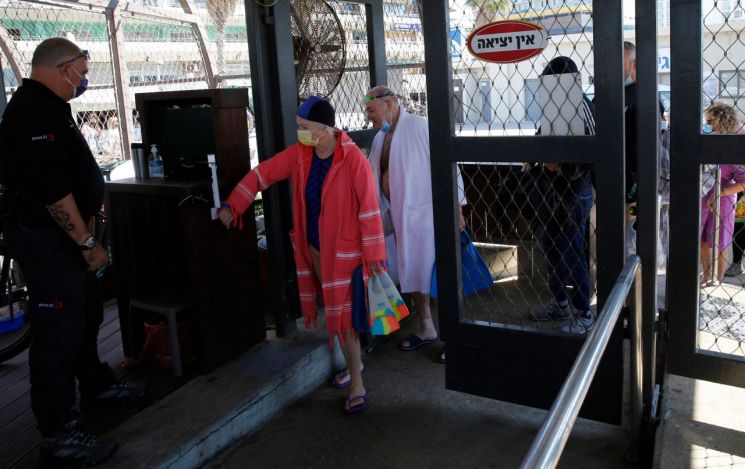
[Asia Economy Reporter Seo So-jeong] "After receiving the COVID-19 vaccine, I have been going to shopping malls and restaurants more often. Soon, I will be able to go on overseas business trips as well."
Jonathan Pook, Head of Business Development at Tune Fork, an audio software development company located in Jerusalem and Tel Aviv, shared the changed landscape of Israel after vaccination in a written interview with Asia Economy on the 29th.
Pook completed his second dose of the Pfizer-BioNTech vaccine on January 20th. He said, "Apart from a slight headache, there were no significant side effects," adding, "Most of my family and friends around me welcomed the vaccination, and although some relatives refused to get vaccinated, they completed it safely after strong encouragement from their children."
Pook conveyed that as the public’s vaccination progressed rapidly, expectations grew that life would return to pre-COVID-19 normal. Although masks must still be worn and quarantine rules followed when visiting crowded places, the vague fear of infection has disappeared thanks to the vaccine.
He especially expressed trust in the government’s vaccine procurement and rapid vaccination efforts. Pook emphasized, "Before the nationwide vaccination, the government thoroughly shared precautions for each age group," and "By widely promoting the benefits of the vaccine and helping schedule vaccinations so that as many people as possible could get vaccinated, the vaccination process accelerated."
He added, "The life that will come after vaccination is the ‘New Normal’ era," and "As many have said, even if we return to life before the COVID-19 pandemic, a different way of life will unfold."
Pook named "a family trip to the United States" as the thing he most wants to do after the end of COVID-19. He expressed, "I sincerely hope that the global population will complete vaccinations quickly to overcome COVID-19."
◆ Confirmed cases drop from over 10,000 to 500 range = According to the international statistics site Worldometer, as of the 28th, Israel reported 541 new COVID-19 cases, bringing the cumulative total to 831,924.
Along with vaccinations, various indicators are rapidly improving. At the end of January this year, daily new cases in Israel exceeded 10,000, but this month, cases have sharply decreased to the 500 range. Deaths also dropped to 20 on the 28th, with a cumulative death toll of 6,185.
Israel’s vaccination rate is the highest in the world. As of the 27th, 60.3% of the total population received the first dose, and 54.4%, or 4.71 million people, completed the second dose. Since the 22nd, restrictions on passenger flights, which were imposed to block the influx of overseas variants, have also been lifted.
The Israeli government announced it will no longer impose lockdown measures to prevent the spread of COVID-19. Professor Nahman Ash, Israel’s top COVID-19 prevention official, said at a recent press briefing, "There will be no fourth wave," but added, "However, mask-wearing will still be necessary for the time being."
Domestic experts agreed that it is urgent to raise the vaccination rate in Korea by referring to Israel’s case.
Professor Kim Woo-joo, an infectious disease specialist at Korea University Guro Hospital, said, "Israel, which started Pfizer vaccinations on December 19 last year, saw an increase in cases early on as vigilance dropped," and diagnosed, "With the Brazilian variant spreading fiercely and concerns about variant influx growing, a fourth wave could come at any time."
Professor Kim advised, "With spring arriving and nationwide mobility increasing, combined with pandemic fatigue, there are risk factors for quarantine. Compared to Israel, Korea’s vaccination rate is significantly lower, so raising the vaccination rate quickly is the biggest challenge."
Professor Jung Jae-hoon of Gachon University College of Medicine’s Department of Preventive Medicine said, "I recently completed the first dose of the AstraZeneca vaccine according to the medical staff schedule with no adverse reactions," adding, "Since the possibility of a fourth wave remains open, the public should get vaccinated in order."
© The Asia Business Daily(www.asiae.co.kr). All rights reserved.

















