Domino Effect of Interest Rate Hikes Amid Raw Material-Driven Price Surge
Ongoing COVID-19 Impact and Debt Burden Require Close Monitoring
Turkish President Dismisses Central Bank Governor Immediately After Rate Hike
[Asia Economy Reporter Kim Eunbyeol] Emerging countries, unable to withstand commodity-driven inflation, are reluctantly raising their benchmark interest rates. The COVID-19 pandemic continues to cause shocks to the real economy, and with rapidly increasing debt, the rise in interest rates is raising concerns about the future of emerging economies.
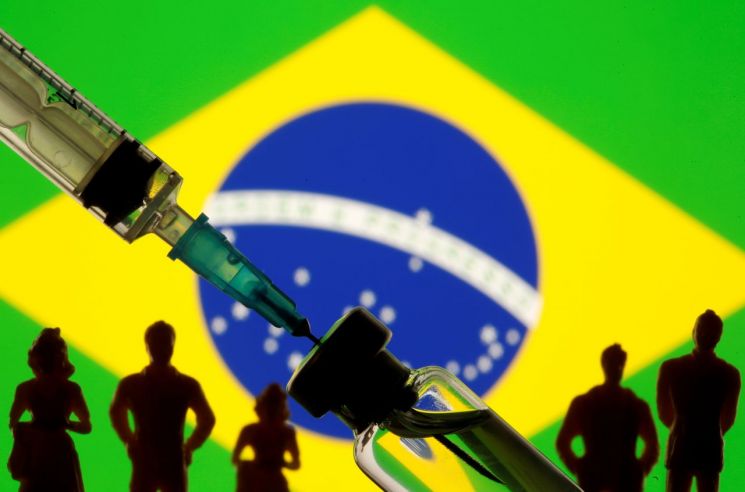
On the 17th (local time), the Central Bank of Brazil raised its benchmark interest rate from 2% to 2.75%, an increase of 0.75 percentage points. This is 50 basis points (bp) higher than the 25bp increase initially expected by the market (1bp = 0.01 percentage points). The main reason for the rate hike was that the inflation rate significantly exceeded the central bank's target range.
With rising prices of commodities and food, Brazil's consumer price index increased by 5.2% year-on-year last month. This is close to the central bank's inflation tolerance limit (3.75±1.5%). As bond yields in developed countries rose, capital outflows occurred, causing the Brazilian real to depreciate against the dollar.
The Central Bank of Brazil stated, "Economic activity is showing a solid recovery, so there is no longer a need for a high level of monetary stimulus, and we are beginning some normalization assumptions." The Brazilian government expects this year's growth rate to rebound to 3.2%, up from -4.1% last year. The consumer price inflation forecast was sharply revised upward to 5.0% this year from the previous 3.6%. Foreign investment banks (IBs) predict that Brazil will further raise its benchmark interest rate into the 4% range by the end of the year.
Turkey also raised its benchmark interest rate from 17% to 19% on the 18th, a 200bp increase. This far exceeded market expectations of 50 to 100bp and marks the fourth rate hike since the third quarter of last year. The Central Bank of the Republic of Turkey (TCMB) reiterated the need for price stability while explaining the background for the large rate hike. Immediately after the rate hike, Turkish President Recep Tayyip Erdo?an dismissed Central Bank Governor Naci A?bal. This was the second dismissal within four months after replacing the governor in November last year. The successor, ?ahap Kavcıo?lu, is known as a dove who supports a low interest rate policy. President Tayyip has long demanded keeping the benchmark rate low, promoting the unusual theory that "high interest rates actually cause inflation."
The Central Bank of Russia also announced the previous day that it would raise its benchmark interest rate from 4.25% to 4.5%, a 25bp increase. This is the first rate hike since December 2018. Market consensus had favored a hold, but with consumer inflation in the first quarter higher than expected, the bank quickly shifted to a rate hike.
Other countries such as Nigeria and Argentina are also considered likely candidates for rate hikes. IBs expect some emerging countries to start raising rates as early as the fourth quarter of this year. Russia and Malaysia are expected to raise rates in Q4, while India, South Africa, Indonesia, and the Philippines are forecasted to do so in early next year. In South Korea, the consumer price inflation forecast for this year is 1.3%, so there is currently no concern about inflation. However, as emerging countries continue to raise policy rates one after another, attention should be paid to the resulting impacts.
The International Finance Center stated, "While most emerging countries are expected to maintain an easing monetary stance through this year, attention should be paid to the possibility that the timing of tightening could come earlier than expected if global economic recovery continues alongside persistent inflationary pressures."
© The Asia Business Daily(www.asiae.co.kr). All rights reserved.

















