Launched from Kazakh Space Center at around 3:07 PM on the 20th
Standard video transmission from October onward... Produced with cost-effective domestic technology
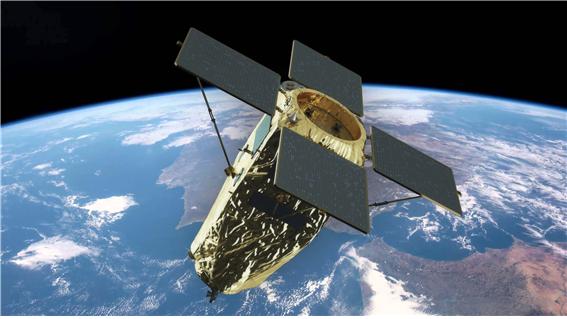
[Asia Economy Reporter Kim Bong-su] The "Next-Generation Medium-Sized Satellite 1" (photo), which will usher in the era of "K-Satellites," is set to be launched.
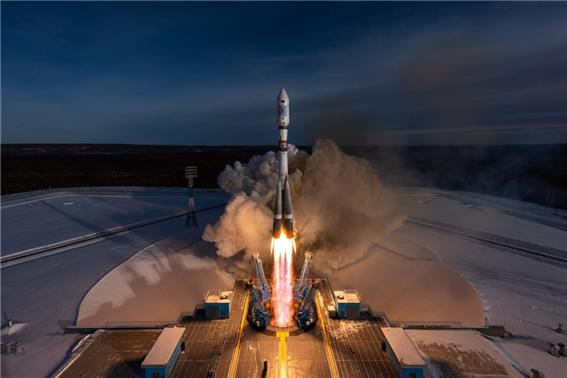
On the 19th, the Ministry of Science and ICT announced that the Next-Generation Medium-Sized Satellite 1, developed with domestic technology, will be launched aboard a Russian Soyuz rocket from the Baikonur Cosmodrome in Kazakhstan at approximately 3:07 PM (Korean Standard Time) on the 20th. The Ministry plans to broadcast the launch live on YouTube starting at 2:15 PM on the day of the launch.
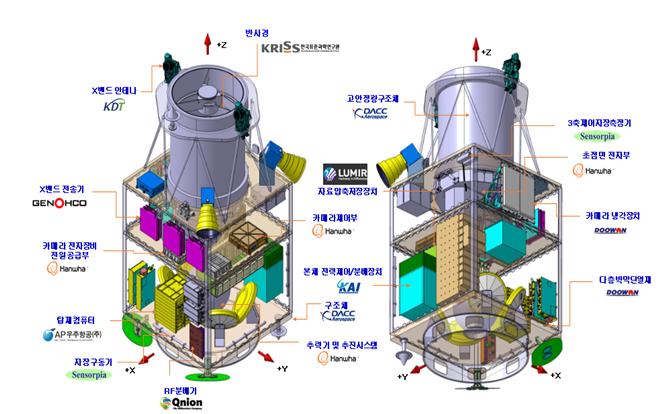
Weighing 500 kg and measuring 1.86 m in width and 2.89 m in height, the Next-Generation Medium-Sized Satellite 1 is a medium-sized low Earth orbit satellite mostly built using domestic technology from design to parts manufacturing and assembly. Even the core component, the optical payload (satellite camera), was equipped entirely with domestic technology except for the photodetector. After assembly was completed in January, the satellite was transported to the Baikonur Cosmodrome, where it underwent about 50 days of functional checks, fuel loading, and integration with the launch vehicle in preparation for launch. Approximately 64 minutes after launch, it will separate from the launch vehicle, and 102 minutes after launch, it will establish initial communication with the Norwegian Svalbard ground station to confirm whether it has entered its intended orbit.
After launch, the Next-Generation Medium-Sized Satellite 1 will operate initially for six months in an orbit at an altitude of 497.8 km, and from October onward, it plans to provide standard imagery to users in earnest. It will perform its mission by passing over the Korean Peninsula every day at 11 AM, with a lifespan of four years. It will provide precise ground observation images for purposes such as map-making, land and resource management, and disaster response including coastal monitoring, wildfires, and floods.
The government has secured a 500 kg-class satellite standard platform through the production of the Next-Generation Medium-Sized Satellite 1. Notably, it has opened the path for independent development and export of high-performance satellites for precise ground observation at the private sector level. Despite costing 157.9 billion KRW, it was produced at about half the price of similar satellites from other countries (59% of Japan's cost and 29% of Peru's), while offering better performance in resolution and observation range, earning it a reputation as a "best value (price-performance ratio)" satellite and securing international competitiveness.
The Korea Aerospace Research Institute (KARI), which has led the satellite development and launch, involved numerous domestic companies to transfer technology and promote the activation of the private satellite industry. The second satellite is also planned for production and launch in early 2022, and as part of the second phase of the project, satellites 3, 4, and 5 with upgraded performance will be developed.
A Ministry of Science and ICT official stated, "From the development of the first satellite, a joint design team between KARI and domestic industries was operated to successfully transfer satellite development experience and system, bus, and payload manufacturing technologies to participating companies. Infrastructure support has laid the foundation for expanding space technology and industrialization." The official added, "Starting with the second satellite, the industry (Korea Aerospace Industries, KAI) will take full charge from design to production, enhancing domestic space industry satellite development technology and establishing an industry-led mass production system. This will not only create jobs and foster a virtuous cycle satellite industry ecosystem with partner companies but also promote overseas exports."
© The Asia Business Daily(www.asiae.co.kr). All rights reserved.



















