Last Year's Sales of 2.95 Trillion KRW... Chinese Joint Venture Closely Chasing
"Localization Success" Sales Target of 180,000 Units This Year
[Asia Economy Reporter Yoo Je-hoon] The Indian market, ranked fourth globally in the automobile sector, has emerged as Kia's new star performer offsetting the sluggish Chinese market. Just three years after establishing its corporation, sales have reached approximately 3 trillion KRW, closely trailing the Chinese market, while net profit has turned positive and even surpassed it, demonstrating rapid growth.
According to Kia's business report on the 18th, Kia Motors India (KMI) recorded sales of 2.9531 trillion KRW and a net profit of 73.7 billion KRW last year. Compared to 2019, sales (913.9 billion KRW) increased 3.2 times, and net profit, which was a loss of 51.9 billion KRW, turned positive.
The Indian automobile market, like other regions, experienced a sharp demand contraction last year due to COVID-19. With stringent lockdown measures continuing, overall demand plummeted by 17.4% year-on-year to about 2.44 million units. Despite this, Kia sold approximately 140,000 units, a 210% increase from the previous year, rising to 4th place in the Indian market with a 5.8% share.
Kia Motors India's rapid growth is attributed to the Anantapur plant in Andhra Pradesh, completed in 2019. The Anantapur plant, with an annual production capacity of 329,000 units, produced 177,538 units last year, selling them in the Indian domestic market and emerging markets such as Southeast Asia.
This performance contrasts with the Chinese market, where Kia has struggled since the 2016 THAAD (Terminal High Altitude Area Defense) incident. The Chinese joint venture Dongfeng Yueda Kia recorded sales of 3.5887 trillion KRW last year but suffered a net loss of 835.5 billion KRW. Sales volume also dropped about 24% year-on-year to approximately 224,000 units. In terms of sales, the Indian market is closing in, and in net profit, it has surpassed the Chinese market.
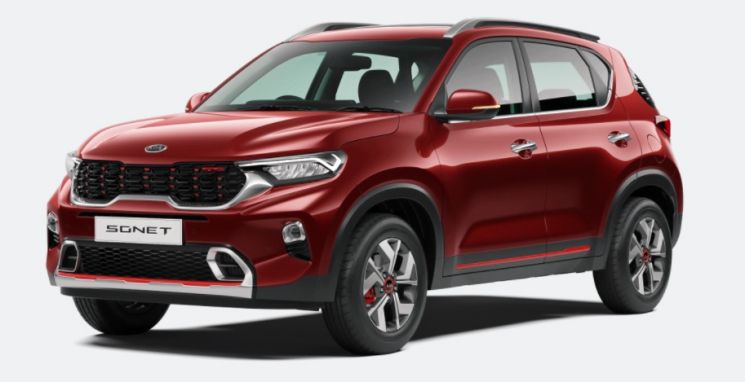
Industry insiders attribute these results to the success or failure of localization. Kia introduced numerous sport utility vehicle (SUV) models with high preference and cost-effectiveness in the emerging Indian market. Representative models include the Seltos, Carnival, and Sonet, which is a strategic model for India and emerging countries. The Seltos, Kia's first locally produced model, rose to 2nd place in the Indian recreational vehicle (RV) market, and the Sonet ranked 1st in its segment in its first month of release.
Kia's push into the Indian market is expected to accelerate further. Kia has set its sales target for the Indian market at 180,000 units this year. Professor Lee Ho-geun of Daeduk University stated, "Hyundai Motor and Kia have been proactive in localizing products from the early stages, such as increasing the height of small cars for sales, and have successfully adapted to local culture by absorbing initial losses in localizing production lines."
© The Asia Business Daily(www.asiae.co.kr). All rights reserved.

















