Five Power Generation Subsidiaries under KEPCO All Recorded Net Losses Last Year
Deficit Widened Since Current Government Took Office... Net Profit of 662.3 Billion KRW in 2017 to 361 Billion KRW Loss in 2020
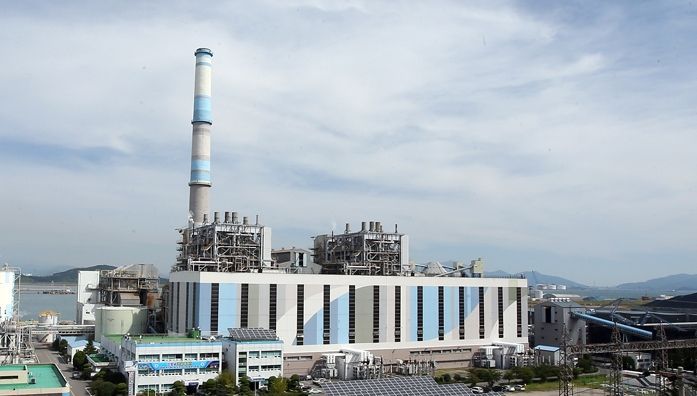
[Sejong=Asia Economy Reporter Kwon Haeyoung] Due to the government's coal phase-out policy, five power generation subsidiaries of Korea Electric Power Corporation (KEPCO) all recorded net losses last year. The decline in electricity demand caused by COVID-19 and the drop in wholesale electricity prices due to falling liquefied natural gas (LNG) prices also negatively impacted the performance of these subsidiaries. On the other hand, Korea Hydro & Nuclear Power, which operates nuclear power plants, showed rather favorable results.
According to KEPCO's business report on the 18th, the five power generation subsidiaries recorded a total net loss of 361 billion KRW last year.
Among the power generation companies, Namdong Power recorded the largest net loss of 139.1 billion KRW, followed by Seobu Power with 109 billion KRW, Dongseo Power with 65.4 billion KRW, and Jungbu Power and Nambu Power with 29.9 billion KRW and 17.6 billion KRW respectively.
The deterioration in performance was influenced by the government's energy transition policy aimed at reducing coal power generation. As the operation of coal-fired power plants with low fuel costs decreased, sales and profits from existing power generators declined, while investments in renewable energy facilities increased.
Since the current administration took office, the performance of the power generation subsidiaries has noticeably declined. The five subsidiaries recorded a net profit of 662.3 billion KRW in 2017, when the Moon Jae-in administration began, but turned to a net loss of 18.2 billion KRW in 2018. Subsequently, net losses increased to 18.1 billion KRW in 2019 and 361 billion KRW in 2020.
In particular, last year, the economic downturn caused by COVID-19 reduced electricity demand, and the drop in LNG prices led to a decrease in wholesale electricity prices, further worsening performance. The five subsidiaries operate both coal and LNG power plants, and when the wholesale electricity price sold to KEPCO falls, profitability also deteriorates. The government's fine dust reduction policy, which has led to the suspension of coal power generators, is also a burden. This month alone, up to 28 out of 58 coal power generators have been or are scheduled to be suspended.
A power generation company official expressed concern, saying, "Due to the government's coal phase-out policy, the operation of low-cost coal-fired power generators is decreasing, and the deficit is expected to continue to widen."
The outlook for this year's performance is even bleaker. The five power generation subsidiaries expect a total net loss of about 1.3 trillion KRW this year and have formed a joint response task force (TF). The government is implementing a coal cap system from this year, which limits the annual power generation of coal power plants, and plans to reduce the current 60 coal-fired power plants to half, 30, by 2034.
On the other hand, Korea Hydro & Nuclear Power recorded an operating profit of 1.3158 trillion KRW and a net profit of 617.9 billion KRW last year. This was due to an increase in nuclear power plant utilization and electricity sales as maintenance work on existing nuclear plants was completed.
© The Asia Business Daily(www.asiae.co.kr). All rights reserved.

















