LH speculation allegations summon Joseon Dynasty Jeong Dojeon’s Gyeongguk Daejeon
"Crimes of exploiting the people by all means to enrich oneself"
Execution and branding with characters like Dogwanjeon, Dogwanryang on right arm
Some LH employees mock public outrage
"If you’re upset, just transfer to our company"
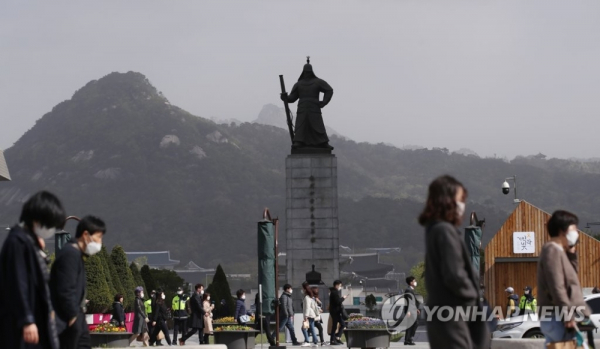
[Asia Economy Reporter Han Seung-gon] "Punish LH employees according to the Gyeongguk Daejeon!" , "Hang them in the marketplace at Gwanghwamun..."
As public outrage over the suspicion of speculative investment by employees of Korea Land and Housing Corporation (LH) in the 3rd New Towns of Gwangmyeong and Siheung, Gyeonggi Province, spreads like wildfire, there is a growing public opinion that they should be punished at the level of punishments in the Joseon Dynasty. This appears to be a kind of social phenomenon that openly reveals the anger of the people who are deeply indignant about the 'LH incident.'
Recently, a post titled "Punishments LH employees would have faced if it were the Joseon Dynasty" was uploaded on an online community. The author criticized, "Referring to the 'Gyeongguk Daejeon,' the Joseon legal code, LH employees' crime corresponds to 'Gamsujado' because they privately took possession of the property (land, buildings, etc.) they managed, and they should be branded with the mark of 'stealing government property,' beheaded, and displayed at Gwanghwamun..."
The Gyeongguk Daejeon (經國大典) mentioned by the author is a refined version of the Joseon Gyeonggukjeon (朝鮮經國典) written by Jeong Do-jeon (三峯), a key figure in the founding of Joseon, which specifies types of bureaucratic crimes and their punishments. Those who took bribes by abusing their position were called 'Jangri' (臟吏). Such bureaucratic crimes were classified as 'Janggojae' (臟汚罪).
Janggojae refers to crimes where public officials abuse their position to gain unfair benefits. Janggojae was sometimes punished more severely than murder. While murder could be accidental, corrupt officials like corrupt bureaucrats did not accept bribes or embezzle by accident; they committed corruption deliberately or abused their power, making their crimes more heinous. The 'Janggo-yul' (臟汚律) details the specific punishments based on Janggojae.
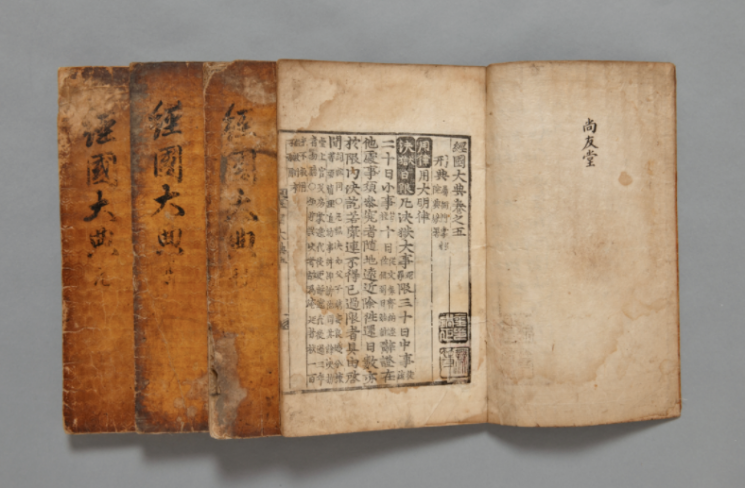 Gyeongguk Daejeon (經國大典). It is the fundamental legal code of the Joseon Dynasty, serving as the unified legal code that forms the basis of governance by compiling the original and supplementary texts of the "Gyeongje Yukjeon (經濟六典)," the legal code from the early Joseon period, along with subsequent laws and regulations. In 1460 (the 6th year of King Sejo's reign), the Hojeon (戶典), which established the basics of taxation and economy, was compiled, and the code was named Gyeongguk Daejeon, with woodblocks created for printing. Photo by Seoul Museum of History
Those who committed Janggojae were severely punished. This can be easily confirmed in historical records. The Annals of the Joseon Dynasty, Taebaeksan Archive edition (Annals of King Injo, Volume 39, 17th year of King Injo, July 2, first article), available on the National Institute of Korean History website, contains a plea for strict punishment of those who committed Janggojae.
The annals state, "Since ancient times, enlightened kings have enacted laws to punish criminals, and those who committed Janggojae were punished most severely. Therefore, even if the offender was noble or close to the king, they were not forgiven at all. However, the laws used today are not like that," urging that although times have changed and punishments are not at the past level, strict punishment should be enforced considering public sentiment.
It continues, "For example, even if someone committed Janggojae, they are brought to the Uigeumbu (State Tribunal), but the execution grounds and instruments are set up in vain, and after dragging out the time, they are all released. It is only natural that people do not fear the law. Please strictly punish Lee Won-hwan according to the law and have the relevant authorities confiscate his property to support the national treasury," repeatedly appealing for justice.
According to the annals, Lee Won-hwan, the magistrate of Sacheon County (泗川縣監), committed crimes by exploiting the people to enrich himself. It is known that Lee Won-hwan was interrogated by the state, and related officials were also investigated.
State interrogation (Gukmun) is a procedure where the king personally interrogates major criminals such as traitors or serious offenders. In historical TV dramas, this is depicted as the accused being tightly bound in the interrogation chamber and forced to confess. When the king personally conducted the interrogation, it was called Chinguk. Sometimes, the Uigeumbu (義禁府), Saheonbu (司憲府), or Hyeongjo (刑曹) conducted it on behalf of the king.
Also, those who took property were called Gamsujado (監守自盜). This refers to officials who oversee and guard property but steal it themselves. Such offenders were punished by summing all stolen goods regardless of rank and determining the penalty accordingly.
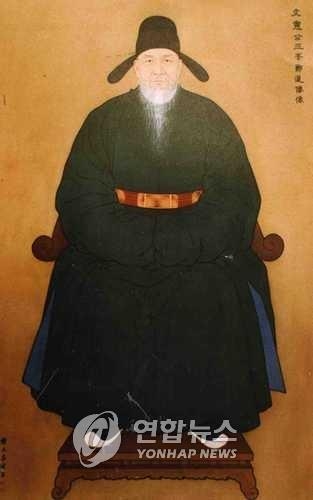 Sambong (三峰) Jeong Do-jeon (鄭道傳·1342?1398). He wrote the "Joseon Gyeonggukjeon," the national governance code, for King Taejo Yi Seong-gye, and is also known as the "Architect of the Joseon Dynasty." Photo by Yonhap News
The public opinion is that the theft of goods and the suspicion that LH employees acquired property using insider information are the same. Citizens are raising their voices demanding thorough investigation and strict punishment.
In particular, some LH employees' repeated offensive remarks have further inflamed public outrage. On the 10th, a post titled "No one cares inside" was uploaded on 'Blind,' an anonymous online community for LH employees. The author mocked the public, saying, "Anyway, after a month or two, people will forget and it will pass like water," and "I will keep speculating under a borrowed name and enjoy my retirement benefits."
The employee continued, "If you don't like it, you guys should transfer to our company," and "You can't come here because you didn't study well, and now you're just picking fights, extremely disgusting," showing no remorse for the land speculation allegations against LH.
As public outrage spreads, the actual punishment for Gamsujado (those who took property through corruption) was very severe. Even if the illicitly obtained property was less than 1 kwan (approximately 3.75 kg), the offender was to be beaten 80 times with a cane. One beating session could not exceed 30 strikes. However, many reportedly died before the verdict. Also, if more than 40 kwan were taken, the punishment was death by execution. The offender's right arm was branded with characters such as Dogwanjeon (盜官錢) and Dogwallyang (盜官粮).
There were also punishment regulations for officials who arbitrarily reduced food supplies meant for widowers, widows, orphans, childless elderly, and patients. Additionally, officials could not take home or personally use liquor and food made by the government. Those who secretly sold or exchanged government livestock without reporting were similarly punished.
Citizens are sharing the Gyeongguk Daejeon on social networking services (SNS) and expressing their venting opinions. Kim, a company employee in his 30s, said, "Conduct a full investigation of all LH employees, confiscate all unjustly acquired assets of their immediate family and relatives, and punish them accordingly," raising his voice.
Another office worker in his 40s, Park, said, "Other countries impose the highest penalties, right? Although we cannot do exactly that, we need to impose punishments equivalent to that level to calm public opinion," and added, "The political circles should stop worrying about by-elections and presidential elections and just punish according to the law," expressing frustration.
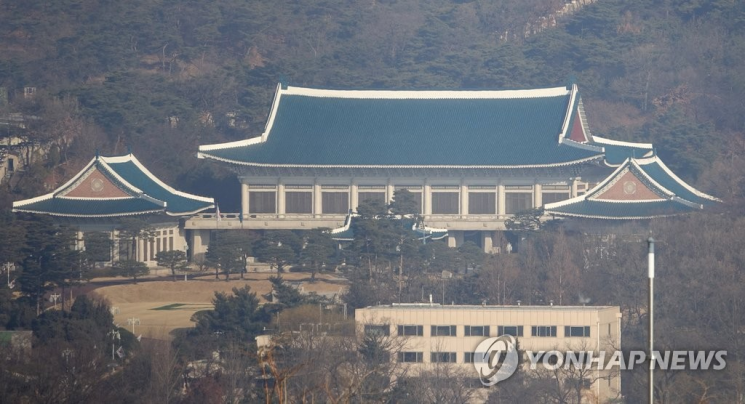
Meanwhile, the Democratic Party of Korea is still cautious about whether Minister of Land, Infrastructure and Transport Byun Chang-heum will resign. After the party's Supreme Council meeting on the 10th, Chief Spokesperson Choi In-ho told reporters, "There have been reports that the party discussed recommending Minister Byun's resignation, but I clearly state that this is not true at all."
Regarding discussions about Minister Byun, he explained, "The party leadership has not had any discussions about Minister Byun's position. At today's meeting, we reaffirmed three principles regarding real estate speculation and illegal speculation: thorough eradication, prevention of recurrence, and maintaining policy consistency."
He added, "Thorough eradication means a thorough investigation led by the Corruption Investigation Office for High-ranking Officials (CIO) with cooperation from the prosecution. Prevention of recurrence involves strengthening transparency and responsibility in real estate for all former public officials and affiliated organizations, and thoroughly recovering any illegal gains."
When asked about Minister Byun's responsibility for the employee speculation issues that occurred during his tenure as LH president, Chief Spokesperson Choi emphasized the 'three principles' again and said, "Maintaining the consistency of the 2.4 policy, including uninterrupted supply measures, is most important."
Regarding the real estate issue involving the mother of Democratic Party lawmaker Yang Yi-won-young, Chief Spokesperson Choi said, "The party will promptly conduct an investigation through the Ethics Inspection Team to thoroughly examine whether there is any problem."
© The Asia Business Daily(www.asiae.co.kr). All rights reserved.



















