US Hampered by COVID, Air Force Budget Restricted
China Lacking Engine Technology Narrows Gap with Financial Power
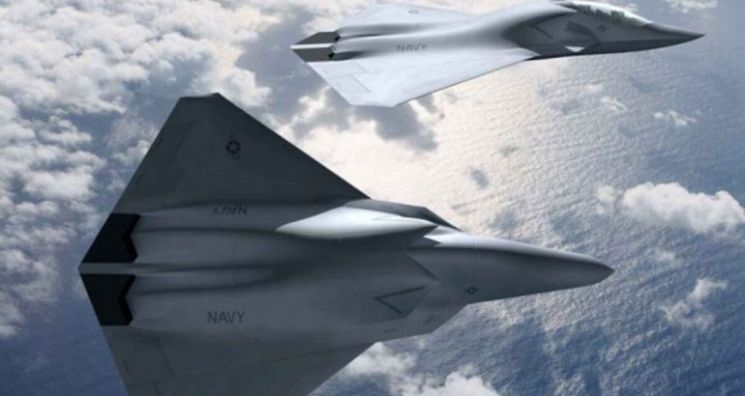
[Asia Economy Reporter Hyunwoo Lee] As the arms race between the United States and China intensifies, the competition to develop cutting-edge "6th generation" fighter jets is also becoming fierce. Although the technological gap between the Chinese Air Force and the U.S. Air Force remains significant, concerns are growing both inside and outside the U.S. that the Chinese Air Force, which has more flexible financial resources amid budget pressures on the U.S. Air Force caused by the COVID-19 pandemic, could narrow this technological gap.
According to the Hong Kong South China Morning Post (SCMP) on the 9th, the U.S. Congress funded only $944 million of the $1.044 billion (approximately 1.191 trillion KRW) requested by the Air Force for the annual development cost of the 6th generation fighter jet in the 2021 fiscal year budget. Due to severe budget pressures caused by the COVID-19 pandemic, only $905 million was approved for the U.S. Air Force’s 6th generation fighter jet development costs in the 2020 fiscal year as well.
The U.S. next-generation fighter jet operation program continues to face budget cuts. On the 5th (local time), Adam Smith, Chairman of the U.S. House Armed Services Committee and a Democrat, stated during a virtual meeting hosted by the Brookings Institution, a U.S. think tank, that "the operating costs of the F-35 are too high" and emphasized the need to organize an air force that does not rely on the F-35. This reflects the necessity to reduce military spending given the massive fiscal deficits caused by COVID-19 stimulus packages and aid funds.
The U.S. Air Force originally promoted an operation program centered on the F-22 fighter jet to modernize fighter operations, but due to congressional criticism over high operating costs, it was downgraded to the F-35. The cost per flight hour (CPFH) for the F-22 is about $58,000, and for the F-35, $35,000, but Congress has ordered that costs be reduced to below $20,000, the level of the existing F-15 model.
Within the U.S. Air Force, concerns are emerging that China could be the first to secure 6th generation fighter jet capabilities due to congressional budget pressures. Earlier, on the 26th of last month, Mark Kelly, Commander of the U.S. Air Combat Command, stated during a press conference, "I question whether we will have the courage to possess this capability first to counter adversaries like China who are acquiring 6th generation fighter technology," emphasizing the need for more funding to counter China.
Although China currently depends on Russia for fighter jet engine technology and cannot compete technologically with the U.S. at present, analyses suggest that the Chinese Air Force, which is not under financial pressure, could catch up with the U.S. Air Force by the 2030s. SCMP also cited Chinese aircraft design experts, noting, "Engine design issues continue to hinder China, and its technology does not yet threaten the U.S., but China enjoys many financial privileges in preparation for the U.S. Air Force’s strict budget approval procedures."
© The Asia Business Daily(www.asiae.co.kr). All rights reserved.












