10-Year Korean Treasury Bond at 2.080%, 5-Year at 1.612%
Won-Dollar Exchange Rate Surpasses 1140 Won
[Asia Economy Reporter Kim Eunbyeol] As signs of recovery in the U.S. economy emerge, U.S. Treasury yields are rising, causing domestic bond yields to surge as well. Although the Bank of Korea announced it would conduct simple purchases of government bonds to curb the rising yields, the sharp increase in overseas yields is limiting the effectiveness of these simple purchases.
As of 10:18 a.m. on the 9th, the 10-year government bond yield stood at 2.080% per annum, up 5.6 basis points (1bp = 0.01 percentage points) from the previous trading day. The 3-year government bond yield also rose by 9.8bp to 1.234% per annum. The 5-year government bond, which is mainly used to determine mortgage loan interest rates, increased by 1.20bp to 1.612%.
Bond yields move inversely to bond prices. With signs of economic recovery in the U.S. increasing inflationary pressures, bond prices have fallen. On the 8th (local time), the U.S. 10-year Treasury yield rose to around 1.6%.
While the issuance of deficit-covering bonds has become inevitable due to the execution of the supplementary budget, causing supply-demand pressures that lower government bond prices, the rise in overseas yields appears to have a significant impact on domestic bond yields as well. This explains why bond yields are rising despite the Bank of Korea’s announcement of simple government bond purchases. The Bank of Korea announced after market close the previous day that it would implement simple purchases of government bonds totaling 2 trillion won. The targeted bonds include five issues: the 3-year benchmark bond 20-8, the 5-year elapsed bond 19-5, and the 10-year elapsed bonds 17-7, 16-8, and 20-4. The inclusion of the 3-year benchmark bond 20-8 among the simple purchase targets is interpreted as the Bank of Korea feeling considerable pressure from the recent sharp rise in short-term interest rates. At a press briefing last month, Bank of Korea Governor Lee Ju-yeol cited the 3-year government bond yield as an example, stating it was "somewhat higher than the historical average."
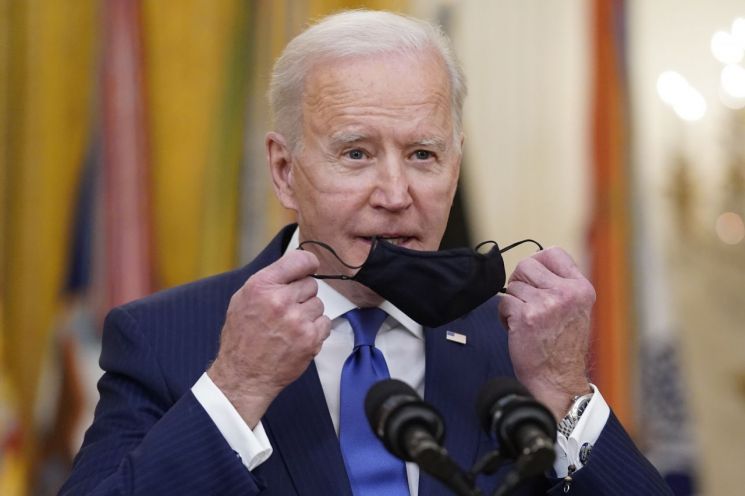
As government bond yields rise, the dollar linked to them is also strengthening. Earlier this year, many expected a 'weak dollar' scenario due to the abundant supply of dollars in the market from President Joe Biden’s continued COVID-19 relief spending. However, with the U.S. economic recovery expected to outpace other regions such as Europe, and with inflation forecasts and rising Treasury yields, the dollar has shown strength.
The same stimulus package (valued at $1.9 trillion) is being interpreted in opposite ways. Earlier this year, it was seen as leading to a weaker dollar upon passage, but recently it is expected to cause a stronger dollar as the U.S. economy recovers rapidly. The Dollar Index, which measures the dollar’s value against the currencies of six major countries, is fluctuating around 92.3, up 0.05% from the previous trading day, maintaining its highest level of the year. Additionally, with the yuan weakening, the Korean won has also weakened alongside it, pushing the won-dollar exchange rate above 1,140 won.
As of 10:33 a.m. on the same day, the won-dollar exchange rate was trading at 1,143.15 won in the Seoul foreign exchange market. The rate opened at 1,141.5 won, up 8.3 won from the previous trading day, and has been moving in the low 1,140 won range. The won-dollar exchange rate has risen for three consecutive trading days since the 3rd (1,120.3 won), increasing by more than 20 won.
© The Asia Business Daily(www.asiae.co.kr). All rights reserved.

















