Promotion of Japanese Colonial Period Place Names and Official Records Reorganization Project
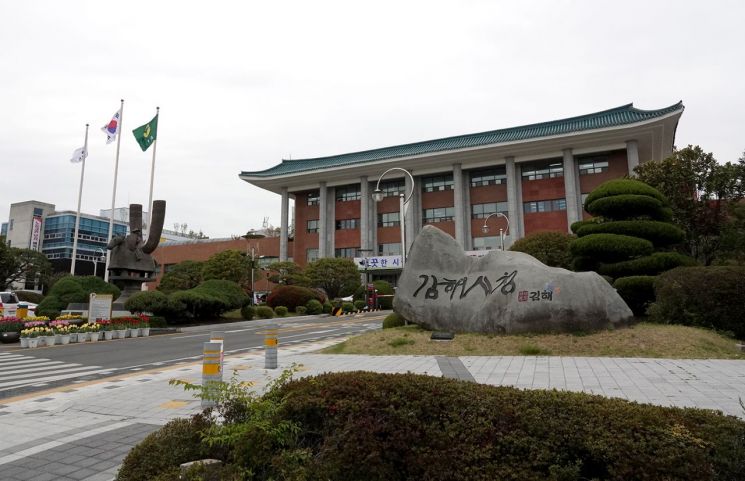
[Asia Economy Yeongnam Reporting Headquarters, Reporter Lee Sang-hyun] Gimhae City in Gyeongnam announced on the 9th that from October last year until the end of this year, it will identify and systematically organize Japanese-style place names created during the Japanese colonial period or distorted with the purpose of belittling or erasing our history and traditions.
For example, Oechon (外村), the name of a small reservoir in Jukgok-ri, Jinyeong-eup, is suspected to have been named by Japanese during the colonial period. The city plans to change it to Yulli Small Reservoir, following the old place name Yulli (栗里), which was called so in the Joseon Dynasty due to the abundance of chestnut trees, and submit it to the Gyeongsangnam-do Place Name Committee.
The establishment and change of place names are completed through deliberation by the administrative district's city/county place name committee and the Gyeongsangnam-do Place Name Committee, followed by final review and resolution by the National Place Name Committee, and then announced by the National Geographic Information Institute.
However, changes to place names are made after collecting opinions from local residents, considering cases where the name has been used for a long time due to its origin, making changes difficult.
In addition, the city will promote the “Erasing Japanese Names from Official Registers” project throughout March, which includes the March 1st Independence Movement Day.
In the first survey conducted last year, the city targeted 210 land parcels where cadastral records and registries did not match, identifying Japanese-style names remaining in official registers such as land and forest registers and registry copies, and organizing them into Korean-style expressions.
This is because some official registers may still contain forced Japanese-style names of past owners.
For example, if there is a registry copy registered under a Japanese-style name but no land register due to land development projects, the registry copy will be canceled to remove the Japanese-style name from official registers.
Furthermore, for official registers still containing Japanese-style names, the city will actively provide administrative support so that descendants can receive ownership transfers (inheritance), and if suspected to be property belonging to the government (property owned by Japanese before Liberation Day on August 15th transferred to our government), it will be transferred to the Public Procurement Service for on-site investigation and proceed with nationalization procedures.
Lee Ki-young, head of the Land Information Division, said, “Gimhae City was one of the major domestic food requisition sites during the Japanese colonial period, and areas such as Daejeo and Myeong-i, which were incorporated into Busan in 1978 due to administrative district reorganization and are now part of Gangseo-gu, had many Japanese residents.” He added, “We will eliminate the remnants of Japanese colonial rule through continuous maintenance projects.”
© The Asia Business Daily(www.asiae.co.kr). All rights reserved.

















