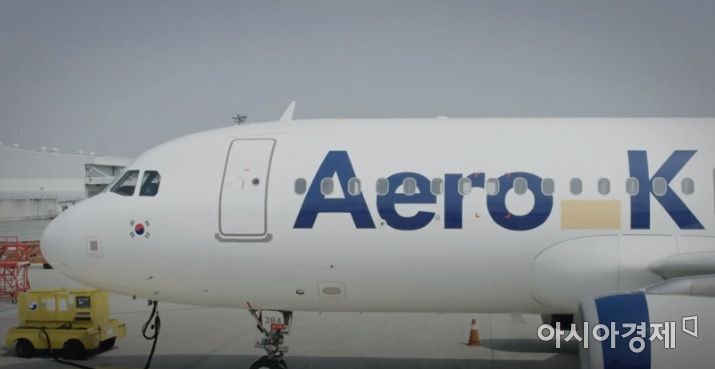
[Asia Economy Reporter Dongwoo Lee] As the government recently decided to provide financial support worth 200 billion KRW to low-cost carriers (LCCs) struggling due to the prolonged COVID-19 pandemic, concerns have been raised that newly entering startup LCCs are being left in a blind spot. There is a call for practical financial support measures for these companies, such as partially relaxing the government's application conditions for the Period Industry Stabilization Fund.
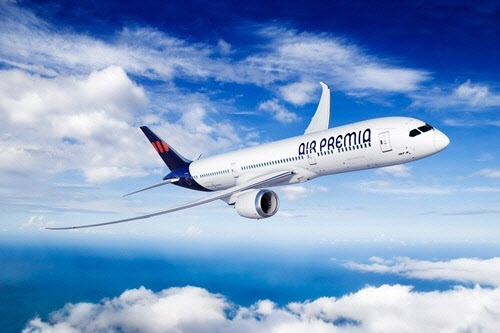
According to the aviation industry on the 7th, the Ministry of Land, Infrastructure and Transport recently announced in the 'Aviation Industry COVID-19 Crisis Overcoming and Rebound Plan' that the deadline for new routes by startup LCCs will be extended to December 31 of this year. With this decision, Air Premia and Aero K, which had to start operations by this month, will benefit from the extension.
However, even this time, the startup LCC industry faces uncertainty regarding support from the government’s Period Industry Stabilization Fund. According to the Ministry’s announcement, since specific financial support measures for these companies were not clearly stated, there is speculation that the application conditions for the fund from last year may remain unchanged.
Previously, the government restricted the application conditions for the Period Industry Stabilization Fund for the LCC industry to companies with more than 300 employees and borrowings exceeding 500 billion KRW, which disqualified startup LCCs from applying for support funds.
Even if the conditions for the Period Industry Stabilization Fund are met, the significantly higher loan interest rates compared to the market are also problematic. Overseas, low-interest loans are provided with a 10-year maturity and an initial 5-year interest rate of around 1% per annum, whereas domestically, the interest rate for a 3-year maturity is known to be between 5% and 7%.
As a result, startup LCCs are maintaining operations with their own capital, but even this is reaching its limit. In fact, Aero K faced a capital erosion crisis as its capital decreased from 48 billion KRW to about 1 billion KRW due to delays in issuing its Air Operator Certificate (AOC). The company reportedly spends over 1 billion KRW monthly on aircraft maintenance and operating costs.
Another startup LCC, Air Premia, is being sold to the domestic private equity fund (PEF) JC Partners and the Hong Kong-based logistics company Cochina. JC Partners and Cochina formed a consortium to acquire 64.6% to 68.9% of Air Premia’s shares and take over management rights.
Even if the first flights begin, it is difficult to shift to a short-term recovery as international flights have not yet normalized. An LCC industry official said, "Direct government support to secure liquidity urgently is crucial," adding, "It is necessary to relax the application conditions for the Period Industry Stabilization Fund for startup LCCs."
© The Asia Business Daily(www.asiae.co.kr). All rights reserved.


















