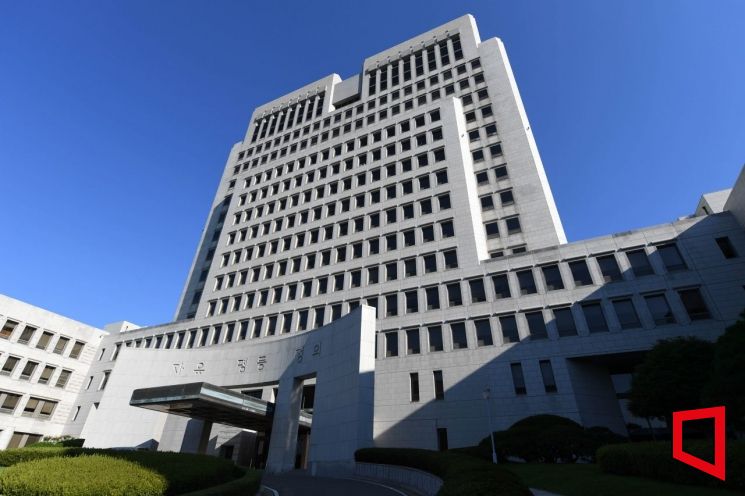
 Supreme Court, Seocho-dong, Seoul / Photo by Honam Moon munonam@
[Asia Economy Reporter Kim Daehyun] The Supreme Court has ruled that if a defendant did not receive the indictment and was unaware that a trial was held, the court cannot confirm a guilty or not guilty verdict in the defendant's absence.
On the 7th, the Supreme Court's 2nd Division (Presiding Justice Noh Jeonghee) announced that it overturned the original sentence of imprisonment in the appeal trial of Mr. A, who was charged with fraud, and remanded the case to the Daegu District Court.
Mr. A was prosecuted on charges of fraud for posting a "false gift certificate sale" on the online marketplace Bungaejangter in 2018, defrauding a total of about 32 million won from 26 victims.
He wrote in the sales post, "I will sell gift certificates at 35% off; if you transfer the payment first, I will deliver the gift certificates after one month," but this was a so-called "Ponzi scheme" where he used money received from new buyers to purchase gift certificates and pay previous buyers.
Because he kept selling gift certificates purchased at the regular price at a discount, Mr. A's debt accumulated excessively, and investigations revealed that he had no intention or ability to supply the gift certificates even after receiving payments from the victims.
The first trial court sentenced Mr. A to 10 months in prison, stating, "There are many victims, and the damages have not been recovered."
However, the trial was held without Mr. A's presence. The court attempted to notify him to appear but could not reach him, and proceeded with the trial by public service of summons (a system where the contents are published in the court gazette and deemed delivered to the parties).
The second trial court also held the trial without Mr. A and dismissed the prosecutor's appeal.
However, Mr. A filed a petition for restoration of the right to appeal after the appeal period had passed, claiming that he did not receive the indictment and was unaware that the trial was held until he learned of the verdict.
Accordingly, the Supreme Court ruled to re-examine and reconsider the case. The court pointed out, "Mr. A was unable to attend the first and second trial procedures due to reasons beyond his responsibility," and "the original court's decision falls under the grounds for retrial stipulated in Article 23-2, Paragraph 1 of the Act on Special Cases Concerning the Promotion of Litigation."
© The Asia Business Daily(www.asiae.co.kr). All rights reserved.
















