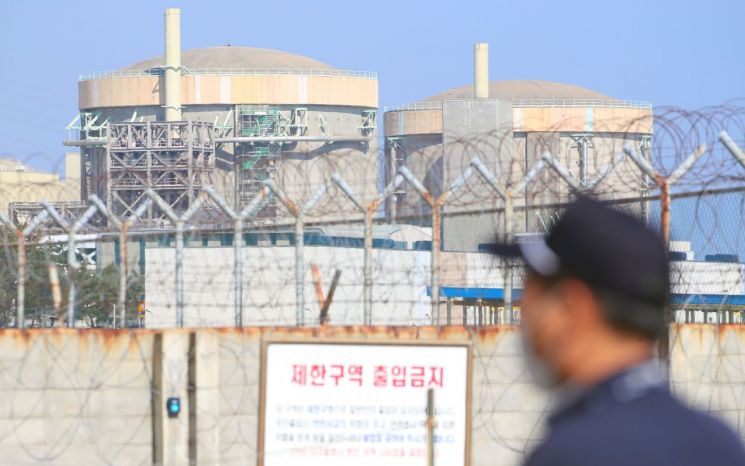
[Sejong=Asia Economy Reporter Kwon Haeyoung] Attention is focused on whether the controversy surrounding the government's nuclear phase-out policy will subside as the Board of Audit and Inspection concluded that there was no procedural illegality in the establishment process of the policy.
A Ministry of Trade, Industry and Energy official said on the 5th, "I hope this Board of Audit and Inspection result will put an end to the exhausting debates over energy policy," and added, "We will continue to pursue energy policy without wavering."
The Board of Audit and Inspection announced that no procedural defects were found in the nuclear phase-out policy. The Board explained, "After reviewing three areas and six items including the energy transition roadmap, various plan establishments, and the deliberation of the Nuclear Promotion Committee based on relevant laws, court precedents, and legal advice, no matters were found to be illegal or procedurally defective."
This decision by the Board has brought significant relief within the Ministry. A Ministry official said, "It is very fortunate that it was concluded there were no procedural defects," adding, "If it had been concluded that there were problems in the policy decision process, the aftermath would have been unimaginable."
The Ministry has consistently pursued the nuclear phase-out policy under the current administration. However, the policy's momentum weakened as it faced the Board of Audit and Inspection's investigation and even a prosecution investigation due to the controversy over the manipulation of the economic feasibility evaluation of Wolseong Unit 1. Above all, with the arrest of the director and secretary in charge of nuclear affairs, a sense of self-mockery and concern spread among Ministry employees, questioning "how policy decisions suddenly became the subject of judicial judgment."
However, this audit is a separate matter from the Board of Audit and Inspection's October last year audit, which concluded that the economic feasibility was unreasonably undervalued in the early closure decision of Wolseong Unit 1. The audit was conducted following a public interest audit request in June 2019, which claimed it was illegal to pursue the nuclear phase-out policy by revising the subordinate plans first, such as the energy transition roadmap and the basic power supply plan, instead of establishing them according to the higher-level energy basic plan.
Meanwhile, both political circles and inside and outside the Ministry are paying close attention to whether the controversy surrounding the nuclear phase-out policy will calm down following this Board of Audit and Inspection decision. There is also keen interest in whether the government's energy transition policy will gain momentum.
© The Asia Business Daily(www.asiae.co.kr). All rights reserved.