Various Safety Trainings Including Non-Face-to-Face Education Planned Besides In-Person Training
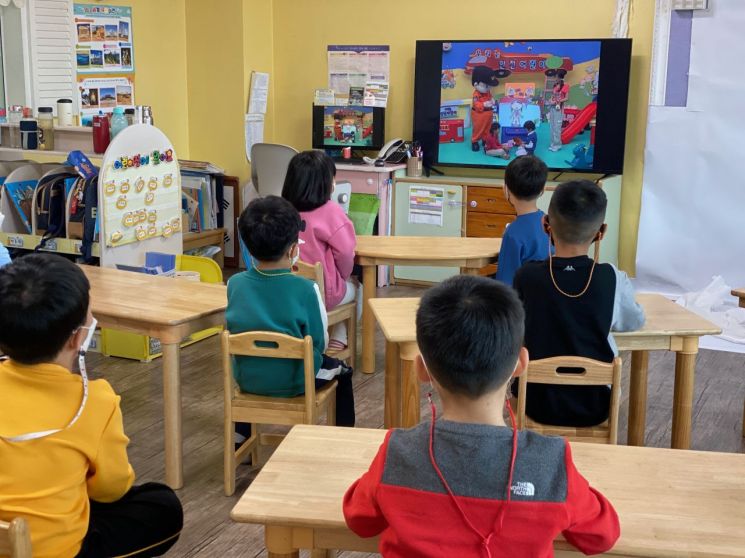
[Asia Economy Yeongnam Reporting Headquarters Reporter Park Saeyan] The Gyeongnam Fire Headquarters announced on the 4th that it will intensively promote fire safety education focused on action guidelines to prevent safety accidents among children and adolescents in the new semester.
In particular, this year, safety education will be promoted through various methods, including non-face-to-face education in addition to face-to-face education.
For schools wishing to receive safety education, firefighters will operate a mobile safety experience vehicle centered on safety experiences and a future firefighter experience classroom.
The main contents include safety action guidelines for each disaster, simulated disaster experiences through virtual reality (VR), fire career experiences, and time for communication about safety.
For non-face-to-face education, if the safety and education officers near each school discuss the education schedule, video education via the internet can be supported.
In addition, experiential teaching materials that allow safety to be learned through games such as daily safety contests will also be supported in a rental format.
According to the analysis of dispatch statistics by the provincial fire headquarters, the total number of emergency dispatches that occurred last year at educational institutions such as kindergartens and schools was 680.
Based on the statutory 171 school days, an average of more than 3.9 emergency dispatches occurred per day.
Among all dispatches, 136 were due to safety accidents excluding illnesses, and the main causes of accidents were falls (77 cases), lacerations (18 cases), and other accidents (17 cases), with most (112 cases, 82.3%) being careless accidents during daily life.
Notably, the start of safety accidents is not in March, when the new semester begins, but in April.
There were zero safety accidents in March last year, but 3 in April, 2 in May, and 23 in June, showing a sharp increase in safety accidents after March.
A representative of the provincial fire headquarters stated that from April, it seems that safety awareness loosens as students feel they have adapted to school life, leading to frequent accidents.
© The Asia Business Daily(www.asiae.co.kr). All rights reserved.
![Clutching a Stolen Dior Bag, Saying "I Hate Being Poor but Real"... The Grotesque Con of a "Human Knockoff" [Slate]](https://cwcontent.asiae.co.kr/asiaresize/183/2026021902243444107_1771435474.jpg)
















