Video Conference at Seminar Hosted by UK Edinburgh University... Emphasizing Global Cooperation
2-3 Years Needed to Achieve Global Herd Immunity, Life Will Improve Going Forward
[Asia Economy Beijing=Special Correspondent Jo Young-shin] The heads of infectious disease response from the United States and China met to discuss global cooperation measures for COVID-19.
China's state-run Xinhua News Agency reported on the 4th that Zhong Nanshan, an academician of the Chinese Academy of Engineering, attended an international epidemic prevention and control online seminar hosted by the University of Edinburgh at 9 p.m. local time on the 2nd, where he held a conversation with Anthony Fauci, director of the U.S. National Institute of Allergy and Infectious Diseases (NIAID).
The dialogue between Academician Zhong and Director Fauci was the first since the COVID-19 pandemic and is significant as it opened the door for cooperation between the two countries' epidemic prevention representatives amid U.S.-China tensions.
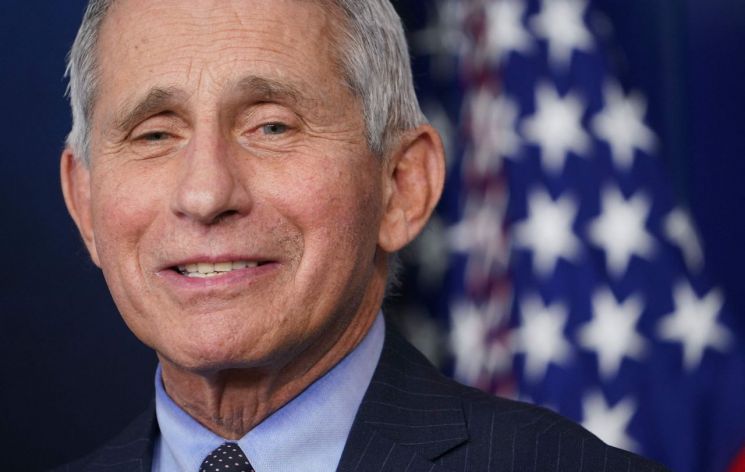
During the conversation, Academician Zhong emphasized global cooperation. He stated, "The novel coronavirus is the enemy of all humanity, and if the virus spreads in one country or a specific nation, it will spread worldwide," highlighting the need for cooperation on a global scale.
He also projected, "Although vaccinations have been carried out since vaccine development, it will take at least 2 to 3 years for the world to form herd immunity."
In response, Director Fauci cited virus mutation as a reason for global cooperation. He said, "It is not enough for one country to successfully prevent an epidemic," adding, "Without cooperation beyond borders, the virus will spread rapidly worldwide, and during this process, variant viruses will emerge."
He continued, "To prevent the spread of infectious diseases, a global epidemic prevention network involving all countries must be established," emphasizing the need for joint response.
Director Fauci particularly mentioned that a balance must be maintained between the economy and epidemic prevention and control. He said, "If we hastily push for a 'normal life,' we may face a counterattack from the epidemic," adding, "It is slow and painful, but risks must be minimized."
Academician Zhong agreed with Fauci's view, stating, "We should not rush economic reopening."
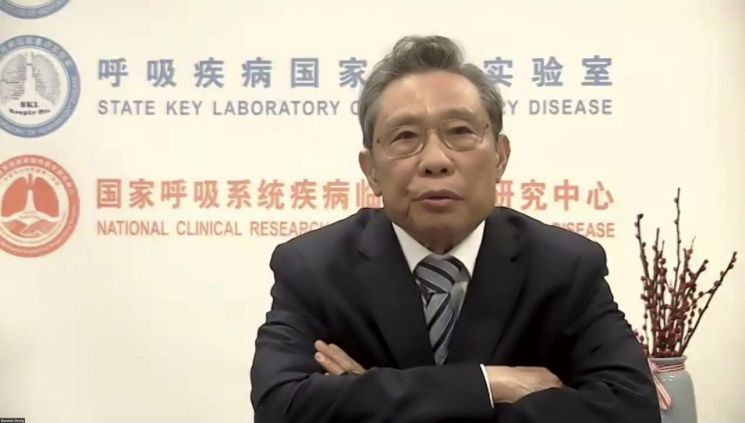
Academician Zhong said, "Since the outbreak of COVID-19 last year, China has spent much time and thought on when to resume economic normalization," adding, "Very strict regulations were established to resume economic activities." He further noted, "If the economy reopens too quickly, the epidemic will strike back," and said this is a problem many other countries face as well.
However, both infectious disease leaders from the two countries predicted that the situation will improve within the next year.
Director Fauci predicted, "Although not everyone worldwide will be vaccinated within a year, since humanity is controlling the epidemic well, the economy will recover, and human life will gradually return to normal."
Academician Zhong also said, "It is difficult to predict what will happen within a year, but if humanity cooperates to regain normal life, the future is not entirely bleak."
© The Asia Business Daily(www.asiae.co.kr). All rights reserved.


















