Big Tech Faces Legal Challenges in Acquisitions
Synergy Also Difficult to Expect
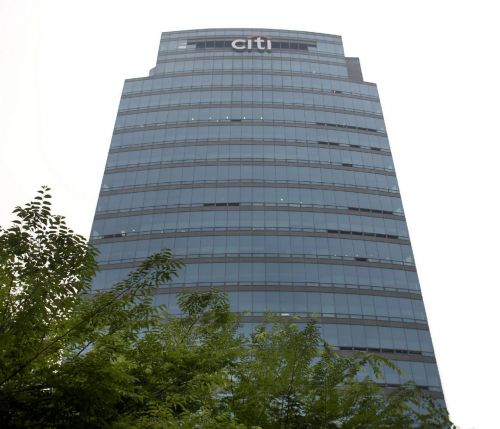
[Asia Economy Reporter Kiho Sung] As rumors of Citibank Korea's withdrawal resurface, there is growing interest in the financial sector about whether it will be put up for sale. In particular, there are expectations that regional financial companies or big tech (large information and communication companies) might show interest. However, big tech companies face difficulties in acquisition due to relatively low profitability compared to their size and the burden of absorbing personnel and branches.
According to the financial sector on the 3rd, The Wall Street Journal reported that Jane Fraser, the new CEO of Citigroup in the U.S., is recently reviewing a comprehensive restructuring of the group. According to the report, Citigroup is highly likely to cease commercial banking (retail finance) operations in some parts of Asia, including Korea and Vietnam, leaving only investment banking (IB) functions. This is the first time Korea has been explicitly mentioned as a withdrawal target. Earlier, Bloomberg News reported that Citigroup might carry out restructuring in the Asia-Pacific region. Citigroup has now specifically mentioned the Korean market.
If Citigroup were to wind down the consumer division of Citibank Korea, there is a prospect that a large-scale merger and acquisition (M&A) opportunity could open up. However, the dominant view is negative regarding the success of such a deal. The most likely candidates, big tech companies, say the acquisition is unattractive and unlikely. Kakao Bank and K Bank have stated that they have never considered acquiring Citibank Korea.
The biggest reason is the difficulty in overcoming legal hurdles. Since Kakao Bank and K Bank have major shareholders from non-financial capital, under the principle of separation of banking and industry, they can only own up to 10% of bank shares (15% for regional banks). This is the same situation for other fintech companies like Naver.
Although significantly reduced, the fact that there are still double-digit numbers of branches remaining is also a problem. According to the Electronic Financial Transactions Act, internet banks are required to provide financial products through electronic devices and prohibit users from face-to-face interactions with employees of financial companies or electronic financial service providers. Therefore, even if Citibank Korea is acquired, the acquirer would face the challenging task of closing all branches and managing all related personnel.
There is also talk of converting Citibank Korea into an internet-only bank, but this is not easy either. If converted to an internet-only bank, the acquiring company can hold up to 34% of shares. However, the company must not have received fines or higher sanctions under the Fair Trade Act in the past five years, and government approval is required to convert Citibank Korea into an internet bank. Even if a big tech company attempts acquisition, there are many hurdles to overcome.
A big tech industry insider said, "Due to current laws, acquisition is difficult, and if Citibank Korea is converted to an internet bank, the possibility of acquisition slightly increases. However, big tech companies focused on electronic finance have no reason to newly acquire an internet bank."
© The Asia Business Daily(www.asiae.co.kr). All rights reserved.
!["The Woman Who Threw Herself into the Water Clutching a Stolen Dior Bag"...A Grotesque Success Story That Shakes the Korean Psyche [Slate]](https://cwcontent.asiae.co.kr/asiaresize/183/2026021902243444107_1771435474.jpg)
















