[Asia Economy Reporter Park So-yeon] The Construction Workers’ Mutual Aid Association is regarded as one of the most risk-conscious institutional investors in South Korea. This is due to its nature as an agency under the Ministry of Employment and Labor, established to contribute to the stable retirement life of construction workers. Unlike other mutual aid associations, it operates with stability as the top priority because there is no fund deficit compensation clause in case of losses caused by poor investment assets, resulting in a lower proportion of risky asset investments compared to other pension funds or mutual aid associations.
While maintaining a low risk level for managed assets, the institution’s mid- to long-term asset management structure is quite similar to the retirement pension management structure in the financial sector, consistently showing stable returns. Therefore, in years like 2020 when stock investment returns were higher than other asset classes, the Construction Workers’ Mutual Aid Association’s returns may appear lower compared to other pension funds with higher stock allocations. However, in years like 2018 when stock markets performed poorly, the association posted positive returns while other pension funds showed negative results.
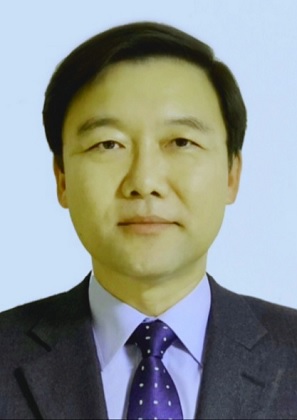
Lee Wi-hwan, Chief Investment Officer (CIO) of the Construction Workers’ Mutual Aid Association’s Asset Management Headquarters, said in an interview with Asia Economy on the 2nd, “The asset deterioration caused by the COVID-19 pandemic in 2020 is expected to gradually emerge, especially in investments such as aircraft, hotels, and resorts, which were severely impacted by travel restrictions and reduced consumption.” Although the association has managed to endure the prolonged COVID-19 crisis throughout 2020, the unprecedented and widespread market shock means the negative impact of asset deterioration cannot be overlooked. Even if consumption recovery and economic stimulus proceed during 2021, it is expected to take considerable time and effort to return to pre-COVID conditions in terms of speed and direction.
As COVID-19 prolongs, signs of investment deterioration are intensifying in overseas real estate alternative investment funds invested in by domestic and foreign asset managers. In recent years, investment funds have been concentrated in physical assets such as office buildings, overseas real estate, and aircraft, which have been directly hit by COVID-19, leading to reduced rental income or delayed interest payments. Investment risks are also increasing in overseas real estate such as hotels and resorts, as well as aircraft. Lee Wi-hwan warned that if the conditions for overseas alternative investments maturing this year do not recover, losses for domestic financial institutions and other institutional investors could become a reality.
Lee Wi-hwan has accumulated experience in stock and bond investments while working at Samsung Life Insurance, Samsung Asset Management, and Hanwha General Insurance. From 2005 to 2010, he worked in London, UK, gaining insight into international financial market trends. With extensive insurance industry experience, Lee places great importance on investment safety. His awareness of risk management heightened further when he took charge of asset management at the Construction Workers’ Mutual Aid Association, which manages the retirement funds of construction workers. Prioritizing investment safety as the highest value in asset management, the association avoided the 'Lime-Optimus scandal' that caused losses for many financial institutions and institutional investors last year and also escaped alternative asset deterioration during the COVID-19 situation.
This year, the association plans to further reduce the stock investment portion, which stood at about 9% of total managed assets as of the end of last year, emphasizing risk management. Lee Wi-hwan said, “We intend to reduce assets with high volatility further. Compared to stocks, alternative investment assets with lower volatility and stable cash flow will be expanded additionally if market opportunities arise.” He added, “Strengthening alternative investments in logistics centers and data centers is a global trend, but there is a possibility of irrational price increases. We will carefully monitor the risks associated with these assets while investing.”
He emphasized that quickly responding to changes in investment paradigms is also essential for investment stability. Lee Wi-hwan said, “Although sectors like data centers, logistics centers, infrastructure, and renewable energy such as solar power are already mature, we believe there will still be niche investment opportunities.” He added, “Investment paradigms can change at any time. It is questionable whether Amazon will still own logistics centers 10 years from now.” While logistics centers are currently necessary and profitable due to the rise of untact (contactless) trends amid COVID-19, he anticipates that within the next decade, an era will come where products are delivered directly from production bases to consumers. He also hinted that investment opportunities related to ESG (Environmental, Social, and Governance) and the space industry will expand.
Lee Wi-hwan forecasted that despite vaccine distribution, disparities between countries will persist, and economic recovery will take longer than current projections. He said, “Many predict explosive consumption and rapid economic recovery, but I am somewhat skeptical. Governments have spent heavily due to COVID-19, but they cannot just keep printing money. Interest rates are already rising.” He warned that the timing of U.S. interest rate hikes could be sooner than expected. “The U.S. 10-year Treasury yield will gradually approach the 2% range. If that happens, the current base interest rate cannot be maintained,” he said. He added, “It cannot be completely ruled out that the U.S. base interest rate hike could become visible as early as the end of this year. This will have a significant impact on all investors in the capital markets.”
Meanwhile, the Construction Workers’ Mutual Aid Association has steadily increased its managed assets through thorough risk management. The assets under management (AUM) grew from 2.7065 trillion KRW at the end of 2015 to 4.0104 trillion KRW as of the end of last year. Despite an expected increase in fund outflows due to the relaxation of retirement mutual aid fund eligibility by the end of this year, the association aims to grow its asset size through improved returns.
◇Major Business Details of the Construction Workers’ Mutual Aid Retirement Fund
Mandatory Enrollment Workplaces
Public construction projects, private investment attraction projects → Construction contract amount of 100 million KRW or more
Private construction projects → 200 units (rooms) or 5 billion KRW or more
Scope of Workers Covered by Retirement Mutual Aid
Daily workers employed at construction sites enrolled in the retirement mutual aid
Workers or temporary workers with employment contracts of less than one year
Retirement Mutual Aid Fund
Accumulated funds available to construction workers who have worked at least 252 days or are aged 65 or older,
Paid by adding interest to the daily mutual aid contribution of 6,500 KRW (6,200 KRW retirement mutual aid fund + 300 KRW additional contribution) accumulated according to the number of working days
(For deceased workers, payment is made even if the accumulation is less than 252 days)
Electronic Card System
Records work attendance at construction sites using the 'Hanaro Electronic Card' tag
Applied to newly ordered construction projects from November 27, 2020
Introduction of Construction Skilled Worker Grading System
Calculation and classification management system for skill grades by occupation
Scheduled to be implemented from May 27, 2021
© The Asia Business Daily(www.asiae.co.kr). All rights reserved.
















