Established Principles and Standards for 90% of National Laws and Administrative Regulations... Expected Reduction in Administrative Waste
Minister of Legislation: "Protecting Citizens' Rights, Advancing Rule of Law, Promoting Proactive Administration and Regulatory Innovation"
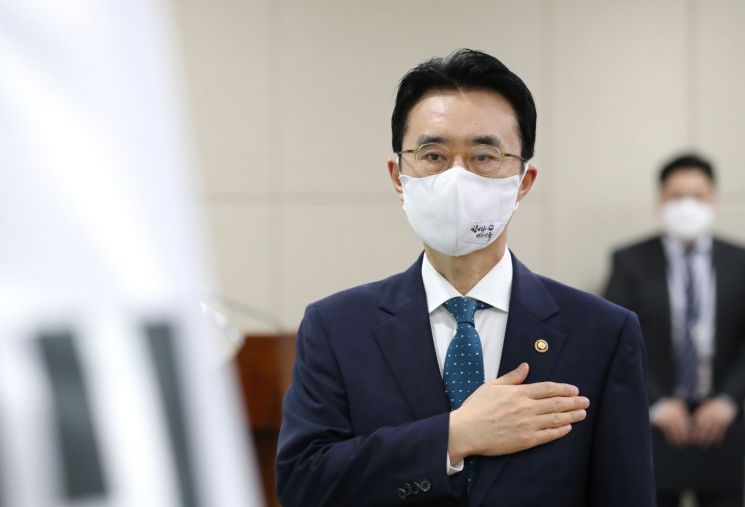
[Sejong=Asia Economy Reporter Moon Chaeseok] The bill to enact the 'Administrative Basic Act' has passed the plenary session of the National Assembly. It is expected to resolve confusion caused by different regulations on systems such as permits and fines in each law, and the issue of having to amend hundreds of laws individually to improve a single system.
On the 28th, the Ministry of Government Legislation announced that the bill to enact the Administrative Basic Act passed the plenary session of the National Assembly on the 26th.
Although administrative statutes account for the majority of national statutes, unlike civil (Civil Act), criminal (Criminal Act), and commercial (Commercial Act) fields, there was no basic law serving as a principle or standard for law enforcement.
Different laws regulated the same systems such as permits and fines differently, causing confusion among the public. In particular, improving a single system required amending hundreds of laws individually, which also hindered regulatory innovation.
First, constitutional principles such as rule of law administration, equality, and proportionality, as well as principles established by academic theories and precedents such as protection of trust and prohibition of unfair conditions, were codified as legal principles of administration. The conditions and limits for exercising the right to cancel illegal or unfair dispositions and the right to withdraw lawful dispositions, established through precedents, were presented.
To increase predictability in administration and stabilize the legal status of the public, the possible period for imposing sanctions such as business closure (statute of limitations) was limited to five years.
To improve administrative efficiency, clear standards for the application of new and old laws during legislative amendments were established. As a principle, dispositions based on applications follow the laws at the time of disposition, and sanction dispositions follow the laws at the time of the violation. Unified standards were prepared for common matters scattered across individual laws such as permit presumptions, fines, and compulsory execution fees.
The promotion of proactive administration by public officials was stipulated as a legal obligation, and it was specified that the state and local governments have an obligation to promote policies to activate proactive administration.
To expand means of protecting citizens' rights and interests, a general basis for the objection system was created to expand opportunities to raise objections before administrative appeals and administrative litigation. Even when it becomes impossible to dispute a disposition through litigation, in certain cases, a request for reexamination of the disposition can be made.
Lee Kang-seop, head of the Ministry of Government Legislation, emphasized, "The enactment of the Administrative Basic Act is an important legislative achievement that lays the foundation for transitioning to a citizen-centered administrative law system and advancing our laws and administration to the next level. It will greatly contribute to protecting citizens' rights and interests, developing the rule of law, and promoting proactive administration and regulatory innovation."
The law is scheduled to be promulgated and enforced next month. The Ministry of Government Legislation plans to promptly carry out follow-up measures such as drafting enforcement decrees and revising and improving related individual laws.
© The Asia Business Daily(www.asiae.co.kr). All rights reserved.
![Clutching a Stolen Dior Bag, Saying "I Hate Being Poor but Real"... The Grotesque Con of a "Human Knockoff" [Slate]](https://cwcontent.asiae.co.kr/asiaresize/183/2026021902243444107_1771435474.jpg)











