Seoul Housing Supply-Demand Index Declines for 2 Consecutive Weeks
Increased Caution Since 2·4 Measures Announcement
Byun Changhoom: "No Immediate Reason to Buy a House"
However, Too Early to Talk About Market Stabilization
Housing Price Increase Rate in Capital Region Rather Expands
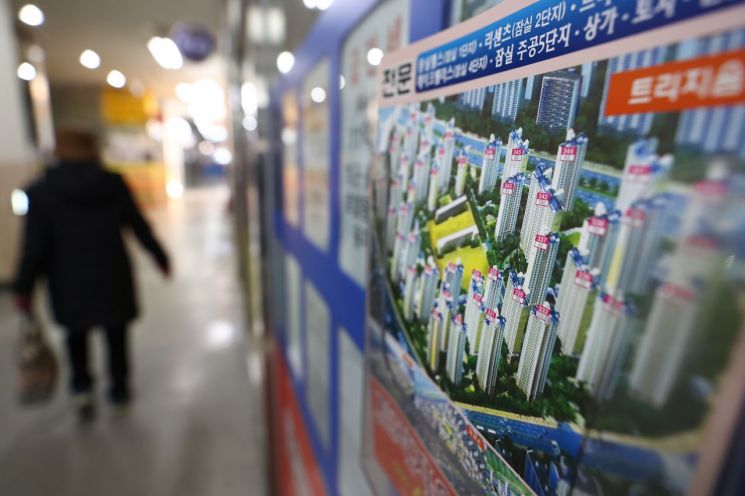
Buyer sentiment for apartments in Seoul has contracted for two consecutive weeks compared to the previous week. This is interpreted as the market adopting a wait-and-see stance following the government's announcement of the 2·4 Housing Supply Plan, which aims to supply 320,000 units in Seoul and 830,000 units nationwide.
However, many analyses suggest it is premature to say the market has entered a stabilization phase, as buying demand still outweighs selling, and in the past, house prices have slightly paused after government policy announcements before rising sharply again.
According to the Korea Real Estate Board on the 27th, as of the 22nd, Seoul's apartment sales supply-demand index recorded 109.8, down 0.8 points from last week's 110.6.
The Seoul sales supply-demand index has been rising since surpassing the baseline of 100 at 100.2 in the fourth week of November last year, increasing until the second week of this month, but the rate of increase has narrowed over the past two weeks.
The sales supply-demand index is expressed as a number between 0 and 200, with values above 100 indicating demand exceeds housing supply. It is calculated by analyzing surveys from member real estate agencies and the number of online listings.
The metropolitan area apartment sales supply-demand index also recorded 118.8 in the second week of this month, the highest since the Korea Real Estate Board began tracking this index in July 2012, before slightly decreasing to 118.2 for two consecutive weeks.
This slight weakening in buying demand is analyzed to be influenced by the government's announcement of the 2·4 Plan. As a follow-up measure, the government recently designated the Gwangmyeong-Siheung district adjacent to Seoul as the sixth 3rd New Town and decided to supply 70,000 housing units. Of these, 45,500 units will be offered through private and public sales.
On the 25th, Land, Infrastructure and Transport Minister Byeon Chang-heum appeared on a YouTube broadcast of a news agency and expressed confidence in stabilizing house prices, stating, "If cheaper houses come out next year or in three to five years, there is no reason to rush to buy a house now," and "We will continue to announce detailed measures to give such confidence."
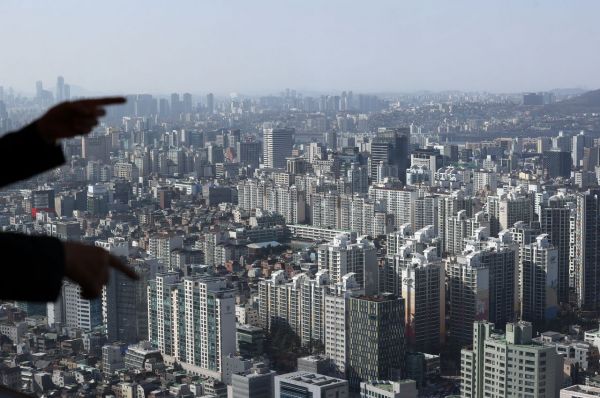
However, many in the market still argue that it is too early to talk about house price stabilization. Although buying demand has somewhat weakened, the market remains supply-dominant, and house prices in Seoul and the metropolitan area continue to rise.
In particular, the apartment price increase rate in the metropolitan area slightly expanded from 0.30% last week to 0.31% this week. After the 2·4 Plan announcement, the weekly increase rate showed a slight pause but expanded again within a week.
Seoul also showed a 0.10% increase in the first week of this month, followed by two consecutive weeks of narrowing gains, but this week recorded the same 0.08% increase as last week, indicating a sideways movement. While prices in the Gangbuk area showed some stagnation, the Gangnam area, where major reconstruction complexes are concentrated, is experiencing a growing upward momentum due to development expectations.
An official from the Korea Real Estate Board said, "The Seoul apartment sales supply-demand index has been declining since the 2·4 Plan," but added, "It is still difficult to say that the effects of the plan are fully manifesting."
© The Asia Business Daily(www.asiae.co.kr). All rights reserved.


















