[Asia Economy New York=Correspondent Baek Jong-min] The arrival of the third COVID-19 vaccine in the United States is imminent.
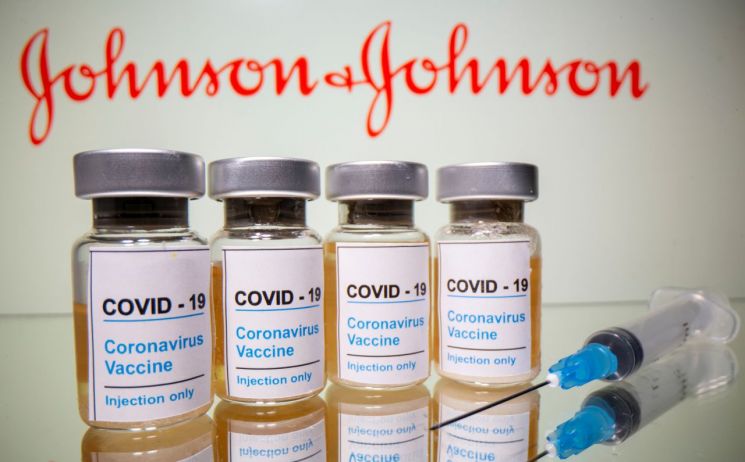
The Vaccines and Related Biological Products Advisory Committee (VRBPAC), an advisory body to the U.S. Food and Drug Administration (FDA), unanimously recommended emergency use authorization (EUA) for Johnson & Johnson's (J&J) COVID-19 vaccine on the 26th (local time).
If the FDA accepts the advisory committee's recommendation and grants emergency use approval, the U.S. will secure the third vaccine available for general public inoculation following Pfizer-BioNTech and Moderna vaccines. U.S. media reported that since the FDA previously approved Pfizer and Moderna vaccines following advisory committee recommendations, approval is expected this time as well. Approval could come as early as tonight.
After FDA approval, the vaccine can be administered to the general public following final approval procedures by the Centers for Disease Control and Prevention (CDC). The CDC's advisory committee, the Advisory Committee on Immunization Practices (ACIP), will discuss whether this vaccine is suitable for Americans and establish a recommendation. If CDC Director Rochelle Walensky accepts the advisory committee's recommendation, Americans will be able to receive the J&J vaccine.
The CDC advisory committee is also scheduled to hold an emergency meeting on the 28th of this month to vote on this issue and may designate priority groups for vaccination.
The J&J vaccine is considered a significant breakthrough in expanding COVID-19 vaccinations because it provides sufficient immunity with just one dose and can be stored using standard refrigeration facilities.
Clinical trials conducted in the U.S., South Africa, and South America showed that the vaccine has an overall efficacy of 66% in preventing mild to severe cases. It was 85% effective in preventing hospitalization, and no deaths from COVID-19 occurred among those vaccinated with this vaccine.
However, CNN reported that there were two cases of allergic reactions among clinical trial participants who received the vaccine. J&J explained that one allergic reaction case involved an anaphylaxis response from a healthcare worker participating in the South African clinical trial. Details about the other case were not specifically disclosed.
J&J's vaccine efficacy is lower than that of Pfizer (94%) and Moderna (95%) vaccines. During the meeting, J&J explained that this is likely because their clinical trials were conducted at a time when more coronavirus variants were circulating, some of which evade immune responses.
Unlike Pfizer and Moderna vaccines, which use the latest messenger RNA (mRNA) technology, J&J's vaccine was developed using a common cold virus called an 'adenovirus.' The adenovirus is genetically engineered so it cannot replicate in the body, and the genetic code of the coronavirus is inserted. When injected into the arm, some cells in the arm become infected with this virus. These infected cells then produce substances that resemble pieces of the coronavirus, triggering an immune response. This is a more traditional vaccine technology.
© The Asia Business Daily(www.asiae.co.kr). All rights reserved.