Musk "Regret Not Buying Earlier"
Gates "If You Have Less Money Than Musk, Don't Buy"
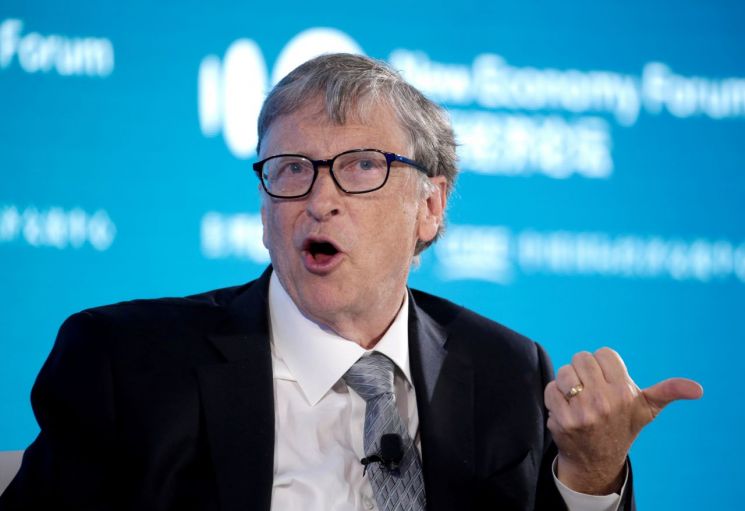
[Asia Economy Reporter Kim Suhwan] “If you’re not rich like Musk, don’t buy Bitcoin” (Bill Gates, Microsoft Founder) VS “I regret not buying Bitcoin earlier” (Elon Musk, Tesla CEO)
Bitcoin, which has become a major issue among investors worldwide, has recently seen prominent figures in the U.S. economic sector publicly share their opinions. In particular, the Bitcoin debate has intensified as Gates and Musk, both global billionaires and entrepreneurs, express completely opposite views on Bitcoin.
Gates regards Bitcoin as an unnecessary asset that only consumes power resources and has no investment value. He criticized the massive waste of resources involved in Bitcoin mining. In an interview with Bloomberg on the 23rd, he said, “What concerns me is that individual investors who are not wealthy are jumping into the Bitcoin frenzy,” adding, “Unless you have money like Musk, you should be cautious about investing in Bitcoin.”
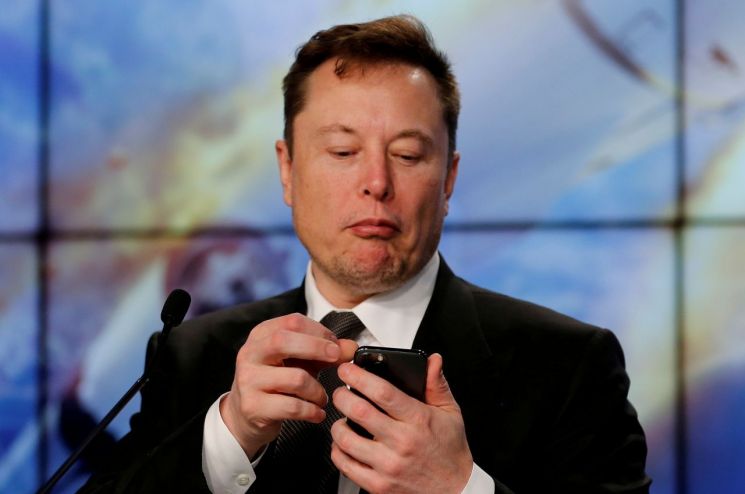
In contrast, Musk actively encourages Bitcoin investment, revealing earlier this month that Tesla purchased $1.5 billion worth of Bitcoin. During a discussion on the social networking service (SNS) app Clubhouse on the 1st, he said, “I am a Bitcoin supporter” and “I regret not buying it earlier.” He also added, “I hope Bitcoin will be widely accepted by financial investors.”
His encouragement is credited with contributing to the recent Bitcoin rally. According to CoinDesk, Bitcoin prices surged 76% after Tesla’s Bitcoin purchase was disclosed on the 8th.
Prominent Figures’ Bitcoin 'Quotes'... Debate Over Currency or Speculation
The controversy over Bitcoin’s value in the U.S. shows no signs of subsiding. At the heart of this debate is a difference in values regarding what kind of asset Bitcoin should be considered.
Those who view Bitcoin negatively criticize it on the grounds that “it is difficult to replace currency” (Jerome Powell, Chair of the U.S. Federal Reserve). They argue that because there is no central authority like a central bank to control and monitor transactions, Bitcoin is likely to be used for illegal transactions, and its high volatility makes price determination difficult.
Warren Buffett, CEO of Berkshire Hathaway and known as an “investment master,” also downplayed Bitcoin in an early-month interview with CNBC, saying, “Bitcoin has no value at all and there is no reason to invest,” and added, “Because transactions are anonymous, it is highly likely to be used for illegal financial transactions.” Janet Yellen, U.S. Treasury Secretary, also criticized Bitcoin in an interview with CNBC on the 22nd, calling it “a very inefficient means of transaction” and “a very risky investment asset due to its price volatility.”
On the other hand, proponents of Bitcoin argue that “Bitcoin is digital gold” (Michael Saylor, MicroStrategy CEO) and insist that its value as a future asset and currency must be recognized. In the digital age, cash, which was the traditional means of transaction, is gradually losing its appeal as currency, and Bitcoin, which can be easily traded in electronic form, is emerging as a future asset.
Jack Dorsey, CEO of the social networking service Twitter, said in a 2018 interview with the British media The Times that Bitcoin “will become the single currency of the future” and that “this is an inevitable change.” Rick Rieder, Chief Investment Officer of BlackRock, the world’s largest asset management company, announced BlackRock’s Bitcoin investment plan on the 17th, emphasizing, “With technological advances, the concept of investment assets as we knew them has begun to change,” and “Bitcoin will remain one of the essential portfolio assets for investors in the future.”
In fact, Bitcoin is increasingly being incorporated into mainstream investment targets. This is because Bitcoin investments by U.S. IT companies, including Tesla, are continuing. On the 23rd, U.S. electronic payment company Square announced it would purchase $170 million (about 190 billion KRW) worth of Bitcoin, and PayPal, the largest U.S. electronic payment company, started Bitcoin trading services in October last year. Additionally, Visa and MasterCard recently announced plans to allow Bitcoin trading through their platforms.
Bloomberg reported, “With the recent emergence of Bitcoin ETFs and institutional investors including cryptocurrencies in their investment portfolios, the investment craze is expected to continue,” adding, “The controversy surrounding Bitcoin will not end easily.”
© The Asia Business Daily(www.asiae.co.kr). All rights reserved.


















