[Asia Economy Reporters Naju-seok and Lee Hyun-joo] The amendment to the Medical Service Act that would revoke the licenses of doctors who commit serious crimes failed to be brought to the plenary session on the 26th. The Legislation and Judiciary Committee, which reviewed the system and wording of the amendment, decided to shelve the agenda at the plenary meeting.
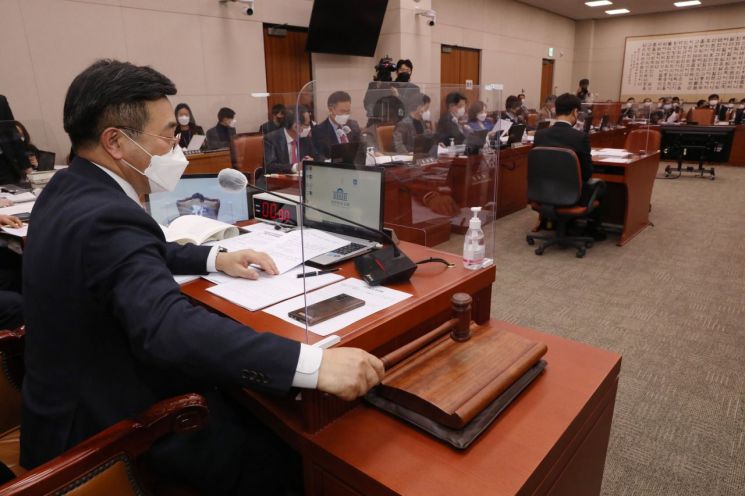
The Legislation and Judiciary Committee held a plenary meeting that day to attempt to process the Medical Service Act amendment, but it did not pass the committee stage.
The amendment allows for the revocation of licenses of medical professionals who have been sentenced to imprisonment or higher. According to the amendment, medical professionals who commit serious crimes such as sexual assault will have their licenses revoked. However, cases involving professional negligence resulting in death or injury are excluded from license revocation.
Regarding the amendment, the Korean Medical Association strongly opposed it, calling it a retaliatory license confiscation law. The association cited refusal to cooperate with COVID-19 vaccination and general strikes as part of their opposition.
In the political sphere, voices mainly from the Democratic Party of Korea argued that since the law applies to other professionals such as lawyers and accountants, medical professionals should not be exempt, and thus the Medical Service Act should be amended accordingly. On the other hand, opposition parties such as the People Power Party took a cautious stance, citing the COVID-19 period as a reason.
Additionally, opposition parties raised issues with the amendment, arguing that it violates the principle of minimal infringement. People Power Party lawmaker Jang Je-won stated, "While licenses should certainly be revoked for crimes such as murder, robbery, and sexual offenses, revoking licenses for crimes unrelated to professional duties, such as violations of the Public Official Election Act, violates the constitutional principle of minimal infringement," expressing opposition.
© The Asia Business Daily(www.asiae.co.kr). All rights reserved.

















