Worst Locust Swarm in 70 Years
Startup Offers "500 Won per kg of Locusts"
Capturing Them to Convert into Protein Feed or Organic Fertilizer
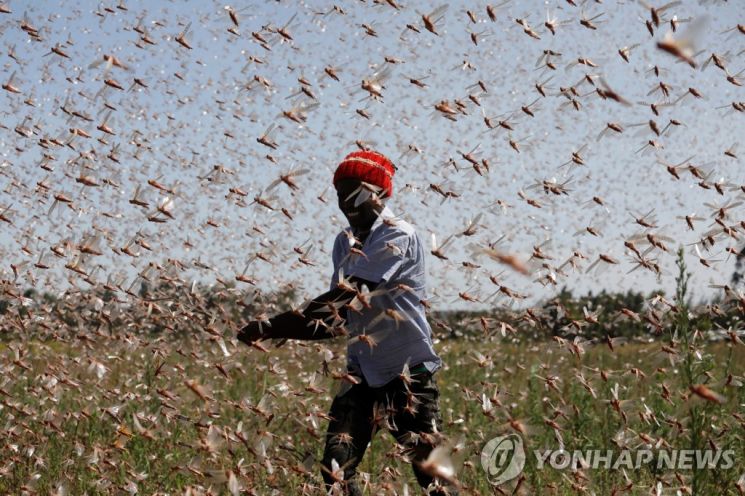 A swarm of locusts struck the Rumuruti area in Kenya on the 1st (local time). [Image source=Yonhap News]
[Asia Economy Reporter Kim Bong-ju] Kenyan farmers are attracting attention by capturing locust swarms that devastate crops.
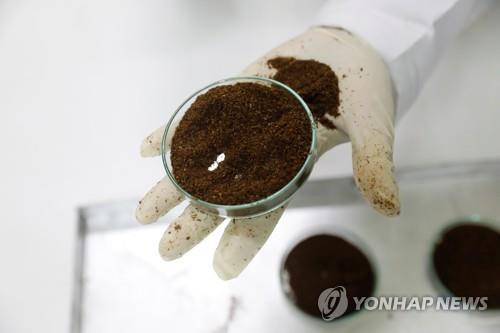
According to Euronews and others on the 24th (local time), an African startup called The Bug Picture is capturing locust swarms together with residents in central Kenya regions such as Laikipia, Isiolo, and Samburu, converting them into protein feed or organic fertilizer.
The Bug Picture founder Laura Stanford heard stories of farmers despairing over locust swarms destroying their hard-cultivated crops and devised a sustainable method to turn crop-destroying pests into animal feed that can also generate profit.
The Bug Picture targets locust swarms covering farmland areas of less than 5 hectares (0.05㎢) that cannot be eliminated with pesticides. The company pays residents 50 shillings (about 500 won) per kilogram for capturing locusts and collected a total of 1.3 tons of locusts from the 1st to the 18th of this month.
On its website, The Bug Picture stated, "Traditional protein production methods for feed using soybeans, fish, etc., destroy forests and resources. We are transforming people's perspectives to see insects as a cost-competitive and environmentally sustainable protein source."
It added, "By 2050, when the East African population doubles, meat demand will increase even more, emerging as a socio-economic issue," and said, "We want to contribute to solving food problems by utilizing natural resources that cause less environmental destruction."
Currently, Kenya and other northeastern African countries are battling crop epidemics caused by the worst locust swarms in 70 years. These locust swarms can travel up to 150 km per day, devouring crops completely and causing a food crisis. Typically, locusts number 40 to 80 million per square kilometer and can consume enough food daily to feed 3,500 people.
Laura Stanford said, "I want to help Kenyan residents view locust harvesting and selling as a 'seasonal crop' and make a profit from it."
© The Asia Business Daily(www.asiae.co.kr). All rights reserved.


















