Seoul Sees 60 Apartment Sale Contract Cancellations in Jan-Feb, 55% at Record Prices
Intentional Acts to Inflate Housing Prices Questioned Amid Counterarguments
"Regardless of Intent, Record Prices Affect Housing Market... Need Careful Examination"
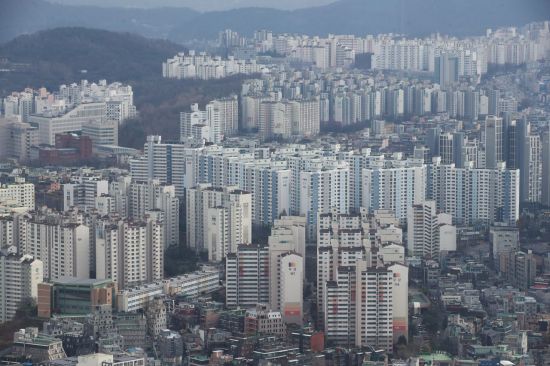
[Asia Economy Reporter Kim Hyemin] Controversy is growing over 'cancellation of contracts at record high prices' disrupting apartment market prices. About half of the contracts canceled last year were confirmed to be at record high prices, raising suspicions that this might be a deliberate tactic to increase market prices or boost transactions. This trend appears to be continuing into this year as well.
According to an analysis of apartment sales registered on the Ministry of Land, Infrastructure and Transport's real transaction price disclosure system in Seoul on the 23rd, a total of 60 transactions were canceled over the past two months, of which 33 cases, or 55%, were at the highest price at the time. By district, all four canceled transactions in Yeongdeungpo-gu were record highs, and Seongdong-gu (75%), Dongdaemun-gu (75%), and Gangnam-gu (66.6%) also showed high proportions.
As the proportion of record high prices among canceled contracts is confirmed to be high, some are casting suspicious eyes, questioning whether false contracts were made to raise house prices.
Until earlier this month, while real transaction prices were disclosed, canceled contracts were not made public, and it is alleged that this was exploited to deceive the market into thinking prices were higher or transactions were more active. This disrupts the market by making it appear that apartments were traded at much higher prices than before, then inducing transactions at slightly lower amounts than those prices. In politics, Assemblyman Cheon Junho of the Democratic Party raised suspicions, and Minister of Land, Infrastructure and Transport Byeon Changheum agreed, stating that "the matter should be thoroughly investigated."
However, on the other hand, it is pointed out that with rapidly rising house prices, some previously lower-priced contracts were canceled. There were also simple cancellation cases where the same transaction was registered multiple times.
Nonetheless, whether by coincidence or intention, it is pointed out that canceled record high prices inevitably affect the prices of the respective apartments or surrounding houses. This is because real transaction prices serve as a barometer for both sellers and buyers to judge market prices. Portals and real estate applications (apps) that provide real transaction prices do not separately indicate 'transaction cancellations,' which can cause confusion among consumers.
For example, in Cheongnyangni-dong, Dongdaemun-gu, Seoul, a 101.65㎡ unit in 'Miju' was contracted for sale at 1.25 billion KRW on the 8th of last month but was canceled on the 27th. However, during that period, the same unit was sold at a higher price of 1.29 billion KRW (on the 21st).
In Cheonwang-dong, Guro-gu, 'Yeonji Town Complex 2' (84.9㎡) was contracted for sale at 845 million KRW on the 11th. This was a 50 million KRW increase from 795 million KRW two months earlier. The same unit was later sold on the 24th of the same month at 838 million KRW, which is 7 million KRW lower. However, the transaction on the 8th, which raised the price to the 800 million KRW range, was suddenly canceled on the 28th.
Kim Taehoon, head of the data research team at real estate information company Disco, said, "Apartment prices vary even within the same complex and floor area depending on the complex, floor level, sunlight exposure, and whether there is a tenant. In areas with higher speculative risk than Seoul or other regions, if there are transactions that have risen sharply compared to other real transaction prices, the reasons should be investigated to determine if they are false listings."
© The Asia Business Daily(www.asiae.co.kr). All rights reserved.

















