"6 Deaths During Clinical Trials", "Fetal Lung Tissue Found"
Fake News Used as a Tool for Political Conflict by Some YouTubers Spreading Fear
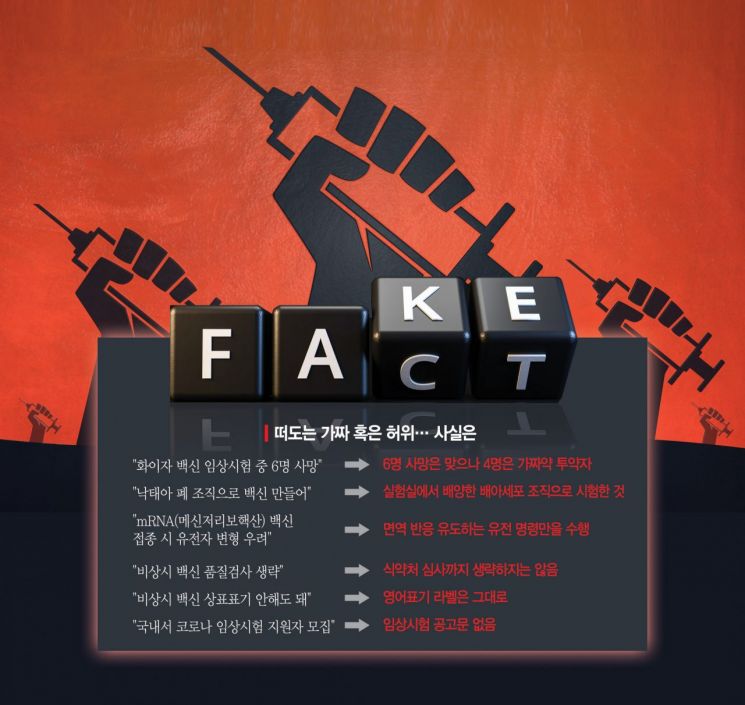
[Asia Economy Reporter Donghoon Jeong] "Six people who received the vaccine died," "It causes genetic mutations," "A notice recruiting volunteers for COVID-19 clinical trials has been posted."
As COVID-19 vaccination approaches, fake news and misinformation that distort and exaggerate the risks of vaccines are spreading, causing anxiety. Nearly 100 million people worldwide have already been vaccinated, but as reports of side effects and deaths continue, 'fake news' about vaccines is also amplifying on social networking services (SNS) and YouTube. The fake news claiming that "six people died during Pfizer vaccine clinical trials, so the vaccine is dangerous" has been widely circulated mainly on SNS. However, among the deaths during the actual clinical trial period, four were placebo recipients. The other two who died had actually received the vaccine, but it is difficult to conclude that the vaccine caused their deaths. Similarly, claims that "mRNA (messenger RNA)-based vaccines such as Pfizer and Moderna cause genetic mutations upon vaccination" are unfounded. While these claims argue that the genetic material in the vaccine can cause genetic mutations, the genetic material in mRNA vaccines only carries genetic instructions to induce an immune response that prevents COVID-19 infection. After triggering the necessary immune response, it naturally degrades and cannot alter the human genome, according to experts.
There are also claims that aborted fetal lung tissue is included in COVID-19 vaccines. This appears to stem from the use of embryonic cell lines cultured in laboratories during vaccine testing. Developers of the AstraZeneca vaccine have stated, "We conducted research using replicated cells, but these are not cells from aborted fetuses." Absurd claims that 'nanochips' contained in vaccines control the human body have also been circulated. Reports about vaccine-related bills proposed in the National Assembly, such as skipping inspections of imported vaccines or removing brand names, were also inaccurate. Notices recruiting volunteers for COVID-19 clinical trials circulating on the internet were proven to be fake.
Fake news, misinformation, and distortion undermine trust in vaccines and lower vaccination rates. During last year's influenza vaccination campaign, unfounded fake news caused the vaccination rate to drop by 9 percentage points from the previous year (2019), falling to 71%. According to a recent survey conducted by a research team led by Myungsun Yoo at Seoul National University Graduate School of Public Health regarding COVID-19 vaccination, when asked "How do you want to act regarding the COVID-19 vaccination schedule?" 45.3% of respondents said they wanted to get vaccinated according to the government's quarterly schedule, but 26.8% said they wanted to postpone the timing or order of vaccination, and 4.9% said they would refuse vaccination. One in three people expressed a desire to delay vaccination timing or order, indicating that anxiety about vaccination has not been dispelled.
The rampant spread of fake news is driven by some YouTubers who "sell fear" for profit or use it as a tool for political conflict. The police plan to take a strong stance against the dissemination of fake news. At a press briefing held at the Seoul Seodaemun-gu Police Agency the day before, Commissioner General Changryong Kim stated, "We anticipate fake news exaggerating or distorting personal experiences and aftereffects related to COVID-19 vaccines, and have prepared comprehensive measures that have been dispatched to the front lines," adding, "We will respond swiftly to fake news and distortions that cause public anxiety or hinder vaccination, and although it may vary by case, we will thoroughly investigate through internal and external investigations." Those who produce or spread fake news may face imprisonment or fines under the Information and Communications Network Act and the Telecommunications Business Act.
© The Asia Business Daily(www.asiae.co.kr). All rights reserved.

















