[Asia Economy Reporter Byunghee Park] "The contradiction in the climate change agenda emphasized by the left has been revealed. The more we try to use less fossil fuel, the more we end up needing fossil fuel."
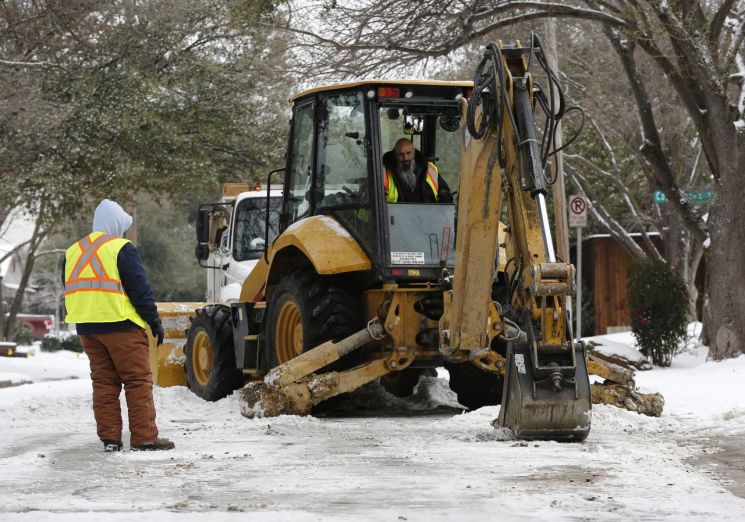
This is from an article by The Wall Street Journal (WSJ) on the 15th (local time), referring to the severe cold wave that struck Texas and paralyzed the entire United States.
On the 17th, NBC cited the WSJ article and reported that this incident has intensified controversies surrounding the U.S. power supply system and President Joe Biden's energy policy.
The large-scale blackout has heightened concerns that the U.S. power grid is not sufficiently prepared for extreme situations where electricity demand spikes drastically. In this context, debates have emerged over whether President Biden's energy transition policy is the right approach.
President Biden has presented climate change as one of his seven major policy tasks. As part of measures to respond to climate change, he declared that by 2035, carbon emissions from U.S. power generation will be reduced to zero. He announced that by 2035, all electricity would be produced solely from renewable energy sources such as solar and wind.
However, the recent cold wave that hit Texas has raised voices questioning the renewable energy policy. Texas has a higher proportion of power generation from renewable energy compared to other states. According to the U.S. Energy Information Administration (EIA), Texas generates a quarter of its electricity from solar and wind. Yet, this cold wave caused a massive blackout in Texas.
In fact, during the cold wave, solar power generation was impossible, and wind turbines froze, rendering them inoperable.
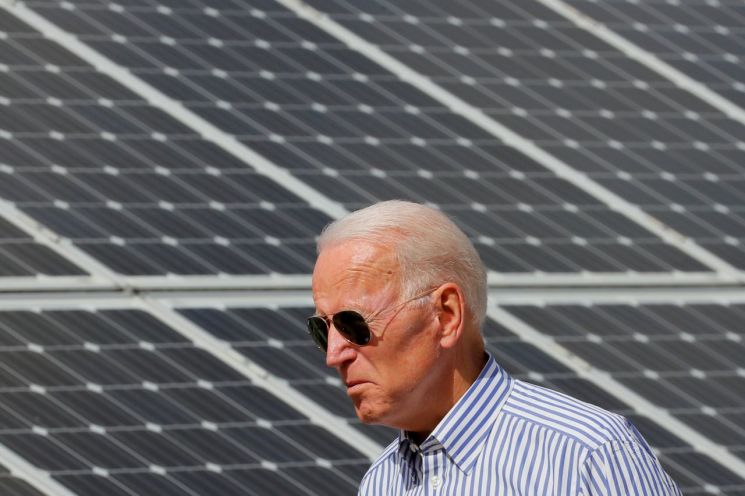
However, proponents of renewable energy argue that the amount of power generated from renewables in Texas is still not large, and that the blackout was caused by problems in traditional power generation methods using coal, natural gas, and nuclear energy. They also emphasize that renewable energy can be prepared for extreme situations by using large-scale energy storage systems. President Biden has also announced plans to invest $2 trillion by 2030 in eco-friendly energy sectors, including the development of large-scale storage systems.
NBC also supports the use of renewable energy through the development of large-scale storage technology. After mentioning the WSJ article that emphasized the necessity of fossil fuels, NBC stressed that even without reverting to fossil fuels, storing renewable energy and using it when needed could emerge as a viable option.
Recently, large-scale storage technology has been rapidly advancing. Capacity is increasing while prices are rapidly decreasing. Of course, despite the fast development, it is still true that there are many aspects in which these systems fall short of functioning as a sufficient power source.
Jim Robb, CEO of North American Electric Reliability Corporation, said that batteries should serve as the ultimate backup system, but there is still a long way to go.
NBC stated that there is a need to steadily develop technology over time until the target year of 2035 set by President Biden. NBC concluded the article with a quote from Professor Daniel Craig of the University of Michigan: "We live in a constantly changing world. Climate change also continues to evolve. The past 40 years do not necessarily reflect the next 40 years."
© The Asia Business Daily(www.asiae.co.kr). All rights reserved.


















