Ministry of Environment, 2021 Zero-Emission Vehicle Distribution Innovation Plan
Zero-emission Vehicle Supply Target 10% in 2021 → 12% in 2022
Low-emission Vehicles, 18% → 20%
Expansion of More Than 30,000 Slow Chargers for Electric Vehicles Mainly in Residential Areas
Expansion of Charging Station Location Information Disclosure
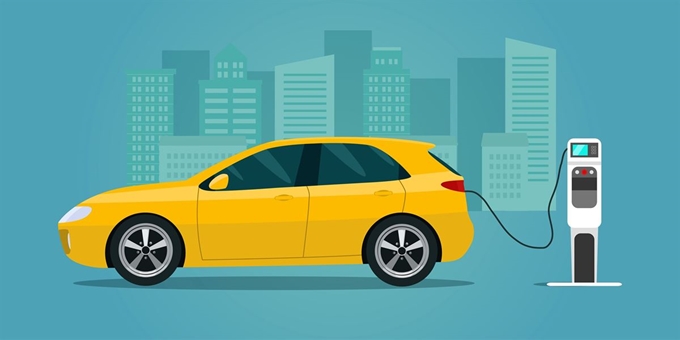
[Sejong=Asia Economy Reporter Joo Sang-don] Starting this year, automobile sellers such as Hyundai and Kia must supply 10% of their sales volume as electric or hydrogen vehicles, i.e., zero-emission vehicles. This is due to the establishment of a supply target for zero-emission vehicles.
On the 18th, the Ministry of Environment announced that it presented and discussed the "2021 Zero-emission Vehicle Supply Innovation Plan" containing this content at the National Policy Coordination and Inspection Meeting chaired by Prime Minister Chung Sye-kyun.
First, the Ministry of Environment set a zero-emission vehicle supply target for the first time this year. The target is 10% in 2021 and 12% in 2022, meaning that from this year, at least 1 out of every 10 vehicles sold must be electric or hydrogen vehicles. To enhance the effectiveness of the supply target system, the Ministry plans to impose contribution fees on the shortfall in meeting the target. For example, if a manufacturer with a supply target of 100 vehicles supplies 80 zero-emission vehicles, a certain contribution fee per vehicle will be imposed on the remaining 20 vehicles. The contribution fees will be used to expand electric and hydrogen charging infrastructure. The level of contribution fees for the shortfall will be finalized through a research project this year.
However, considering differences in manufacturing capabilities for zero-emission vehicles, differentiated supply targets will be set for each manufacturer. Hyundai and Kia, with annual sales of over 100,000 units, have a 10% target, while Renault Samsung, SsangYong, GM, and others with sales over 20,000 units have a lower target of 4%. From 2023, the same standard will apply regardless of sales volume. Manufacturers who fail to meet the supply target must purchase excess achievements from other companies or adjust the target by carrying over excess or shortfall for three years.
The supply target for low-emission vehicles, which include electric and hydrogen vehicles, hybrids, and some gasoline and liquefied petroleum gas (LPG) vehicles with low emissions, was 15% last year and will be raised to 18% this year. It will increase further to 20% next year.
The Ministry of Environment plans to significantly improve charging convenience by expanding charging stations and disclosing location information. More than 2,800 rapid chargers and over 123 ultra-rapid chargers will be installed at high-demand mobility hubs such as highways and gas stations, while more than 30,000 customized chargers, including streetlight and outlet types, will be expanded near residential areas and workplaces considering parking conditions and usage environments. More than 24,000 outlet-type slow chargers will be installed this year in existing apartment parking lots where installing high-speed chargers is difficult, and 1,000 streetlight-type chargers will be pilot-installed in narrow roads in densely populated multi-family residential areas where securing outlets is difficult. The goal is to install a total of 500,000 electric chargers by 2025.
Charging station location information disclosure will also be strengthened. Currently, out of a total of 64,000 electric vehicle chargers, only about 28,000 (43%) have publicly disclosed location information. Although the law requires electric vehicle chargers to be installed at a ratio of one charger per 200 parking spaces in apartments with more than 500 households, this location information is not publicly disclosed. The Ministry plans to complete the establishment of a system to check the location information of all chargers within this year. A Ministry of Environment official said, "Currently, only residents who know the location of chargers in apartments can use them, but once location information is disclosed, visitors will also find it convenient to use them," adding, "We will do our best to create a convenient charging environment through charger expansion and location information disclosure."
Additionally, the Ministry of Environment plans to encourage demand for zero-emission vehicles in the public and private sectors by strengthening mandatory purchases in the public sector. From this year, at least 80% of new vehicles for administrative and public institutions must be purchased or leased as zero-emission vehicles, and this ratio will be raised to 100% from 2023. Furthermore, companies that publicly declare to convert 100% of their owned or leased vehicles to electric or hydrogen vehicles by 2030 through the "Korean-style Zero-emission Vehicle Transition 100" campaign will be given priority support for purchase subsidies and charging infrastructure installation. To induce price reductions for zero-emission vehicles and foster popular affordable vehicles, subsidy support standards will be differentiated by price range, and minimum self-payment amounts will be set for electric buses and electric two-wheelers to prevent market disruption caused by low-priced vehicles. For electric buses, the minimum self-payment is 100 million KRW for large buses; for electric two-wheelers, 750,000 KRW for small, 1,150,000 KRW for medium, and 1,300,000 KRW for large and other types.
The Ministry of Environment plans to announce the supply innovation plan by next month after consultations with related agencies based on the discussions from this meeting.
© The Asia Business Daily(www.asiae.co.kr). All rights reserved.
![Clutching a Stolen Dior Bag, Saying "I Hate Being Poor but Real"... The Grotesque Con of a "Human Knockoff" [Slate]](https://cwcontent.asiae.co.kr/asiaresize/183/2026021902243444107_1771435474.jpg)
















