Sales up 8%, Operating Profit up 60% Despite COVID Impact
Successful 'Structural Improvement' with Black Box... Navigation Sales Share 98%→8%
Dashcams Losing to Built-in Cameras... "Diversifying Sales Structure to B2B and B2G"
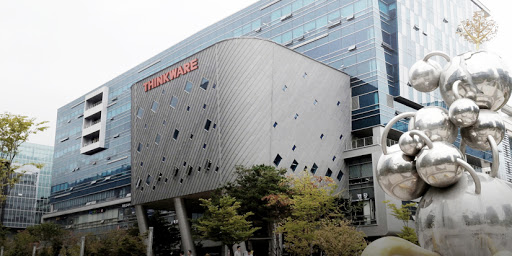
[Asia Economy Reporter Lee Junhyung] Tinkware, well known for its navigation systems, is showing steady growth driven by strong performance in its black box business. Thanks to the robust sales of black boxes, operating profit surged significantly last year. There was no performance slump despite concerns due to the COVID-19 pandemic. The company is evaluated to have successfully transformed its business from navigation systems to black boxes. The stable establishment of recently entered new businesses also contributed. Tinkware is once again challenging to improve its business structure toward a business-to-business (B2B) focused sales model.
Despite the COVID-19 crisis, Tinkware's performance stood out. According to the Financial Supervisory Service's electronic disclosure system, Tinkware's sales last year reached 197.6 billion KRW, an 8.4% increase from the previous year (182.2 billion KRW). Operating profit rose 59.5% to 12.5 billion KRW from 7.8 billion KRW the year before.
Transformation from Navigation to Black Box... New Businesses Also Contributed
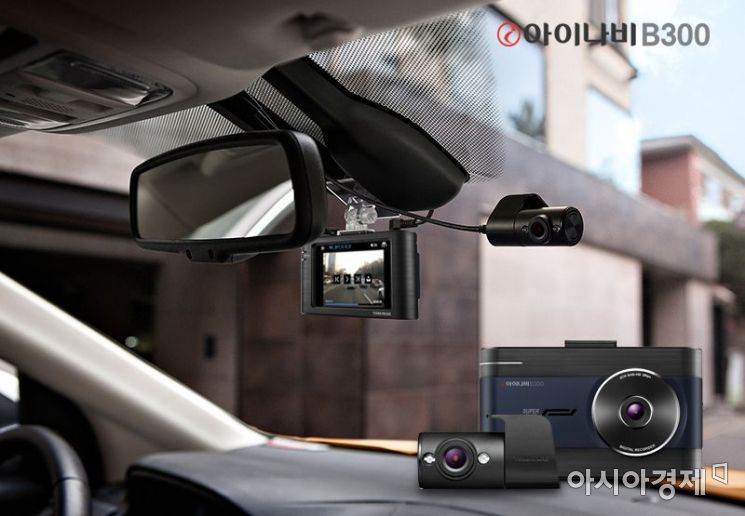
Black box sales drove the performance. This was thanks to the successful business transformation. Tinkware is familiar to the public through its navigation brand ‘iNavi’. After launching Korea’s first dedicated navigation device in 2004, it held the number one position in the vehicle navigation market for a long time. However, in the 2010s, vehicle-mounted navigation devices went into decline. This was largely due to the popularization of smartphones and the spread of mobile navigation apps like ‘T map’ and ‘KakaoMap’.
At that time, Tinkware chose black boxes as its future growth engine. The sales structure completely changed over ten years. In 2009, navigation sales accounted for 97.5% of Tinkware’s revenue, but by 2019, navigation sales made up only 8%. Meanwhile, black box sales rose to 72%.
During this period, the market also expanded significantly. According to the securities industry, the domestic black box market grew at an average annual rate of 25% over five years until 2018. The market size grew from 52.1 billion KRW in 2014 to 199.5 billion KRW last year. Although the growth rate is believed to have slightly declined recently, this explains why Tinkware was able to thrive despite COVID-19.
Last year’s vehicle sales also contributed to performance improvement. In Korea, black boxes have already become a ‘vehicle essential,’ so vehicle sales directly translate into black box sales. According to the Korea Automobile Manufacturers Association (KAMA), 1.61 million vehicles were sold domestically last year, an increase of about 72,000 units from 1.54 million the previous year. Despite weakened consumer sentiment due to COVID-19, sales showed an upward trend.
The company also explained that new businesses entered one to two years ago contributed to last year’s performance. These businesses have stabilized in the market and sales have begun to materialize. The home appliance brand ‘Bluevent’ and electric scooter brand ‘Roadgear’ are representative examples.
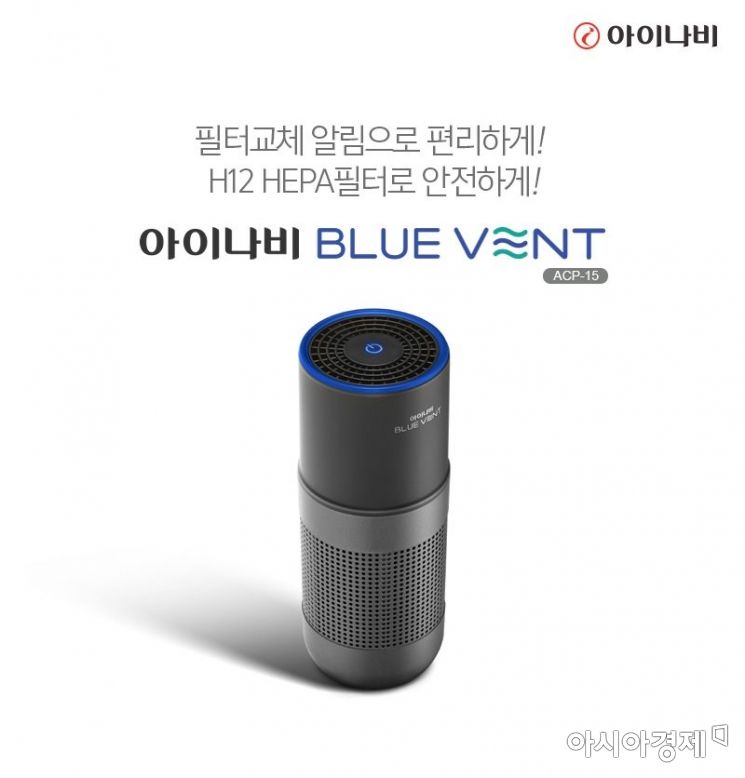 Car air purifier released by Tingkware's home appliance brand 'Bluevent'.
 [Photo by Asia Economy DB]
Dashboard Cameras Losing Ground to Built-in Cameras... “From B2C to B2B and B2G”
The vehicle-mounted black box market, Tinkware’s core area, has steadily grown but its future outlook is not bright. Electric vehicles and autonomous vehicles are already equipped with dozens of high-definition cameras used as safety devices. Experts explain that by simply connecting memory and storage devices, these can be used as black boxes without blind spots. Professor Lee Hogun of Daeduk College’s Department of Automotive Engineering said, “It’s only a matter of time before the automotive industry fully enters the era of built-in cameras,” adding, “The dashboard camera market will be rapidly absorbed within two to three years at most.” He further explained, “Recent vehicles include various video sensors to meet safety and convenience demands, and built-in cameras are especially essential for autonomous driving technology.”
Tinkware plans to respond to market changes by diversifying its sales structure. In the mid to short term, it aims to expand from a business-to-consumer (B2C) sales structure to business-to-business (B2B) and business-to-government (B2G). According to industry sources, Tinkware is currently discussing black box supply with BMW. Last year, Tinkware was selected as a first-tier supplier for Hyundai Motor Group. Recently, it announced supplying augmented reality (AR) navigation solutions to Chinese automaker Chery Automobile. It has also collaborated with government agencies, such as winning the contract to operate and manage the National Traffic Information Center for the Korea Expressway Corporation in 2018. This is based on the map development know-how accumulated through its navigation business.
A Tinkware official explained, “Although sales to consumers still account for a large portion of total revenue, there will be significant changes in the sales structure within five years.”
© The Asia Business Daily(www.asiae.co.kr). All rights reserved.



















