Admission for nursing hospitals and others from the 26th... Vaccination for the elderly possible in the 2nd quarter
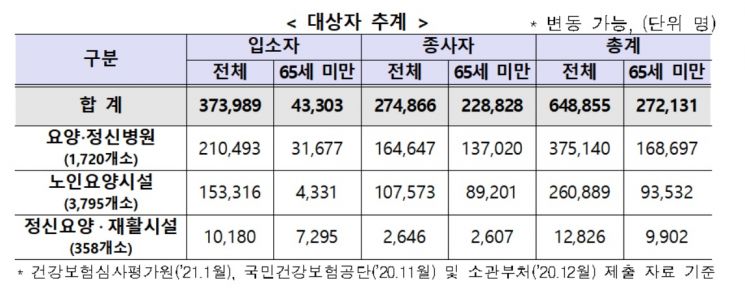
[Asia Economy Reporter Seo So-jeong] The first COVID-19 vaccine recipients in Korea have been changed to inpatients and residents under the age of 65, as well as workers at nursing hospitals and nursing facilities. Initially, the government planned to prioritize AstraZeneca vaccine administration to those aged 65 and older in nursing hospitals and similar facilities, but due to concerns about the vaccine's efficacy in the elderly, the priority group was changed to those under 65. With this change in the vaccination plan, vaccinations for the elderly are expected to be possible only in the second quarter.
Jung Eun-kyung, head of the COVID-19 Vaccination Response Promotion Team, stated at a briefing on the COVID-19 vaccination plan on the 15th, "We will begin administering the AstraZeneca vaccine to approximately 272,000 inpatients, residents, and workers under the age of 65 in elderly group facilities such as nursing hospitals and nursing facilities."
For those aged 65 and older, the vaccination plan will be finalized after reviewing additional clinical data on vaccine efficacy and undergoing deliberation by the Vaccination Expert Committee under the Korea Disease Control and Prevention Agency (KDCA).
Earlier, on the 11th, the KDCA held a meeting of the Vaccination Expert Committee to decide on the administration of the AstraZeneca vaccine to the elderly aged 65 and above. They comprehensively reviewed the Ministry of Food and Drug Safety’s approval results for the AstraZeneca vaccine, clinical trial results published so far, recommendations related to vaccine use abroad, and the outcomes of expert advisory committee meetings in the COVID-19 vaccine field.
The Vaccination Expert Committee explained, "To achieve the goal of COVID-19 vaccination, it is important to increase the vaccination rate. Concerns about vaccine efficacy in the elderly could reduce vaccine acceptance among the public and healthcare workers, thereby lowering vaccination rates. Therefore, for those aged 65 and older, we decided to proceed with vaccination after confirming additional data such as the AstraZeneca vaccine’s U.S. clinical trial results and effectiveness information from countries like the U.K. that have already administered the vaccine."
Additional clinical trial data for the elderly is expected to be available no earlier than the end of March. Director Jung said, "The clinical trial data is expected around the end of March, and it will take some time to analyze the results, so the exact submission timing needs further confirmation." She added, "I understand that the Ministry of Food and Drug Safety has requested AstraZeneca to submit related data by around April."
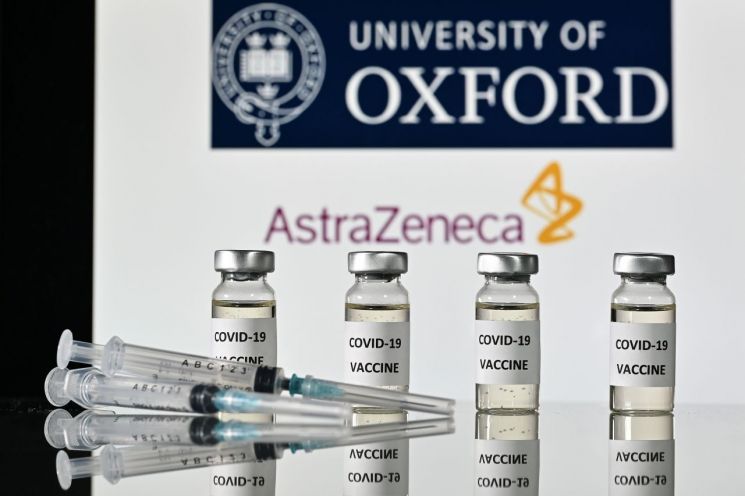
With the elderly excluded from the priority vaccination group, the vaccination plan will be completely revised.
For inpatients, residents, and workers at nursing hospitals and nursing facilities under the age of 65, approximately 272,000 people will begin receiving the first dose of the AstraZeneca vaccine starting on the 26th.
Following that, from March, the AstraZeneca vaccine will be administered to healthcare workers at high-risk medical institutions (approximately 354,000 people) and first responders to COVID-19 (about 78,000 people, including COVID-19 quarantine, epidemiological investigation, testing, and quarantine personnel).
Additionally, Pfizer vaccines introduced through the international vaccine supply organization COVAX Facility will be provided immediately upon arrival between late February and early March through central and regional vaccination centers to approximately 55,000 medical staff treating COVID-19 patients.
For the AstraZeneca vaccine, medical institutions such as nursing hospitals and high-risk medical institutions will conduct vaccinations on-site. Nursing facilities will implement visiting vaccinations considering residents with mobility difficulties, but depending on regional circumstances, vaccinations at public health centers are also possible. First responders will be vaccinated at their respective public health centers.
Pfizer vaccines provided to hospitals treating COVID-19 patients will, in principle, be delivered to infectious disease-dedicated hospitals and other facilities for on-site vaccination to minimize gaps in COVID-19 response. However, to minimize vaccine distribution and wastage, medical institutions with fewer eligible recipients will have vaccinations conducted at central and regional vaccination centers.
The promotion team stated that if additional clinical trial data does not confirm the efficacy of the AstraZeneca vaccine in the elderly, alternative plans will be prepared.
Director Jung said, "If the vaccination order is adjusted, we are also considering adjusting the priority groups accordingly. For the elderly, other types of vaccines expected to be supplied in the second quarter are also being reviewed as alternatives to quickly establish plans for prioritizing vaccination for those aged 65 and older."
Regarding concerns that the delay of vaccinations for 370,000 elderly people originally scheduled for the first quarter to the second quarter might increase difficulties at vaccination sites, Director Jung said, "For example, influenza vaccinations are administered to nearly 15 million people over about two months from September to November. Although it is quite challenging, various vaccination institutions such as entrusted medical institutions and vaccination centers will be mobilized to systematically prepare for vaccination."
However, she noted that the timing of vaccine arrival is a variable. The selection of vaccination recipients depends on the confirmed vaccine supply schedule.
Director Jung said, "I do not think the 370,000 elderly people scheduled for vaccination in the second quarter will be further postponed to a lower priority. Another variable for achieving herd immunity is the vaccine’s effectiveness against variant viruses, and we will do our best to block, suppress, and manage the domestic inflow of variant viruses."
© The Asia Business Daily(www.asiae.co.kr). All rights reserved.
![Clutching a Stolen Dior Bag, Saying "I Hate Being Poor but Real"... The Grotesque Con of a "Human Knockoff" [Slate]](https://cwcontent.asiae.co.kr/asiaresize/183/2026021902243444107_1771435474.jpg)

















