One-Third of Seoul Apartment Lease Contracts Are Half-Jeonse
Clearly Observed Not Only in Gangnam Area but Also in Outskirts
Trend of Converting Jeonse Price Increases into Monthly Rent Accelerates
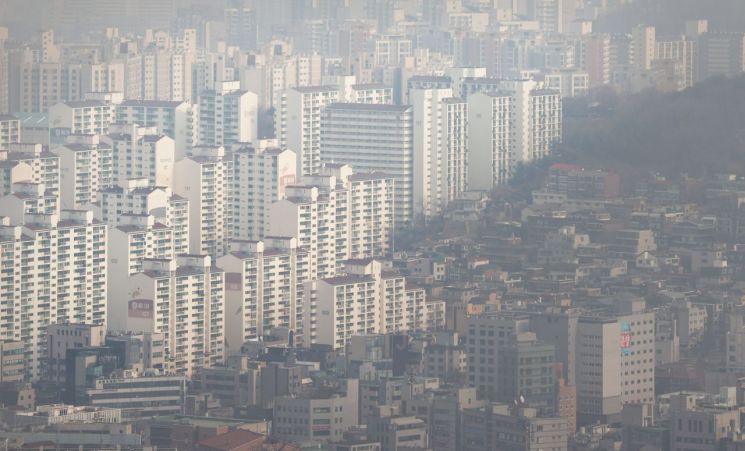
[Asia Economy Reporter Onyu Lim] Since the implementation of the new Lease Protection Act, which includes the right to request contract renewal and limits on rent increases, the number of lease contracts involving monthly rent, such as Ban-jeonse (half jeonse), has increased. As jeonse prices have surged significantly and tax hikes are also anticipated, many landlords appear to be converting the increased jeonse price into monthly rent. Additionally, cases of tenants signing Ban-jeonse contracts have risen due to the sharp decrease in available properties, making it difficult to find jeonse or afford the increased deposit.
According to the Seoul Real Estate Information Plaza on the 14th, from August last year, when the new lease law was enacted, to last month?a period of six months?there were a total of 75,684 apartment lease transactions in Seoul. Among these, transactions involving monthly rent, commonly called Ban-jeonse, accounted for 24,909 cases, representing 32.9% of all lease transactions. This is an increase of 4.7 percentage points compared to the 28.2% recorded in the six months immediately before the new law was implemented (February to July last year).
Ban-jeonse includes monthly rent (where the deposit is less than or equal to 12 months of rent), quasi-monthly rent (deposit equivalent to 12 to 240 months of rent), and quasi-jeonse (deposit exceeding 240 months of rent), excluding pure jeonse contracts that only involve a deposit without monthly rent.
In the year before the new lease law was enacted, the proportion of Ban-jeonse exceeded 30% only once?in April last year at 32.5%. However, after the law's implementation, the situation changed: from August last year to January this year, only October last year recorded a Ban-jeonse proportion below 30% (29.6%). It was 30.6% in August, 32.6% in September, dropped to 29.6% in October, then surged past 40% to 40.1% in November, followed by 32.7% in December and 31.8% last month.
This trend was clearly observed not only in the Gangnam area, where high-priced jeonse is concentrated, but also in the outskirts of Seoul. In Seocho-gu, the Ban-jeonse proportion hovered around 35% in the first half of last year, dropped to 28.5% in July just before the new law took effect, then rose to 33.8% in August, surpassed 50% at 50.5% in November, and remained high at 43.2% in December. In Songpa-gu, the Ban-jeonse ratio was around 25-27% from May to July last year but jumped to 45.7% in August, fluctuated around 35% thereafter, and rose again to 44.3% in November.
In the outskirts of Seoul, Ban-jeonse transactions in Eunpyeong-gu fluctuated between 19% and 25% from January to August last year, increased to 27.1% in September, 30.5% in December, and recently surged to 38.8% in January this year. Similarly, Guro-gu's Ban-jeonse ratio hovered around 30% for most of last year but exceeded 50% at 51.5% in November and remained high at 42.8% last month.
Landlords Pass Increased Property Taxes to Tenants... "Converting Jeonse Price Increases into Monthly Rent"
As jeonse prices have risen sharply, Ban-jeonse rents have also increased. In Helio City, Garak-dong, Songpa-gu?the largest complex nationwide?84㎡ (exclusive area) Ban-jeonse transactions were commonly made last year in the first half with a deposit of 100 million KRW and monthly rent around 2.5 million KRW. However, last month, transactions were made with the same deposit of 100 million KRW but monthly rent increased to 3.3 million KRW (23rd floor), indicating a rise in rent.
In Eunpyeong New Town, Jin-gwan-dong, Eunpyeong-gu (Hillstate Complex 1), a 59.85㎡ pure jeonse without monthly rent rose from about 400 million KRW deposit in the first half of last year to about 550 million KRW last month. Ban-jeonse rents also increased from a deposit of 100 million KRW and monthly rent of 800,000 KRW (4th floor) in May last year to a deposit of 150 million KRW and monthly rent of 1 million KRW (7th floor) last month.
A real estate industry official said, "As the government raised official property prices and significantly increased property holding taxes such as comprehensive real estate tax, some landlords have started converting the jeonse price increases into monthly rent to address tax issues. Tenants also seem to have become less resistant to converting part of the deposit into monthly rent amid soaring jeonse prices." Accordingly, the trend of jeonse turning into monthly rent is expected to accelerate going forward.
© The Asia Business Daily(www.asiae.co.kr). All rights reserved.
![User Who Sold Erroneously Deposited Bitcoins to Repay Debt and Fund Entertainment... What Did the Supreme Court Decide in 2021? [Legal Issue Check]](https://cwcontent.asiae.co.kr/asiaresize/183/2026020910431234020_1770601391.png)

















